
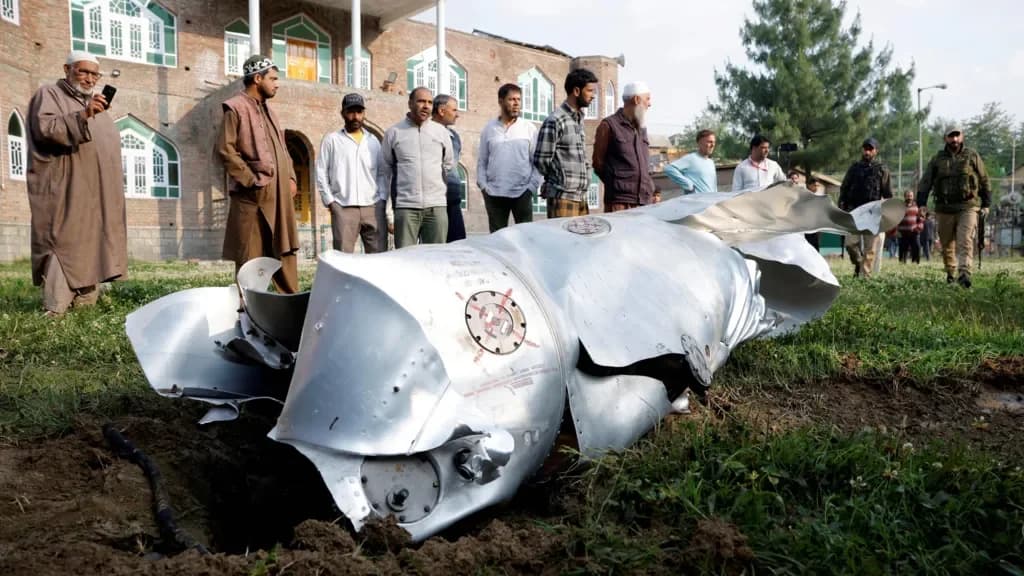
Tensions reached a boiling point across India and Pakistan on Thursday following India's missile and drone strikes on Pakistani territory, which left 31 people dead. In response, Pakistan shut down several major airports and placed border cities on high alert, while vowing to retaliate with force. In a national address late Wednesday night, Pakistan’s Prime Minister Shehbaz Sharif delivered a stern warning: “I solemnly swear that we will avenge each and every drop of blood of our martyrs.” His remarks followed India’s most expansive military operation against Pakistan in decades, involving pr
Tensions reached a boiling point across India and Pakistan on Thursday following India's missile and drone strikes on Pakistani territory, which left 31 people dead. In response, Pakistan shut down several major airports and placed border cities on high alert, while vowing to retaliate with force. In a national address late Wednesday night, Pakistan’s Prime Minister Shehbaz Sharif delivered a stern warning: “I solemnly swear that we will avenge each and every drop of blood of our martyrs.” His remarks followed India’s most expansive military operation against Pakistan in decades, involving precision air and drone strikes on nine locations across the country—including four in the Punjab province. Both nations remained on high alert Thursday. Flight operations were suspended in key cities, with Pakistani authorities grounding all flights from Karachi, Lahore, and Sialkot until Thursday afternoon. In India, over 20 regional airports in the north of the country remained closed, with closures extended until Saturday. In Pakistan’s Sindh province, which borders India, a state of emergency was declared across all hospitals and health facilities. The provincial health department ordered all medical staff and support personnel to cancel leave and remain on standby. Meanwhile, India’s border regions were also on alert. In Amritsar, a city just 20 miles from the Pakistani border, authorities conducted a second security drill along with a brief blackout on Wednesday evening. Residents were advised to remain vigilant. In Rajasthan and Punjab, police leave was revoked, and security forces were granted shoot-on-sight orders in response to any suspicious activity. Anti-drone systems were also activated along the border. Prime Minister Sharif denounced the strikes as an “act of war” and vowed retaliation. Senior Pakistani military and government officials confirmed that a response would come, though the specifics remained unclear as of Thursday morning. Some officials cited Pakistan’s claim of having shot down five Indian military aircraft—including three Rafale fighter jets—as part of its retaliation. However, other sources in the Pakistani government suggested that a more decisive response was still forthcoming. Observers widely believe that the final decision on Pakistan’s military action lies with General Asim Munir, the country’s influential army chief. Munir faces growing public pressure to demonstrate strength in the face of India’s aggression. India, on the other hand, defended its strikes as a direct and proportional response to a recent militant attack in Indian-administered Kashmir in April, which killed 26 people. Indian authorities have blamed Pakistan for facilitating the attack through long-standing ties with militant groups. Pakistan, however, has categorically denied any involvement. Indian officials claimed their strikes exclusively targeted “terrorist infrastructure,” including training camps and residences associated with militant organizations responsible for major terror attacks in India over the last 20 years. They emphasized that the strikes deliberately avoided Pakistani military installations, framing the operation as “measured, not escalatory, proportionate and responsible.” Pakistan disputed these assertions, insisting that no militant groups were operating in the affected areas. Officials accused India of targeting civilians rather than legitimate terror-related infrastructure. Along the heavily militarized Line of Control (LoC) in the contested Kashmir region, heavy cross-border shelling between Indian and Pakistani forces continued into a second night. Reports indicated that one Indian soldier and at least 11 civilians were killed in the renewed exchange of fire. Calls from the international community for de-escalation continued. Iran’s Foreign Minister Abbas Araghchi arrived in New Delhi on Thursday for talks with Indian officials. Araghchi, who had also visited Pakistan earlier in the week, reiterated Iran’s willingness to act as a mediator in the ongoing conflict.



Comments
No comments yet. Be the first to share a thought.