
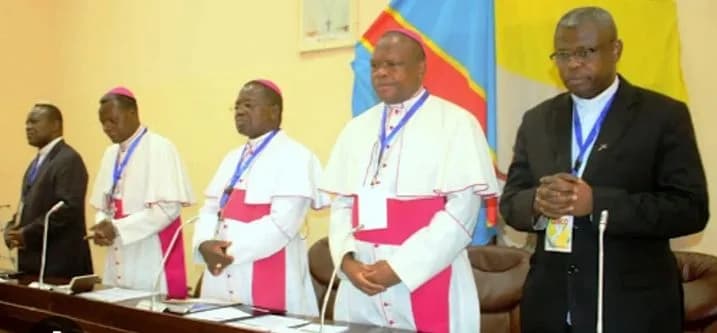
Following the collapse of the Luanda peace framework, the Democratic Republic of Congo (DRC) has entered a new phase of peace initiatives, including the Washington talks between Kinshasa and Kigali and the Doha negotiations involving the Congolese government and the armed group AFC/M23. These processes have been prioritized by the administration of President Félix Tshisekedi, even as persistent calls for an inclusive national dialogue bringing together all Congolese stakeholders continue to be sidelined despite the fact that such a forum is widely seen as essential to addressing the root caus
Following the collapse of the Luanda peace framework, the Democratic Republic of Congo (DRC) has entered a new phase of peace initiatives, including the Washington talks between Kinshasa and Kigali and the Doha negotiations involving the Congolese government and the armed group AFC/M23. These processes have been prioritized by the administration of President Félix Tshisekedi, even as persistent calls for an inclusive national dialogue bringing together all Congolese stakeholders continue to be sidelined despite the fact that such a forum is widely seen as essential to addressing the root causes of the security crisis that has plagued eastern Congo for more than three decades. Although major religious institutions including the Catholic Church through CENCO, the Protestant Church (ECC), and other national partners have already produced a joint roadmap for organizing this inclusive dialogue in collaboration with state institutions, the President has yet to formally convene or implement the process. This delay prompted the civic platform Congo 2060, represented by human rights advocates Temuni Patricia and Jean-Mobert Senga, to appeal directly to the United States government. In a letter addressed to U.S. Secretary of State Marco Rubio, made public on Tuesday, December 23, 2025, Congo 2060 urged Washington to openly support the establishment of an inclusive national Congolese dialogue. The authors argued that such a dialogue is not only necessary but urgent, and that it aligns with key U.S. interests particularly the pursuit of sustainable peace and stability in the Great Lakes region. According to the signatories, a broad-based national dialogue is the only mechanism capable of giving substance and durability to the Washington and Doha processes by tackling the structural problems that have fueled conflict for decades. These include allegations of discrimination and marginalization of certain communities, governance reforms, security sector restructuring, justice and accountability, anti-corruption measures, and broader challenges linked to chronic mismanagement of state institutions. Congo 2060 further contends that President Félix Tshisekedi has become the principal obstacle to convening this inclusive Congolese forum. They warn that continued rigidity especially when reinforced by international backing risks pushing some actors to view armed struggle as the only remaining avenue to assert their rights. Such a trajectory, they caution, could dramatically increase the risk of large-scale conflict, including violent attempts to seize power, with devastating consequences for the DRC and the wider Great Lakes region. The letter calls on the United States to take a leading role, emphasizing that it is among the few global powers with sufficient diplomatic influence to encourage all parties to accept a genuine ceasefire and engage in unconditional political talks aimed at lasting peace. The authors stress that this approach would also lay the groundwork for sustainable economic development, benefiting Congolese citizens, the region, the United States, and the international community at large. They also recall what they describe as tangible diplomatic progress under former President Donald Trump’s administration, including the signing of the Washington Agreement on December 4, 2025, and Qatar’s facilitation of preliminary accords between the Congolese government and AFC/M23. The withdrawal of AFC/M23 forces from the city of Uvira, they note, was reportedly driven by U.S. pressure. However, the authors express concern that these initiatives may yield limited results if the Congolese crisis continues to be framed narrowly focusing primarily on Rwanda’s role and the actions of AFC/M23 while overlooking the responsibilities of the Kinshasa government and President Tshisekedi’s administration. They argue that the roots of the conflict lie in poor governance, unresolved community grievances, weak security institutions, entrenched impunity, systemic corruption, constitutional violations, hate speech, and identity-based tensions. As religious institutions in the DRC continue to demonstrate unity in the search for peace, a common roadmap for organizing an inclusive national dialogue was officially presented on Monday, July 25, 2025, in Kinshasa, with the support of CENCO, ECC, the Congo Religious Council, and the Interfaith Platform for the Nation (CIN). Despite these developments, concrete action from the Presidency remains slow. Internationally, diplomatic efforts continue largely on paper, while on the ground insecurity persists and relations between Kinshasa and its neighbors remain strained leaving the prospects for lasting peace increasingly uncertain.



Comments
No comments yet. Be the first to share a thought.