
Airlines around the world are cancelling flights and grounding aircraft as soaring jet fuel prices and supply concerns threaten to upend the global aviation industry ahead of the summer travel season, Bloomberg reported. Global flight capacity for May has been reduced by about 3% points, with all but one of the 20 largest airlines cutting schedules, according to aviation analytics firm Cirium. The firm, which had initially forecast growth of 4 to 6 % for the year, now says a decline of as much as 3% is possible. "It appears extremely likely that more reductions are ahead," Cirium senior consul
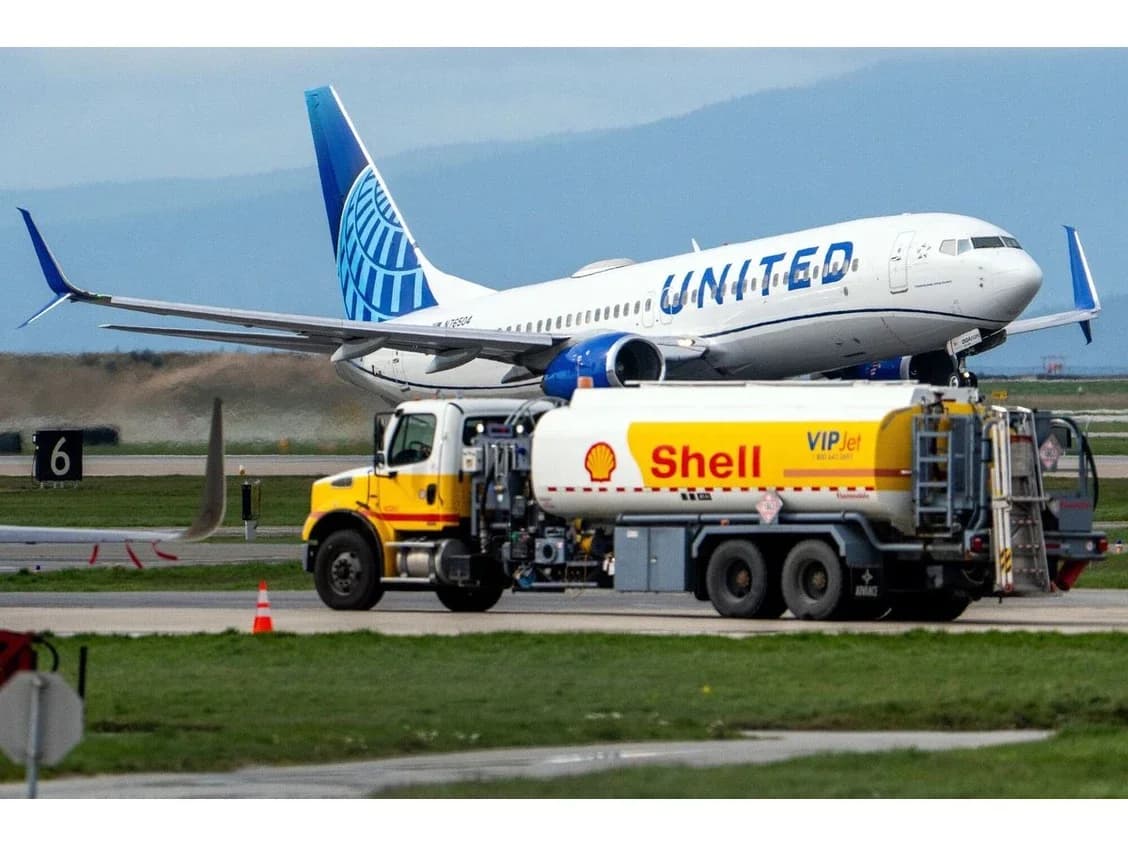
Airlines around the world are cancelling flights and grounding aircraft as soaring jet fuel prices and supply concerns threaten to upend the global aviation industry ahead of the summer travel season, Bloomberg reported.
Global flight capacity for May has been reduced by about 3% points, with all but one of the 20 largest airlines cutting schedules, according to aviation analytics firm Cirium. The firm, which had initially forecast growth of 4 to 6 % for the year, now says a decline of as much as 3% is possible.
"It appears extremely likely that more reductions are ahead," Cirium senior consultant Richard Evans said in a report released Thursday.
The crisis, which initially disrupted Middle Eastern airlines following the outbreak of war in Iran, has since spread globally. A U.S. naval blockade of the Strait of Hormuz cutting off Iranian oil shipments has left the industry with no immediate relief in sight, though Iran said Friday the strait was "completely open" to commercial traffic, causing benchmark Brent crude to fall as much as eleven percent, according to Bloomberg.
Delta Air Lines Chief Executive Ed Bastian said the carrier was facing an additional $2.5 billion in fuel costs this quarter alone.
"This is going to be a test for the industry," Bastian said.
Dutch carrier KLM announced it will cancel 80 return flights at Amsterdam's Schiphol Airport over the coming month, joining United Airlines, Lufthansa, and Cathay Pacific, which have all reduced schedules to limit financial damage.
Lufthansa, Europe's largest airline, shut down its CityLine unit and withdrew 27 aircraft from service, while also grounding older fuel-heavy widebody jets across its broader network. Its Edelweiss brand suspended flights to Denver and Seattle and reduced frequencies to Las Vegas.
Air Canada cancelled services from Montreal and Toronto to New York's John F. Kennedy Airport. Norse Atlantic halted all flights to and from Los Angeles. Virgin Atlantic scrapped its London-to-Riyadh service, and British Airways dropped its Jeddah route.
Nigerian airlines warned they are "facing existential threats" and may halt flights entirely unless measures are taken to lower fuel prices, according to Bloomberg.
Australia's Qantas is reducing U.S. flights and cutting domestic capacity by about 5%, estimating an additional A$800 million on its fuel bill in the second half of its fiscal year. Cathay Pacific is cutting two percent of flight frequencies across the Asia-Pacific region from mid-May through June, with its budget unit HK Express implementing a steeper 6% reduction.
Supply availability is also emerging as a concern. The International Energy Agency has warned that Europe has around six weeks of jet fuel supplies remaining. Ryanair, Virgin Atlantic, and EasyJet have each issued availability forecasts that do not extend beyond mid-May, while the European Union said it may face supply issues "in the near future" and is preparing a joint action plan.
United Airlines has cut 5% of its annual capacity through September, while Delta is responding with both price increases and capacity reductions of around 3.5 percent. Chinese carriers, which like most U.S. airlines do not hedge fuel costs, have also stepped up daily cancellations, drawing complaints from travelers ahead of the five-day Golden Week holiday in May.
"If the price of jet fuel remains elevated for an extended period there will be more cancellations," analyst Dudley Shanley of Goodbody said.
Source: Bloomberg News



Comments
No comments yet. Be the first to share a thought.