
Prime Minister frames Adelaide investment as both national security cornerstone and manufacturing transformation Prime Minister Anthony Albanese has announced a major $3.9 billion federal investment into Adelaide’s Osborne shipyard, calling it a “downpayment” on what is expected to become a $30 billion defence infrastructure project at the heart of Australia’s nuclear-powered submarine ambitions under the AUKUS pact. The funding, unveiled during a visit to South Australia, is designed to prepare the Osborne facility to train and support up to 10,000 skilled workers needed to build Australia’
Prime Minister frames Adelaide investment as both national security cornerstone and manufacturing transformation Prime Minister Anthony Albanese has announced a major $3.9 billion federal investment into Adelaide’s Osborne shipyard, calling it a “downpayment” on what is expected to become a $30 billion defence infrastructure project at the heart of Australia’s nuclear-powered submarine ambitions under the AUKUS pact. The funding, unveiled during a visit to South Australia, is designed to prepare the Osborne facility to train and support up to 10,000 skilled workers needed to build Australia’s future fleet of nuclear-powered submarines the most complex military industrial undertaking in the nation’s history.

Prime Minister Anthony
“This is a driver not just of national security… it’s also a driver of our economic prosperity,” Albanese said, presenting the project as a long-term investment in jobs, apprenticeships, and industrial capability.
A National Security Bet in an Uncertain Indo-Pacific
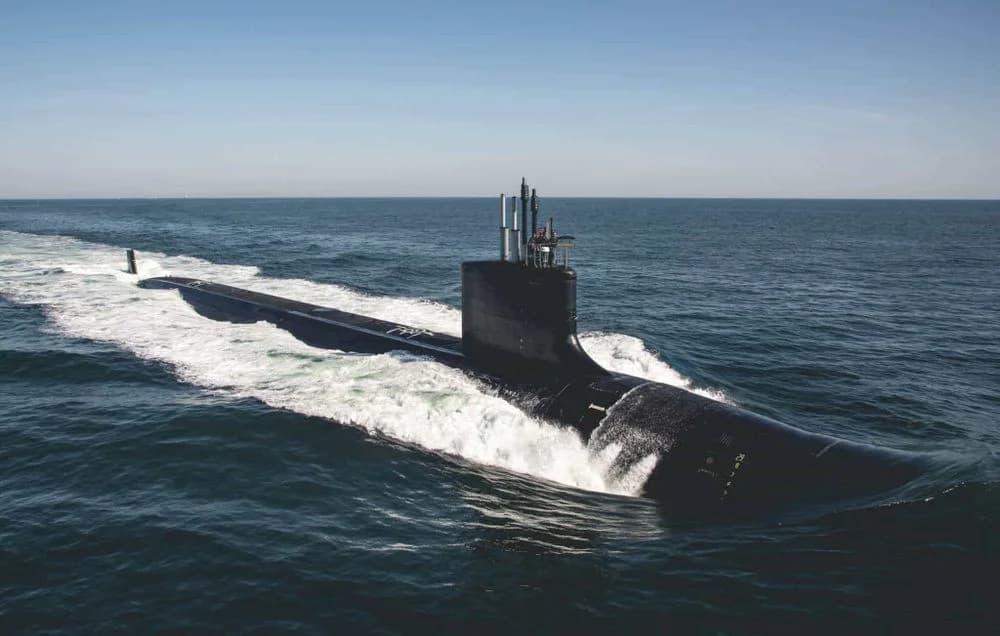
At its core, the shipyard expansion represents Australia’s biggest strategic shift in decades, as Canberra seeks to strengthen deterrence in the Indo-Pacific amid rising tensions and China’s growing regional assertiveness. Under the AUKUS agreement, Australia will acquire eight nuclear-powered — though not nuclear-armed — submarines over the next decade, sourced through collaboration with the United States and the United Kingdom. Supporters argue the vessels will provide Australia with unprecedented stealth, endurance, and reach, enabling the navy to operate more effectively across vast maritime distances. AUKUS was signed five years ago as a geopolitical response to shifting power balances in the Pacific, and Albanese’s announcement reinforces Australia’s commitment to the pact.
Jobs Boom or Defence Dependency?
The federal government estimates the Osborne expansion will directly create 5,500 jobs, with thousands more expected indirectly through supply chains, construction programs, and advanced manufacturing contracts. Defence Industry Minister Pat Conroy described the Adelaide shipyard as a once-in-a-generation industrial leap. “This will be the only shipyard in the southern hemisphere capable of constructing nuclear-powered submarines,” Conroy said. Beyond the immediate employment boost, the government is positioning the project as an engine for skills development, targeting apprentices and engineers in a sector that has long struggled with workforce shortages. However, critics have raised questions over whether Australia is becoming too dependent on defence spending as an economic driver, particularly as cost pressures mount in health, housing, and education.
Modernising Manufacturing Through Defence
A key angle of the announcement is its broader promise: the submarine build is not only about ships, but about reshaping Australia’s industrial base. Conroy revealed that around 70 companies are already undergoing qualification processes to supply submarine components not only for Australia’s vessels, but potentially for US and UK fleets as well. That could place Australian firms into elite global defence supply chains, modernising local manufacturing through advanced systems, robotics, and nuclear-grade engineering standards. For South Australia, long regarded as the centre of Australia’s naval shipbuilding, the project is expected to cement Adelaide’s role as a strategic industrial hub for decades.
Political Stakes and the Trump Factor
The announcement also comes against the backdrop of political uncertainty that recently surrounded AUKUS. Doubts emerged last January when US President Donald Trump returned to office and ordered a Pentagon review of the defence pact, citing concerns it may not align with his “America First” agenda. For months, the future of the agreement appeared uncertain until the US Defence Department ultimately approved continuation in September. Trump later endorsed the pact when hosting Albanese at the White House, declaring it was “full steam ahead.” The episode highlighted Australia’s vulnerability to shifting political winds among allies and the risk of basing long-term national projects on foreign strategic continuity.
A Historic Project With Long-Term Questions
While the government has framed the $30 billion shipyard investment as essential, the scale of the commitment raises significant long-term questions: •Will Australia meet the workforce and training demands of nuclear submarine construction? •Can the project stay within budget amid inflation and global supply pressures? •How will communities respond to the environmental and infrastructure impacts of expanded shipbuilding? •What does Australia’s future look like as defence becomes a dominant pillar of industrial policy? For Albanese, the shipyard pledge is both a strategic statement abroad and a political statement at home tying national security, economic development, and manufacturing renewal into one massive project.
A Downpayment on Australia’s Future
The Osborne shipyard investment is more than a budget line — it is a defining wager on Australia’s role in a contested Indo-Pacific and its capacity to build sovereign defence industry at scale.
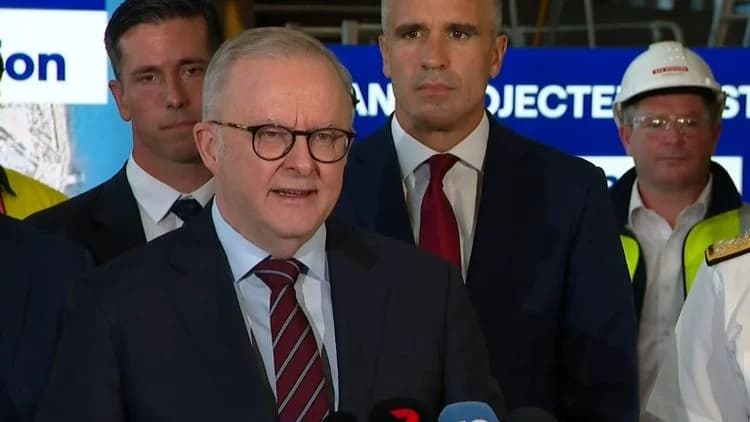
Prime Minister Anthony Albanese today announced a $3.9 billion cash injection into an Adelaide shipyard building nuclear submarines.
As Australia moves deeper into the AUKUS era, the submarines may take a decade to arrive, but the transformation of Adelaide’s shipyards and the strategic choices behind them are already underway.



Comments
No comments yet. Be the first to share a thought.