
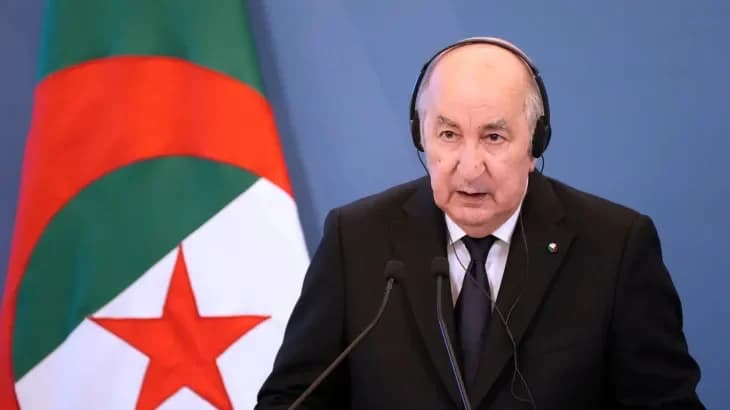
Algeria is facing renewed international scrutiny over plans to expand the use of the death penalty following a series of deadly wildfires, with Amnesty International urging authorities to abandon the proposed changes to the country’s criminal law. The debate intensified after President Abdelmadjid Tebboune instructed Algeria’s Justice Ministry on August 30 to amend the Penal Code to introduce the death penalty for people who intentionally start or provoke fires. The directive followed wildfires that swept through parts of Kabylie and northeastern Algeria between August 26 and 30. The Algeria
Algeria is facing renewed international scrutiny over plans to expand the use of the death penalty following a series of deadly wildfires, with Amnesty International urging authorities to abandon the proposed changes to the country’s criminal law. The debate intensified after President Abdelmadjid Tebboune instructed Algeria’s Justice Ministry on August 30 to amend the Penal Code to introduce the death penalty for people who intentionally start or provoke fires. The directive followed wildfires that swept through parts of Kabylie and northeastern Algeria between August 26 and 30. The Algerian government began examining proposed amendments to the Penal Code on September 6. Tebboune has also indicated that the proposed changes could extend capital punishment to people convicted of abducting or abusing children. Algeria retains the death penalty under its laws but has not carried out an execution since 1993. Courts can still issue death sentences, and the country expanded the use of capital punishment for several drug-related offences in 2025. Amnesty International says the proposed expansion raises human rights concerns, particularly given Algeria’s previous use of terrorism-related charges in cases involving political opposition. The organization has called for an official moratorium on executions and ultimately for abolition of the death penalty. The latest wildfires have also raised questions about the scale of the disaster. Official figures cited by Amnesty recorded 12 deaths and 54 hospitalisations as of August 26, while the organisation said later reports indicated substantially higher casualties, including more than 70 deaths in one municipality. Separate wildfires in July killed six people in northeastern Algeria. Between July 26 and September 10, Algerian authorities announced that 20 people had been detained pending investigations into alleged arson and “subversion.” Authorities said one of those detained was linked to the Movement for the Self-Determination of Kabylie (MAK), which the Algerian government has designated as a terrorist organisation. The issue has echoes of the 2021 wildfires, when at least 90 people died. Amnesty says authorities at the time prosecuted dozens of people on terrorism-related and other serious charges. In 2022, a court sentenced 56 people to death in a mass trial; Amnesty has raised concerns about fair-trial violations and allegations of torture in that case. A retrial began in March 2026 after the Supreme Court ordered the case to be reconsidered. Amnesty argues that Algeria’s response to the latest fires should also examine prevention, emergency preparedness and other factors that may have contributed to the loss of life. The organisation says accountability for those responsible for deliberately setting fires should be pursued through fair legal proceedings rather than the death penalty. The proposed amendments therefore place Algeria at the centre of a renewed debate over capital punishment, public safety and human rights, as authorities respond to increasingly destructive wildfires and examine changes to the country’s criminal law.



Comments
No comments yet. Be the first to share a thought.