
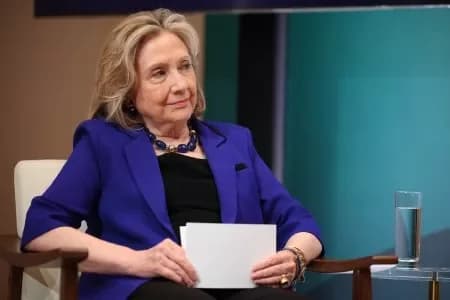
In a recent social media post, former Secretary of State Hillary Clinton urged citizens to vote in the upcoming November elections. The message, seemingly a routine encouragement for civic participation, sparked significant controversy, particularly from commentator Rita Panahi. Ms. Panahi characterized Ms. Clinton's post as "disgusting" and "grotesque," accusing her of being unable to separate her political sentiments from even the most significant days. The Controversial Post Hillary Clinton's post aimed to mobilize voters for the upcoming elections. Voting, a fundamental democratic right
In a recent social media post, former Secretary of State Hillary Clinton urged citizens to vote in the upcoming November elections. The message, seemingly a routine encouragement for civic participation, sparked significant controversy, particularly from commentator Rita Panahi. Ms. Panahi characterized Ms. Clinton's post as "disgusting" and "grotesque," accusing her of being unable to separate her political sentiments from even the most significant days. The Controversial Post Hillary Clinton's post aimed to mobilize voters for the upcoming elections. Voting, a fundamental democratic right and duty, often receives endorsements from political figures, especially close to election dates. However, Ms. Clinton’s call to action was perceived by some as politically charged and potentially divisive. The precise wording of Ms. Clinton's post, which is central to the controversy, included an implication that voting in November was essential for overcoming not just political challenges but specifically those associated with former President Donald Trump. This interpretation fueled the backlash, indicating a perceived ongoing political vendetta rather than a neutral civic encouragement. Rita Panahi's Reaction Rita Panahi, a prominent commentator, did not hold back in her criticism of Ms. Clinton. She labeled the post as "absolutely disgusting" and suggested that Clinton's message was tainted by what she termed "Trump derangement syndrome." Panahi’s term implies an irrational obsession with Trump, accusing Clinton of being unable to refrain from attacking the former president, even on significant occasions. Panahi's reaction underscores a broader sentiment among certain political commentators and public figures who feel that Clinton's messages are often politically motivated and divisive. By referring to the post as "grotesque," Panahi highlights what she sees as a gross misuse of a significant moment for partisan gain. Broader Implications The exchange between Clinton and Panahi reflects the heightened political polarization in contemporary discourse. Clinton's call to vote, while seemingly straightforward, is interpreted through a lens of partisan conflict, revealing the deep-seated tensions that pervade American politics. Panahi’s strong response exemplifies how political figures and commentators are quick to react to perceived slights or partisan jabs. This dynamic often escalates political rhetoric and deepens divides, as both sides interpret actions and words as direct attacks.



Comments
No comments yet. Be the first to share a thought.