
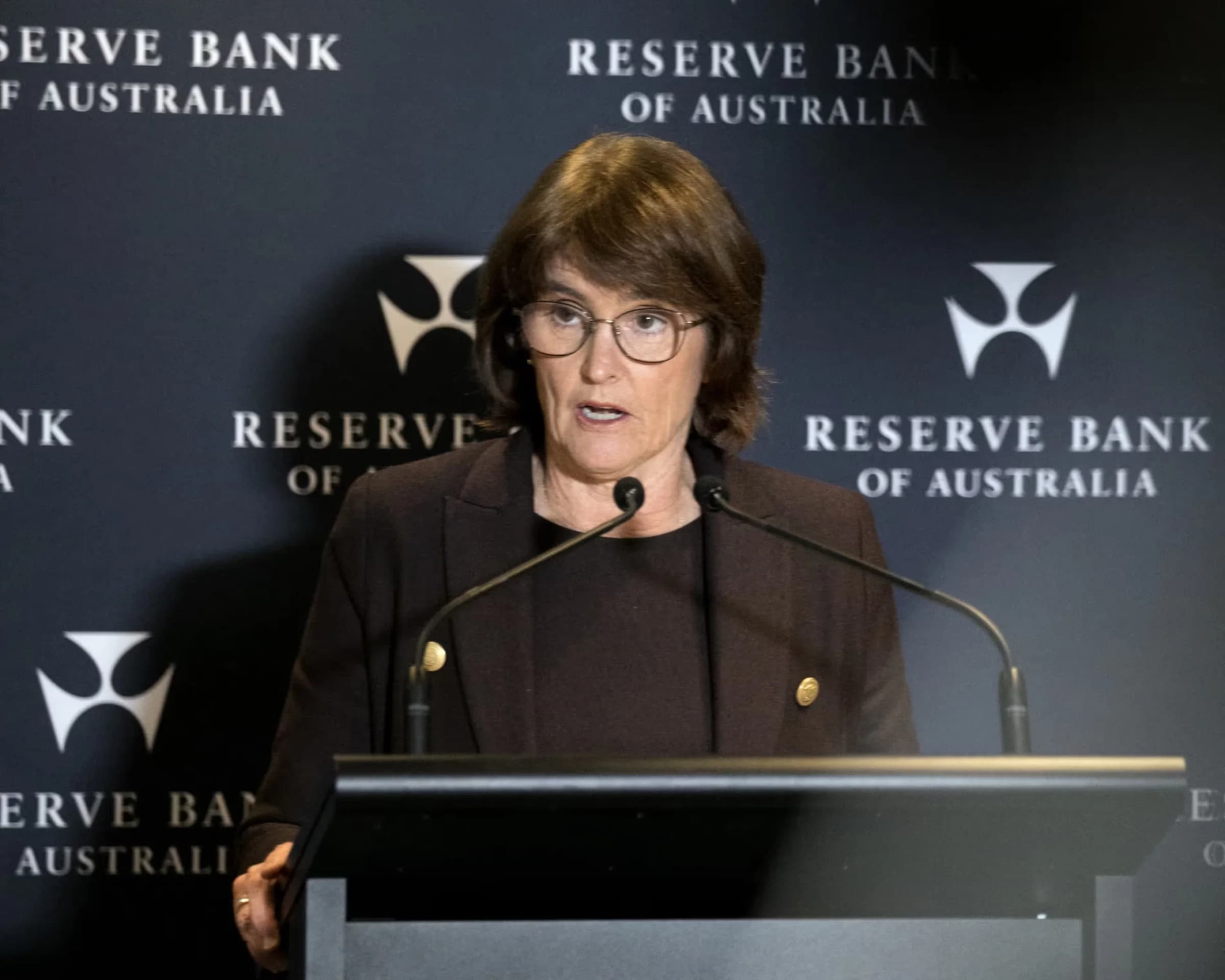
Reserve Bank of Australia (RBA) Governor Michele Bullock has defended the central bank’s cautious approach to monetary policy, rejecting suggestions that alternating between interest rate cuts and holds amounts to economic “whiplash”. Speaking at a press conference, Bullock said the RBA’s strategy was both “sensible” and “cautious” in its efforts to bring inflation under control. “What’s really important is that we get this underlying inflation, which is ultimately where headline inflation will end up … down,” Bullock said. “Now, I wouldn’t say cut, hold, cut, hold is whiplash. I would say
Reserve Bank of Australia (RBA) Governor Michele Bullock has defended the central bank’s cautious approach to monetary policy, rejecting suggestions that alternating between interest rate cuts and holds amounts to economic “whiplash”. Speaking at a press conference, Bullock said the RBA’s strategy was both “sensible” and “cautious” in its efforts to bring inflation under control. “What’s really important is that we get this underlying inflation, which is ultimately where headline inflation will end up … down,” Bullock said. “Now, I wouldn’t say cut, hold, cut, hold is whiplash. I would say that’s a sensible, cautious approach to lowering interest rates in a sensible way.” According to The Guardian, Bullock also addressed past criticism of the RBA’s handling of inflation, noting that many had doubted the current economic outcome was possible. “You will recall maybe if you go back, a lot of people were criticising us for not going higher and not getting inflation down more quickly,” she said. “I think Australia has done remarkably well. Who would have said two years ago that we would be sitting here now with inflation at two something and unemployment at 4.1%? Not many people. We’re in a great position.” Despite optimism about domestic conditions, Bullock acknowledged that global developments, particularly under the Trump administration in the United States, could pose challenges for Australia’s economy. “Our judgement … is that there will be an impact on us – and that’s partly what’s driving some of the deflationary impact in our forecasts – but we’re not going to be anywhere near as badly impacted as some countries because we’re not as directly linked to the US,” Bullock explained. “Our fortunes are much more linked to China. And so that’s why a lot depends on what happens there.” She noted that the RBA had already considered multiple scenarios, including a potential trade war, in its May economic outlook. “We had, in May, forecast three different scenarios: trade peace, trade war, and something in the middle,” she said. “At the time, the country had been facing a disaster,” Bullock added, referencing widespread fears of a major escalation in global trade tensions. While a full-blown trade war has not materialised, Bullock cautioned that the global economic environment remains fragile. “It’s still much, much worse than it was before April,” she said. “World trade is going to be impacted.” The RBA remains focused on domestic performance while remaining alert to international developments that may influence Australia’s recovery path.



Comments
No comments yet. Be the first to share a thought.