
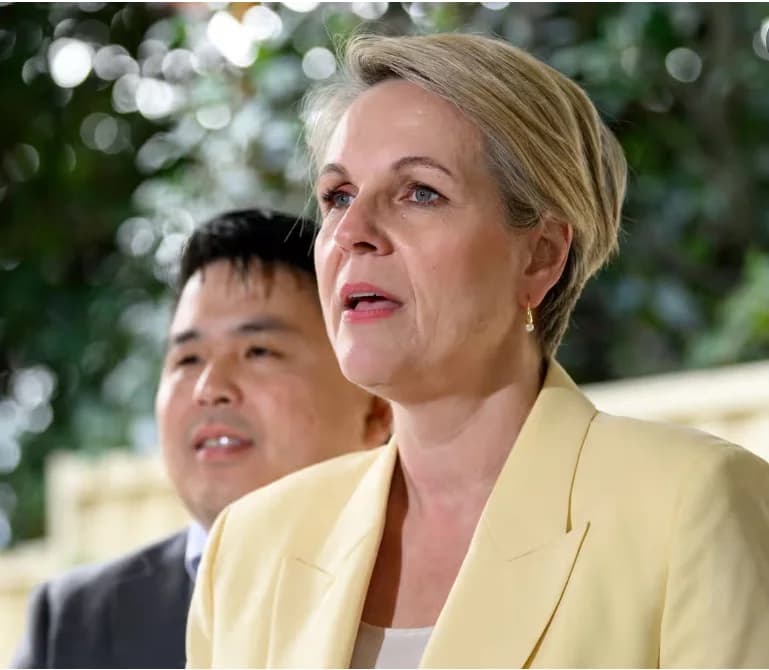
Labor frontbencher Tanya Plibersek has dismissed Liberal Party objections to gender quotas aimed at boosting female representation in federal politics, countering claims that Labor’s longstanding quota rules undermine democratic processes. According to the report by ABC News, as the Coalition launches a series of internal reviews following its decisive election defeat on 3 May, shadow defence minister Angus Taylor, [an influential figure within the NSW conservative wing of the Liberal Party] rejected proposed changes to preselection rules that would promote more women into winnable seats. Tay
Labor frontbencher Tanya Plibersek has dismissed Liberal Party objections to gender quotas aimed at boosting female representation in federal politics, countering claims that Labor’s longstanding quota rules undermine democratic processes. According to the report by ABC News, as the Coalition launches a series of internal reviews following its decisive election defeat on 3 May, shadow defence minister Angus Taylor, [an influential figure within the NSW conservative wing of the Liberal Party] rejected proposed changes to preselection rules that would promote more women into winnable seats. Taylor argued that quotas “subvert democratic processes,” advocating instead for strategies such as mentoring, recruitment, and broader support for women. Plibersek responded in an interview with ABC TV, asserting that Labor’s quota system had successfully delivered gender parity, while women still made up less than a third of the Liberal parliamentary cohort. “They’ve got a quota of National party MPs that have to be on the frontbench,” Plibersek said. “So, they’re happy to have quotas for National party MPs. It’s just quotas for women that they’re not prepared to use. Does Angus Taylor really want people to believe that the 28 most talented Liberals in the whole country are the people who’ve made it into the federal parliament?” She also noted that the Liberal Party had failed to follow through on a non-binding target set after the 2022 election to reach 50% female representation. In contrast, Labor introduced binding quotas in 1994 and has since strengthened those rules to ensure female participation. Opposition leader Sussan Ley last week addressed the National Press Club, vowing to prioritise the recruitment of women to the Liberal Party, describing herself as a “zealot” for the cause. While Ley became the first woman to lead the Liberals, she remained noncommittal on the necessity of quotas, stating that preselection decisions were a matter for state divisions. “Our party must preselect more women in winnable seats so that we see more Liberal women in federal parliament,” Ley said. “Current approaches have clearly not worked, so I am open to any approach that will.” Taylor echoed Ley’s sentiments on Sunday, acknowledging the need for more female MPs and members across the party. “The key thing that we all absolutely agree on here is we have to mobilise a grassroots movement across our side of politics for the things we believe in,” he told Sky News. “That means having people who are representative of their communities, representative of the community here in Australia and we need to find every possible way to do that.” However, Taylor maintained his position against quotas, calling instead for a “sensible debate” on increasing women’s participation. “I’ve never been a believer in quotas to achieve that but it's clear we have to take proactive action to achieve that,” he said. A formal post-election review is being spearheaded by former Howard government minister Nick Minchin and ex-NSW state minister Pru Goward. Separately, Queensland LNP senator James McGrath is expected to lead an internal review into the party’s structure. Meanwhile, Liberal frontbencher Julian Leeser has suggested primary contests in preselections as an alternative to quotas. However, prominent Liberals such as former minister Simon Birmingham and NSW senator Maria Kovacic have come out in support of a mandated quota system to avoid future electoral defeats. The NSW Liberal Women’s Council is scheduled to debate the issue of gender quotas at an upcoming meeting in Sydney. The Liberal Party currently reserves designated positions on its federal council for the chairs of internal groups such as the Federal Women’s Council and the Young Liberals.



Comments
No comments yet. Be the first to share a thought.