
This past weekend, Australia’s cities became the stage for a national reckoning. Under the banner of the “March for Australia,” thousands rallied in Sydney, Melbourne, Brisbane, Adelaide, and Perth to oppose immigration — demonstrations that quickly revealed deep fractures in the country’s social fabric. Organizers claimed to be speaking for “ordinary Australians,” yet the rallies were marked by the presence of racist slogans, anti-immigrant chants, and even neo-Nazi symbols. Such imagery evoked painful reminders of the country’s exclusionary past, when the White Australia policy shaped natio
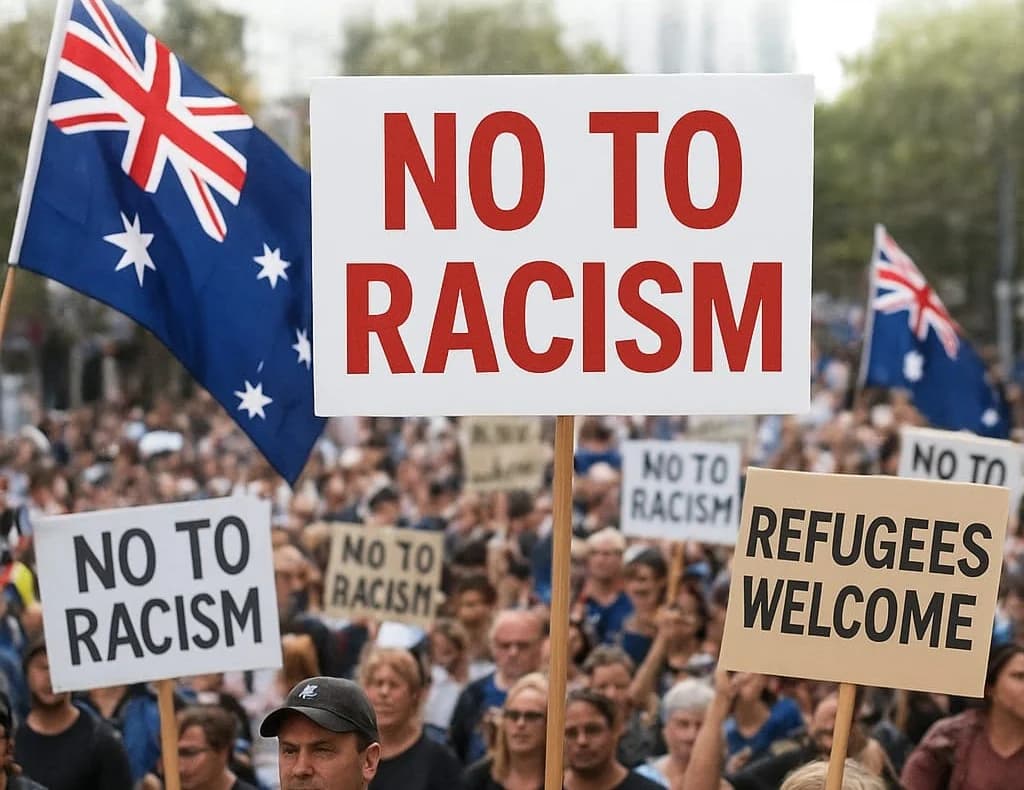
This past weekend, Australia’s cities became the stage for a national reckoning. Under the banner of the “March for Australia,” thousands rallied in Sydney, Melbourne, Brisbane, Adelaide, and Perth to oppose immigration — demonstrations that quickly revealed deep fractures in the country’s social fabric. Organizers claimed to be speaking for “ordinary Australians,” yet the rallies were marked by the presence of racist slogans, anti-immigrant chants, and even neo-Nazi symbols. Such imagery evoked painful reminders of the country’s exclusionary past, when the White Australia policy shaped national identity by keeping migrants out. Police prepared for unrest, deploying in large numbers — over 800 officers in Sydney alone. While many protests remained relatively calm, tensions flared into clashes in some cities as marchers encountered opposition on the streets. Equally visible were the counter-protests. Refugee advocates, multicultural groups, and human rights defenders marched in solidarity with migrants, chanting “Refugees are welcome here” and “No to racism.” Their message was clear: Australia’s future lies in diversity, not division. These voices challenged the narrative of exclusion, reminding the nation that immigration has long been central to Australia’s growth, culture, and prosperity. The federal government condemned the anti-immigration rallies, denouncing them as being fueled by hate speech and extremism. Political leaders and commentators warned that normalizing such rhetoric risks emboldening far-right ideologies at a time when social cohesion is already under pressure. For many Australians, however, the weekend also offered hope. The large turnouts at counter-rallies showed a society unwilling to let fear and xenophobia define its identity. These demonstrations were not just about immigration policy. They laid bare a larger question facing the nation: What kind of Australia do we want to be? One pulled backward by the politics of fear, or one that embraces the richness of its multicultural reality?



Comments
No comments yet. Be the first to share a thought.