
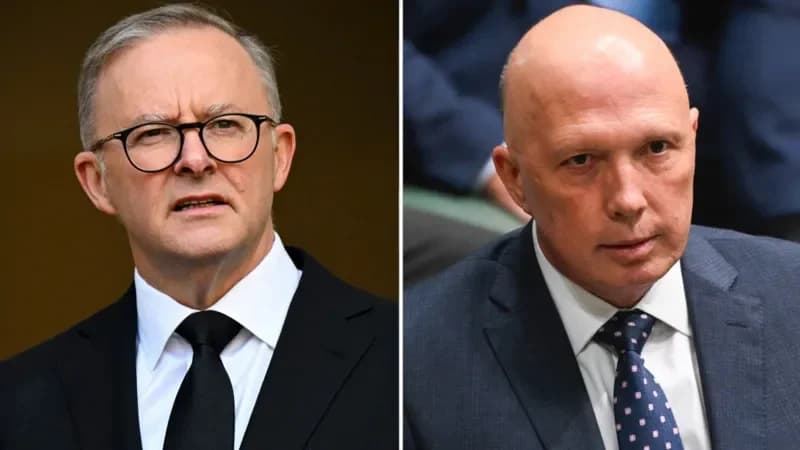
Australia will hold its federal election on May 3, 2025, following an announcement by Prime Minister Anthony Albanese after visiting Governor-General Sam Mostyn in Canberra. This marks the beginning of a five-week campaign in what is expected to be a closely contested race between the incumbent Labor Party and the Liberal-National Coalition, led by opposition leader Peter Dutton. Opinion polls indicate a tight margin between the two major parties, raising the possibility of a hung parliament, where neither side secures the 76 seats needed for a majority. If this happens, both parties may have
Australia will hold its federal election on May 3, 2025, following an announcement by Prime Minister Anthony Albanese after visiting Governor-General Sam Mostyn in Canberra. This marks the beginning of a five-week campaign in what is expected to be a closely contested race between the incumbent Labor Party and the Liberal-National Coalition, led by opposition leader Peter Dutton. Opinion polls indicate a tight margin between the two major parties, raising the possibility of a hung parliament, where neither side secures the 76 seats needed for a majority. If this happens, both parties may have to negotiate with independents and minor parties, whose influence has been growing in recent years. The election campaign is expected to focus on issues such as the cost of living, housing affordability, healthcare access, and economic stability. The Australian public has faced significant financial pressure in recent years, with 12 interest rate hikes impacting households. However, a recent rate cut by the central bank has provided some relief. According to Reuters, Prime Minister Albanese is focusing on his government's efforts to navigate global economic challenges, promising free doctor visits, small tax cuts, and continued investment in public services. He warns that electing Peter Dutton would be a step backward for the country, saying, "This election is a choice between Labor's plan to keep building or Peter Dutton's promise to cut." Peter Dutton, a former police officer and senior minister with over 20 years of parliamentary experience, has positioned himself as a strong economic manager. He argues that Albanese’s government has failed to improve the lives of Australians and promises to revive the economy by: Cutting public service costs Lowering fuel prices Improving Australia’s energy security Dutton has also taken a hardline stance on immigration, crime reduction, and cultural issues, seeking to appeal to conservative voters while softening his public image to attract moderates. Climate change remains a key electoral issue, although its prominence has declined compared to the 2022 election. Labor continues to push for renewable energy investments and aims to achieve net-zero emissions by 2050. The Coalition, on the other hand, supports nuclear energy and gas-fired power plants, arguing that a mix of traditional and renewable energy sources will provide greater energy security. One of the biggest uncertainties in this election is the role of independents and minor parties. In 2022, they won a record share of votes, and their influence may once again shape the formation of the next government. If neither major party secures a majority, negotiations with these smaller parties will be crucial. Australia has not removed a first-term government in almost a century. However, economic uncertainty and voter dissatisfaction could make this election a historic turning point. Labor is fighting to retain power, while the Coalition is determined to return to government after just one term in opposition. As Australians prepare to vote, the nation faces one of its most unpredictable elections in years. With economic concerns at the forefront, the outcome will have significant implications for the country’s future direction.



Comments
No comments yet. Be the first to share a thought.