
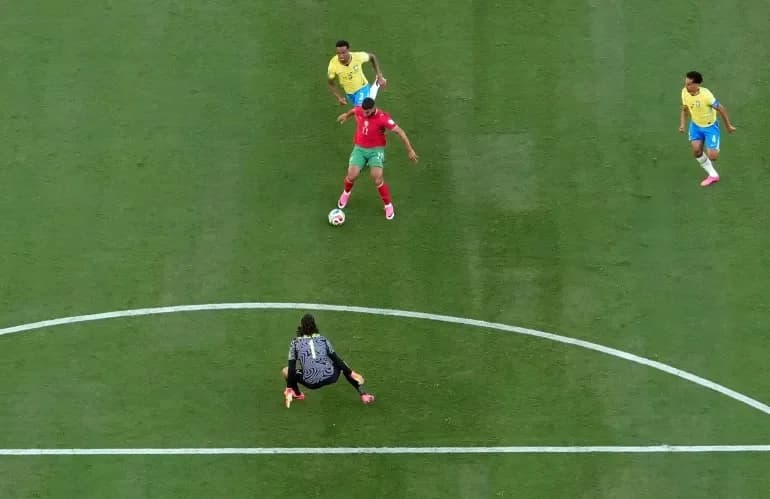
The opening clash of Group C at the 2026 FIFA World Cup delivered everything expected of a heavyweight encounter, as Brazil national football team and Morocco national football team played out an entertaining 1–1 draw at the New York–New Jersey Stadium in East Rutherford. It was a match defined by momentum swings, tactical discipline, and moments of individual brilliance, with both sides left reflecting on what might have been. Morocco strike first, Brazil respond in style Morocco began with intensity and confidence, pressing high and controlling possession in the early stages. Their reward c
The opening clash of Group C at the 2026 FIFA World Cup delivered everything expected of a heavyweight encounter, as Brazil national football team and Morocco national football team played out an entertaining 1–1 draw at the New York–New Jersey Stadium in East Rutherford. It was a match defined by momentum swings, tactical discipline, and moments of individual brilliance, with both sides left reflecting on what might have been. Morocco strike first, Brazil respond in style Morocco began with intensity and confidence, pressing high and controlling possession in the early stages. Their reward came in the 21st minute when Ismael Saibari latched onto a precise through ball from Brahim Díaz, calmly lifting the ball over Alisson Becker to give the Atlas Lions a deserved lead. Brazil, however, responded like champions. After weathering the early storm, they grew into the game and found their equaliser in spectacular fashion. In the 32nd minute, Vinícius Júnior cut in from the left and curled a sensational strike into the top corner, leaving Yassine Bounou with no chance. The goal, assisted by Bruno Guimarães, shifted the momentum firmly in Brazil’s favour going into halftime. Tactical battle unfolds after the break The second half saw Brazil take greater control of possession, with their midfield dictating tempo and width. Morocco, disciplined and compact, defended in numbers while looking dangerous on the counterattack. Both sides created half-chances in a tense final phase. Brazil introduced fresh attacking options to increase pressure, while Morocco adjusted their shape to maintain balance and resist the growing Brazilian threat. Despite several promising moments including late corners, long-range efforts, and a dramatic stoppage-time push neither side could find a decisive breakthrough. Goalkeepers shine under pressure The match also highlighted the importance of both goalkeepers. Alisson Becker made key interventions to deny Morocco’s quick transitions, while Yassine Bounou remained composed under sustained pressure, particularly in the second half. A statement draw in Group C The final whistle confirmed a 1–1 draw an outcome that reflects both Morocco’s tactical maturity and Brazil’s attacking quality. For Morocco, the performance reinforces their growing reputation as a serious force on the world stage. For Brazil, it is a reminder that even moments of brilliance must be matched with consistency over 90 minutes. In the context of the tournament, both teams leave with a valuable point but also with clear lessons as the 2026 World Cup group stage unfolds.



Comments
No comments yet. Be the first to share a thought.