
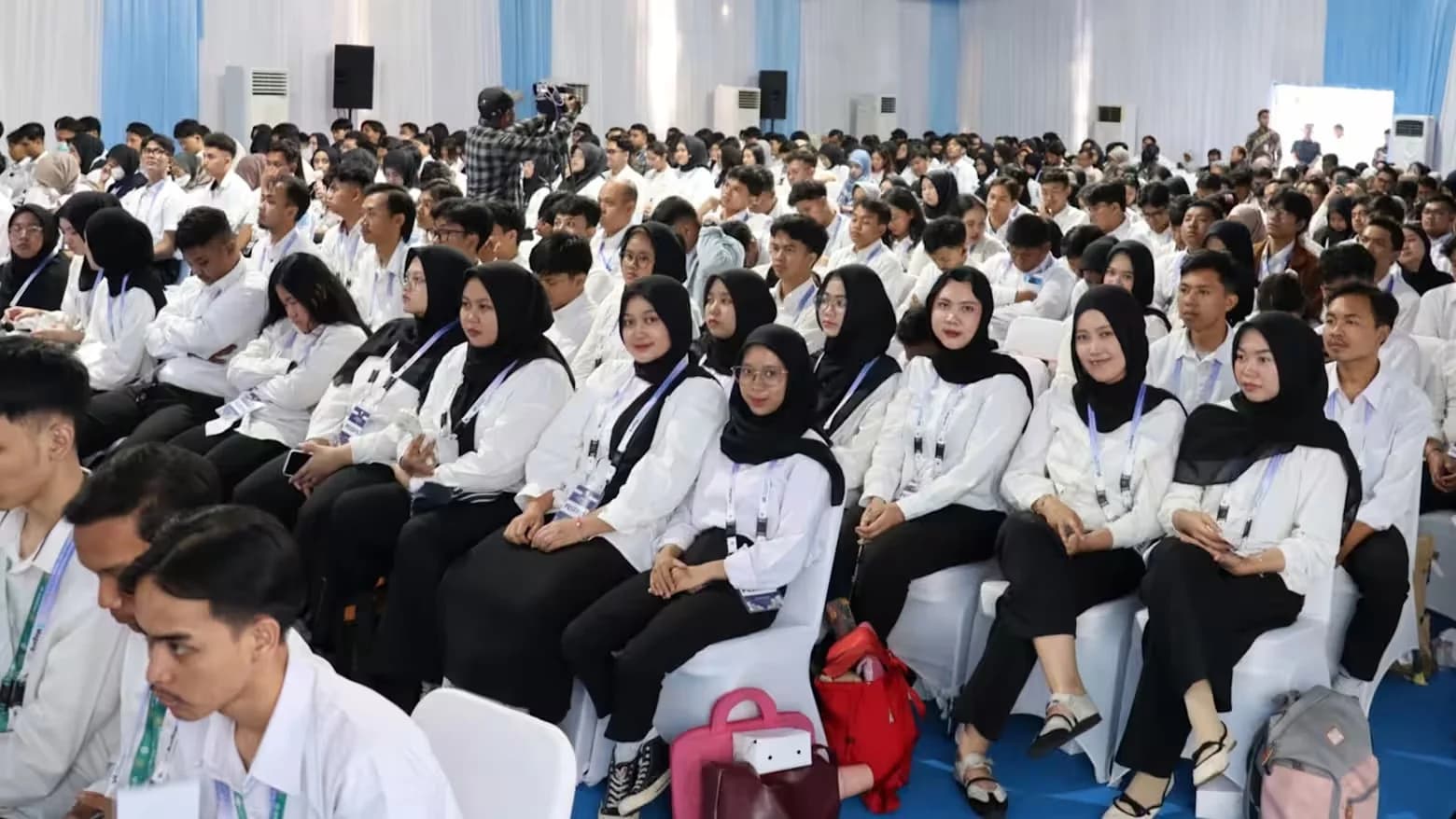
Indonesia has launched a government-subsidized internship program aimed at addressing rising youth unemployment, which remains nearly three times higher than the national average. The initiative targets recent university graduates, offering them paid work experience while easing hiring costs for companies, as the government looks for practical solutions to a tightening job market. The program comes at a time when Indonesia’s economy, while relatively stable on paper, has struggled to generate enough quality jobs for young people entering the workforce each year. Thousands of graduates leave u
Indonesia has launched a government-subsidized internship program aimed at addressing rising youth unemployment, which remains nearly three times higher than the national average. The initiative targets recent university graduates, offering them paid work experience while easing hiring costs for companies, as the government looks for practical solutions to a tightening job market. The program comes at a time when Indonesia’s economy, while relatively stable on paper, has struggled to generate enough quality jobs for young people entering the workforce each year. Thousands of graduates leave universities annually with academic qualifications but limited practical experience, a gap employers frequently cite as a barrier to recruitment. Under the scheme, the government covers part of the cost of internships, allowing companies to take on graduates for a fixed period with reduced financial risk. Officials argue that this approach benefits both sides: young people gain hands-on experience and professional networks, while employers can assess potential employees before committing to long-term contracts. Participants in the program have already begun attending government-organized events in major cities such as Jakarta, where they receive orientation, skills training and placement support. Authorities hope the exposure will improve graduates’ employability and reduce the mismatch between education and labor market needs. However, the initiative has also raised questions about its long-term impact. Labor experts warn that internships, if not carefully regulated, risk becoming a substitute for permanent employment rather than a pathway to it. Without clear incentives for companies to convert interns into full-time staff, critics argue the program could lead to a cycle of temporary placements with limited job security. Others point out that internships alone cannot solve structural issues in Indonesia’s labor market, including slow job creation in high-value sectors and uneven economic development across regions. They stress the need for complementary policies, such as stronger industrial investment, improved vocational training and closer cooperation between universities and employers. The government maintains that the internship scheme is only one part of a broader employment strategy. Officials say they will monitor outcomes closely, including how many interns transition into permanent roles, and adjust the program if necessary. As youth unemployment continues to pose social and economic risks, Indonesia’s experiment with subsidized internships will be closely watched — both as a short-term relief measure and as a test of whether work experience programs can deliver lasting jobs for the country’s next generation.



Comments
No comments yet. Be the first to share a thought.