
The European Union has signaled a major shift in its relationship with Canada, with European Commission President Ursula von der Leyen announcing that the bloc is prepared to explore making Canada its first-ever associate member . The announcement came on Wednesday, September 16, during von der Leyen’s annual State of the European Union address in Strasbourg, France, where Canadian Prime Minister Mark Carney was present. Von der Leyen said the EU wants to take its relationship with Canada “to the highest level possible,” proposing that both sides work toward opening the door to a new form of
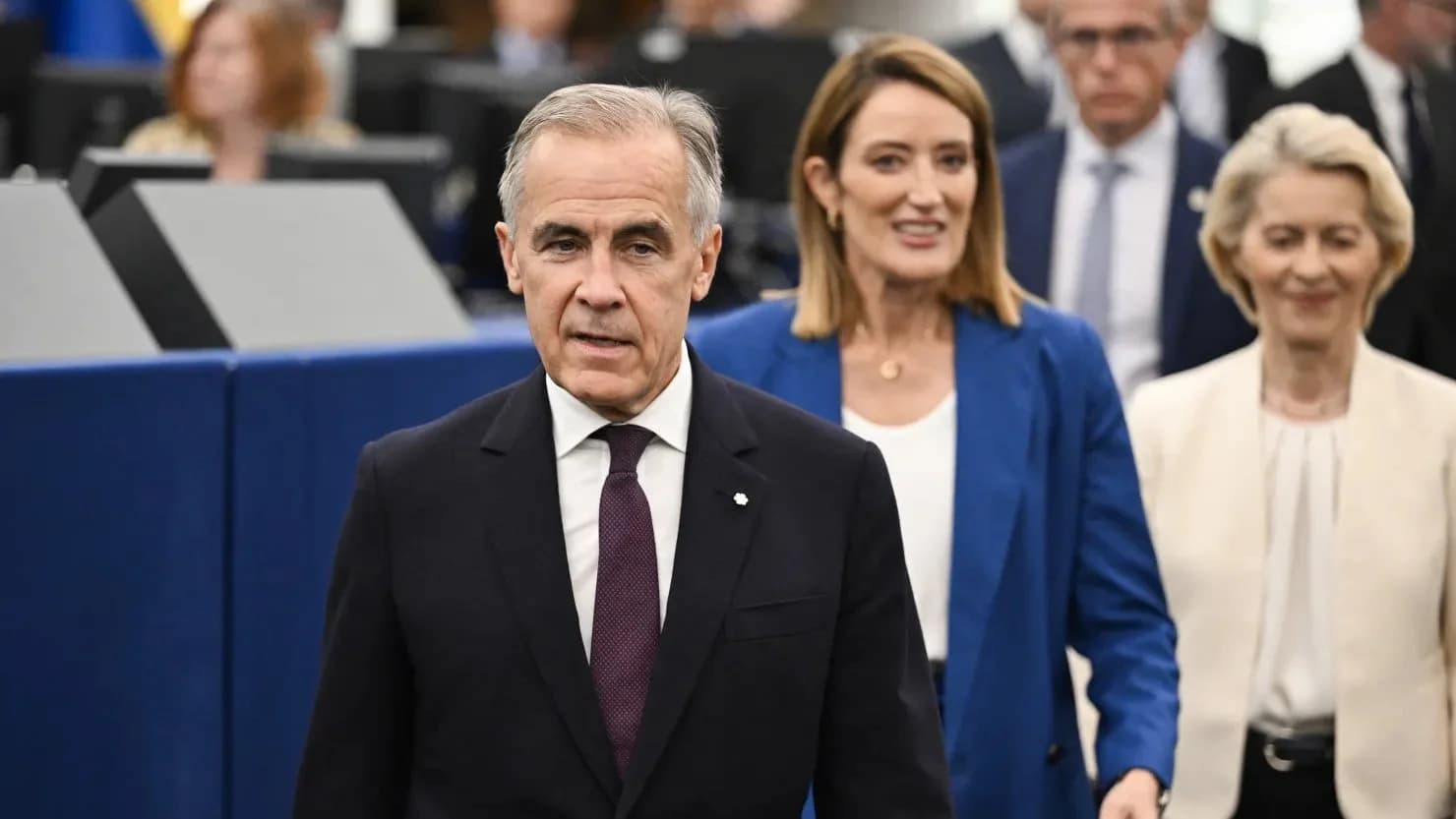
The European Union has signaled a major shift in its relationship with Canada, with European Commission President Ursula von der Leyen announcing that the bloc is prepared to explore making Canada its first-ever associate member. The announcement came on Wednesday, September 16, during von der Leyen’s annual State of the European Union address in Strasbourg, France, where Canadian Prime Minister Mark Carney was present. Von der Leyen said the EU wants to take its relationship with Canada “to the highest level possible,” proposing that both sides work toward opening the door to a new form of European association. Carney has previously expressed interest in establishing a closer economic and security partnership with Europe, while making clear that Canada is not seeking full EU membership. The proposal comes at a time when Canada is facing growing trade tensions with the United States. Ottawa has pledged to respond to U.S. tariffs and is increasingly looking to strengthen economic relationships beyond its traditional dependence on the American market. For Europe, Canada could become an important partner in areas ranging from trade and technology to defence, climate policy and Arctic security. The EU and Canada already have a major economic framework through the Comprehensive Economic and Trade Agreement (CETA). The agreement, which began provisional implementation in 2017, removed tariffs on 99% of tariff lines between the two sides. Von der Leyen now wants the relationship to move beyond the existing trade agreement, describing the goal as creating a shared space for economic security and prosperity. Canada's importance to Europe extends beyond trade. Its geographic position gives it a strategic role in the Arctic, while its natural resources, technological capabilities and membership in Western security institutions make it a significant potential European partner. The proposal also reflects a broader European effort to strengthen relationships with countries that share democratic institutions and strategic interests. Berenberg chief economist Holger Schmieding told CNBC that the initiative represents a significant step as Europe seeks deeper partnerships while reducing its dependence on major powers such as the United States and China. The idea of expanding Europe's network of close partnerships has gained momentum in recent months. Finnish President Alexander Stubb previously suggested that the EU should think more broadly about its future membership and relationships, identifying Canada alongside countries including the United Kingdom, Norway, Iceland and Turkey. Carney has repeatedly argued that so-called middle powers need to cooperate more closely in a world increasingly shaped by competition among major powers. That argument is becoming particularly relevant as governments reassess supply chains, trade relationships, defence cooperation and access to strategic resources. European Parliament trade committee chair Bernd Lange said stronger relationships with countries such as Canada, Brazil, Indonesia, Japan and South Korea could help Europe build a broader network of economic partnerships. For Canada, the proposed EU relationship could provide another avenue for trade and strategic cooperation at a moment of heightened uncertainty in its relationship with Washington. For the EU, Canada offers a large democratic economy, extensive natural resources and a strategic presence in the Arctic. The proposal does not mean Canada has joined the European Union. Instead, it opens discussions around a new category of cooperation that could give Canada a closer relationship with the bloc while remaining outside full EU membership. The next stage will be turning the political proposal into a concrete framework defining what associate membership would actually mean for Canada and the European Union.



Comments (2)
Good to see this covered. Keep it up, Hobe News.
This is worrying. Thanks for keeping us informed.