
Australia’s largest lender says fraudulent mortgages uncovered in internal probe are secured, as industry grapples with rise of AI-powered financial crime. Australia’s biggest bank has called in law enforcement after uncovering up to $1 billion in suspected fraudulent home loans, many allegedly supported by artificial intelligence-generated documents. Penthouse Syndicate allegedly defrauded National Australia Bank (NAB) of around $150 million to purchase high-end In a statement to local media, Commonwealth Bank of Australia (CBA) confirmed it had escalated the matter to police following a
Australia’s largest lender says fraudulent mortgages uncovered in internal probe are secured, as industry grapples with rise of AI-powered financial crime. Australia’s biggest bank has called in law enforcement after uncovering up to $1 billion in suspected fraudulent home loans, many allegedly supported by artificial intelligence-generated documents.
Penthouse Syndicate allegedly defrauded National Australia Bank (NAB) of around $150 million to purchase high-end
In a statement to local media, Commonwealth Bank of Australia (CBA) confirmed it had escalated the matter to police following an internal investigation into irregularities within its mortgage book. The probe began last year after revelations that a criminal network known as the Penthouse Syndicate allegedly defrauded National Australia Bank (NAB) of around $150 million to purchase high-end properties. While the suspected CBA fraud is believed to be separate from the NAB-linked scheme, allegedly orchestrated by former banker Andrew Hu, investigators have not ruled out possible overlaps.
Loans Secured, No Immediate Losses
Despite the scale of the exposure, CBA said it has not suffered direct financial losses. The mortgages in question are reportedly being serviced and remain secured against properties that could be sold if required. If confirmed, the $1 billion figure would represent the largest fraud case in Australian banking history. The bank has not disclosed how many loans are under scrutiny, but described the issue as part of a broader, industry-wide escalation in attempted financial crime.
AI-Generated Forgeries Under Spotlight
The investigation comes amid growing concern over the use of generative artificial intelligence to fabricate financial documents, create synthetic identities, and produce convincing deepfakes.
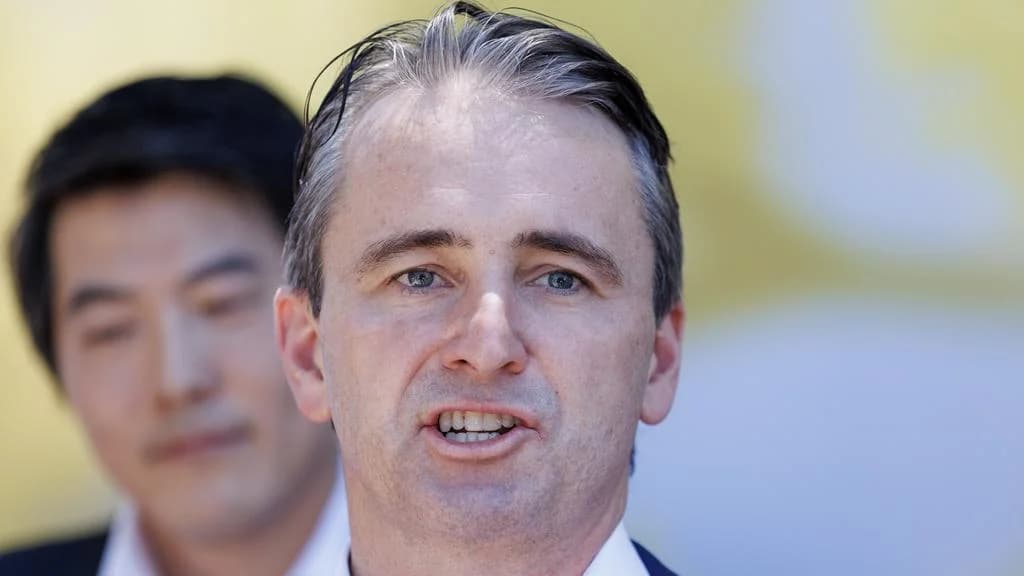
CBA chief executive Matt Comyn announced 300 job cuts as the bank makes a $90 million pivot to artificial intelligence
CBA recently announced 300 job cuts as part of a $90 million technology pivot aimed at expanding its AI capabilities. Chief executive Matt Comyn said businesses must prepare for a future in which AI plays a far greater operational role.
“Australia has to get really good at adopting this technology and whatever follows it,” Comyn said, noting that the bank had been planning for increased AI integration for some time. Industry experts warn that while AI can streamline services and reduce costs, it also lowers the barrier for sophisticated. Penny Dunn, a forensics and financial crime partner at PwC, said artificial intelligence enables “more sophisticated documentation forgery” as well as synthetic identities and deepfakes that are nearly indistinguishable from legitimate records.“It’s very difficult for the human eye to see,” she told Australian media.
Industry-Wide Challenge
A CBA spokesperson said the banking sector is facing “sustained and increasing levels of attempted fraud,” driven by criminals who are constantly refining their techniques.

generative artificial intelligence to fabricate financial documents, create synthetic identities, are the main reason for concern
“This is an industry-wide challenge, with fraud being attempted through mortgage broking and referral channels,” the spokesperson said. The bank said it invested $900 million in the last financial year to strengthen protections against fraud, scams, cyber threats, and financial crime.
Australians Overconfident in Spotting Deepfakes
Separate research commissioned by CBA suggests many Australians overestimate their ability to detect AI-driven deception. While 89 per cent of respondents believed they could identify a deepfake, only 42 per cent successfully distinguished between a real person and an AI-generated image when tested. CBA general manager James Roberts warned that the rapid improvement in AI-generated audio and visuals makes high-quality scams increasingly difficult to detect. “As deepfake scams have evolved, the quality of them has gotten better,” he said. “While AI can be used for millions of legitimate reasons, unfortunately criminals are using generative AI as well.”
Regulatory Pressure Mounting
The case is likely to intensify regulatory scrutiny over lending standards, identity verification processes, and AI governance within Australia’s financial system. With banks accelerating digital transformation strategies, the challenge will be balancing technological innovation with robust risk controls — particularly as generative AI tools become more accessible and more convincing. For now, the police investigation continues, with CBA insisting customer deposits remain protected and the bank’s balance sheet secure.



Comments
No comments yet. Be the first to share a thought.