
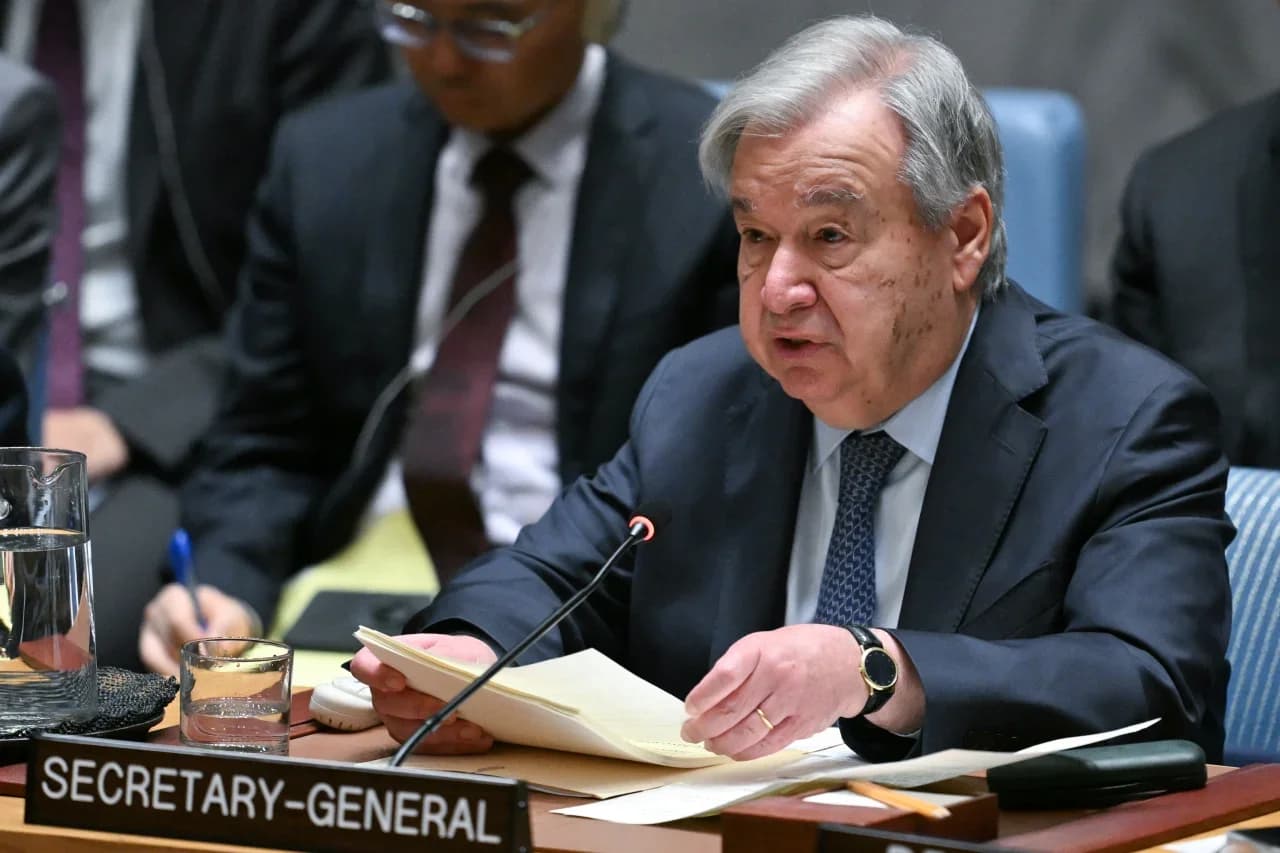
The United Nations Secretary-General has issued a strong warning about the reality of modern ceasefires, saying that what is often described as a “ceasefire” is in many cases “more like a lesser fire” rather than a true end to conflict. The statement highlights a growing concern within the UN that agreements meant to stop fighting are frequently fragile, incomplete, or poorly respected by conflicting parties. Instead of bringing full peace, some ceasefires only reduce the intensity of violence, while sporadic clashes, airstrikes, or armed incidents continue in different areas. According to t
The United Nations Secretary-General has issued a strong warning about the reality of modern ceasefires, saying that what is often described as a “ceasefire” is in many cases “more like a lesser fire” rather than a true end to conflict. The statement highlights a growing concern within the UN that agreements meant to stop fighting are frequently fragile, incomplete, or poorly respected by conflicting parties. Instead of bringing full peace, some ceasefires only reduce the intensity of violence, while sporadic clashes, airstrikes, or armed incidents continue in different areas. According to the UN chief, this situation reflects the complexity of today’s conflicts, where formal agreements may exist on paper but do not always translate into real peace on the ground. Civilians in affected regions often continue to face insecurity, displacement, and humanitarian suffering despite announcements of a ceasefire. The remarks also underline the challenge facing international mediators who work to enforce peace deals. Monitoring violations, ensuring compliance, and building trust between rival sides remain major obstacles. Humanitarian organizations have echoed similar concerns, noting that even “reduced violence” can still cause significant harm, especially in densely populated areas where infrastructure and services are already weakened. The UN continues to call for durable peace agreements that go beyond temporary pauses in fighting and address the root causes of conflict, including political tensions, territorial disputes, and social divisions. In summary, the Secretary-General’s message emphasizes that a ceasefire is not always a true peace—it can sometimes be only a pause in a much longer and ongoing conflict.



Comments
No comments yet. Be the first to share a thought.