
The Democratic Republic of Congo (DRC) is facing a rapidly escalating Ebola outbreak that has now surpassed 1,000 suspected infections, prompting China to join a widening international emergency response involving major global health actors. Beijing has announced it will dispatch emergency medical teams and humanitarian aid to support Congo’s containment efforts as concerns grow that the outbreak could spread further across Central and East Africa. The outbreak, first declared in May, is concentrated in eastern DRC’s Ituri, North Kivu, and South Kivu provinces, with spillover cases also repo
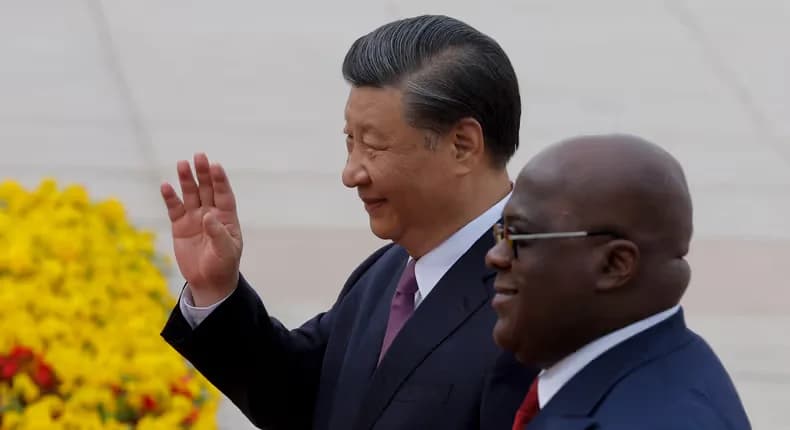
The Democratic Republic of Congo (DRC) is facing a rapidly escalating Ebola outbreak that has now surpassed 1,000 suspected infections, prompting China to join a widening international emergency response involving major global health actors. Beijing has announced it will dispatch emergency medical teams and humanitarian aid to support Congo’s containment efforts as concerns grow that the outbreak could spread further across Central and East Africa. The outbreak, first declared in May, is concentrated in eastern DRC’s Ituri, North Kivu, and South Kivu provinces, with spillover cases also reported in neighbouring Uganda. Health officials say the situation remains highly fluid, with confirmed cases significantly lower than suspected infections, raising fears that the true scale of transmission may be much larger than official figures show. According to the World Health Organization (WHO), at least 134 confirmed Ebola cases and 18 deaths have been recorded across the region so far. Global response intensifies China’s intervention adds to a growing international response that already includes the United States, European Union, Canada, WHO, Africa CDC, and the Bill & Melinda Gates Foundation. The coordinated effort focuses on strengthening surveillance, improving treatment capacity, and preventing further cross-border spread. Chinese Foreign Ministry spokesperson Lin Jian said Beijing would provide emergency humanitarian assistance and send medical experts to help strengthen outbreak control measures in affected areas. Africa CDC has also activated a continent-wide response plan, warning that delays in containment could increase the risk of wider regional transmission. WHO Director-General Tedros Adhanom Ghebreyesus has repeatedly urged stronger international support, warning that the outbreak is advancing faster than response efforts in some high-risk zones. Challenges on the ground Health workers in eastern Congo are operating under extremely difficult conditions. Ongoing armed conflict, displacement of communities, and weak healthcare infrastructure continue to hinder testing, contact tracing, and patient care. The outbreak involves the Bundibugyo strain of Ebola, a relatively rare variant for which no licensed vaccine is currently available, complicating containment efforts further. WHO has also warned that funding gaps could undermine response operations at a critical stage, potentially allowing the virus to spread beyond current hotspots. Rising global concern and restrictions As international assistance increases, some countries, including the United States and Canada, have introduced travel and visa-related restrictions targeting individuals from affected regions. Several neighbouring states have also tightened border controls. However, WHO has cautioned against broad travel bans, arguing that they may disrupt humanitarian operations and discourage transparent reporting of new cases. The organization maintains that targeted surveillance, testing, and contact tracing remain the most effective tools for controlling Ebola transmission. China’s expanding health role in Africa China’s involvement reflects its growing role in global health diplomacy across Africa. Beijing says it has deployed more than 45 medical teams to African countries in recent years and continues to expand cooperation in disease prevention and emergency response. Officials say the latest deployment will also strengthen collaboration with the Africa CDC and the African Union Commission in building long-term epidemic preparedness across the continent. A race against time With suspected cases continuing to rise and health systems under strain, experts warn that the coming weeks will be critical in determining whether the outbreak can be contained or escalates into a broader regional health emergency. Beyond the immediate health impact, prolonged outbreaks in the region have historically disrupted trade, weakened economies, and placed additional pressure on already strained public finances. For now, global health agencies and international partners are racing to close funding gaps, strengthen response capacity, and prevent the virus from spreading further across borders.



Comments
No comments yet. Be the first to share a thought.