
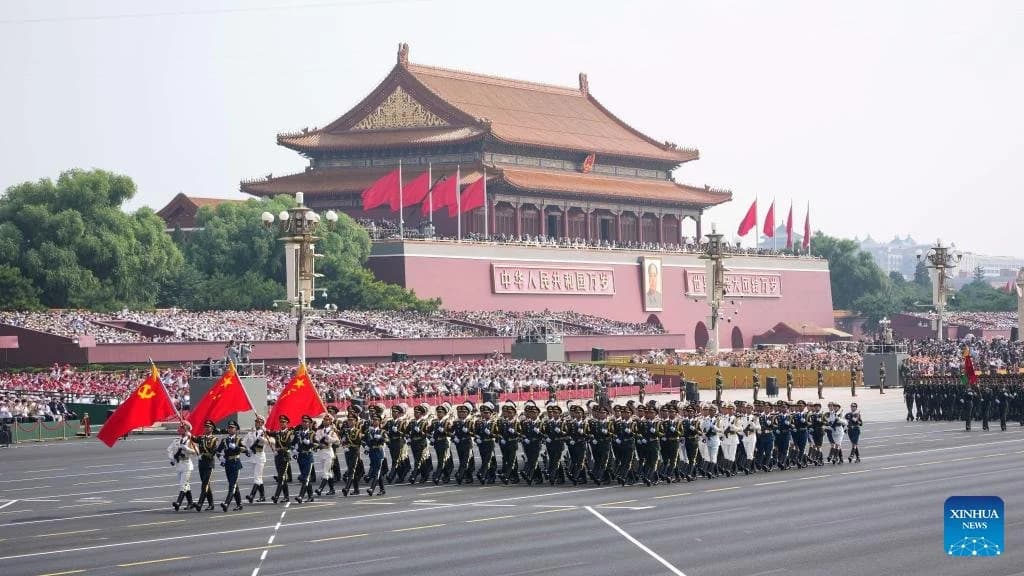
China showcased its military power on Wednesday with a massive parade in the capital, commemorating 80 years since the end of World War II. The event, held in Tiananmen Square, was the country’s largest military parade to date and drew more than 25 foreign leaders. President Xi Jinping, wearing a Mao-style suit, welcomed Russian President Vladimir Putin and North Korean leader Kim Jong Un as guests of honour. Kim’s teenage daughter, Kim Ju Ae, also attended, marking her first known international trip. The last time a North Korean leader joined a Chinese military parade was in 1959, when Kim I
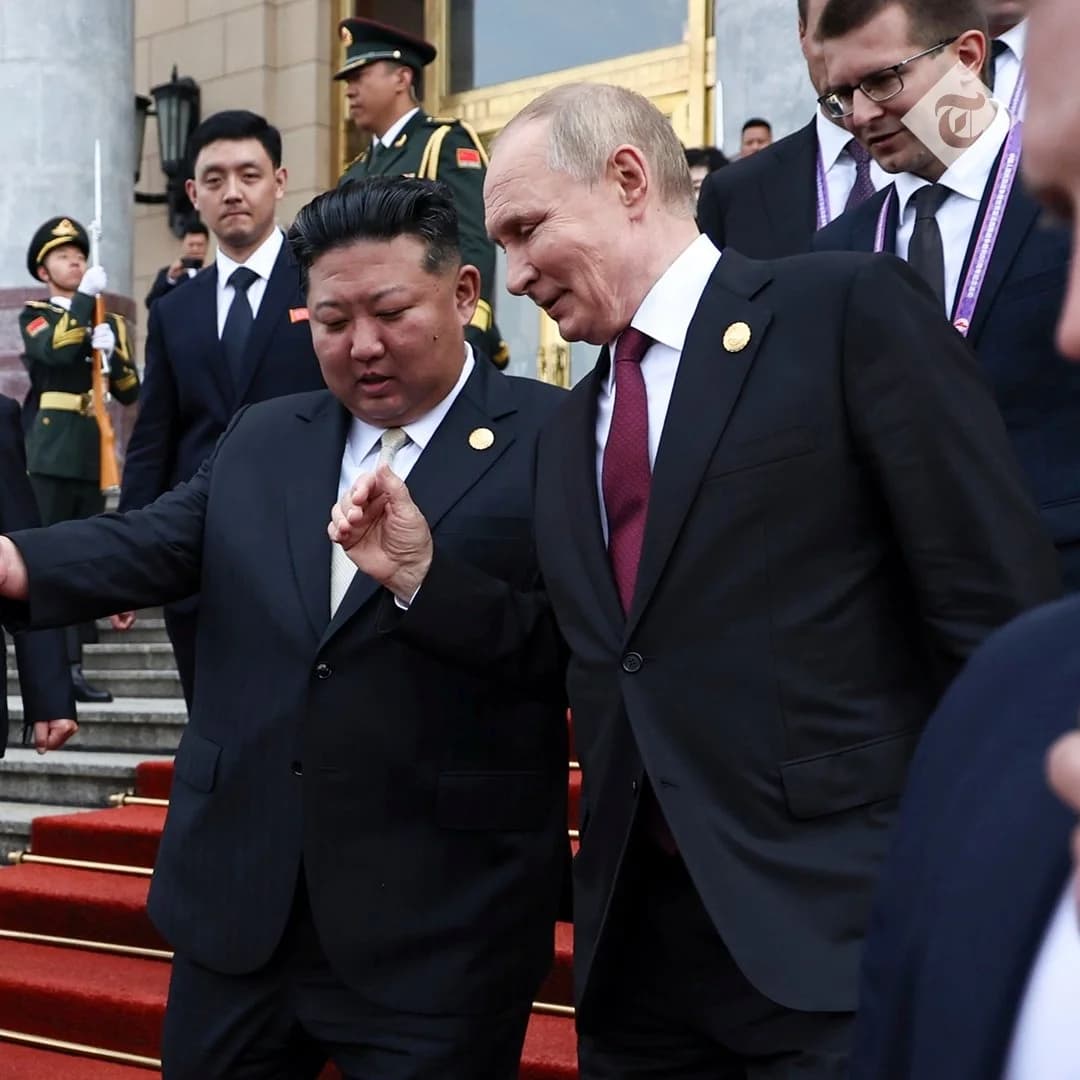
China showcased its military power on Wednesday with a massive parade in the capital, commemorating 80 years since the end of World War II. The event, held in Tiananmen Square, was the country’s largest military parade to date and drew more than 25 foreign leaders. President Xi Jinping, wearing a Mao-style suit, welcomed Russian President Vladimir Putin and North Korean leader Kim Jong Un as guests of honour. Kim’s teenage daughter, Kim Ju Ae, also attended, marking her first known international trip. The last time a North Korean leader joined a Chinese military parade was in 1959, when Kim Il Sung visited Beijing. Other leaders in attendance included Iranian President Masoud Pezeshkian, Pakistani Prime Minister Shehbaz Sharif, Mongolian President Khurelsukh Ukhnaa, Belarusian President Alexander Lukashenko, Myanmar’s military chief Min Aung Hlaing, Uzbek President Shavkat Mirziyoyev, Vietnamese President Luong Cuong, Malaysian Prime Minister Anwar Ibrahim, Maldivian President Mohamed Muizzu, Nepalese Prime Minister KP Sharma Oli, Zimbabwean President Emmerson Mnangagwa, and Indonesian President Prabowo Subianto. Europe was represented by Slovak Prime Minister Robert Fico and Serbian President Aleksandar Vucic.
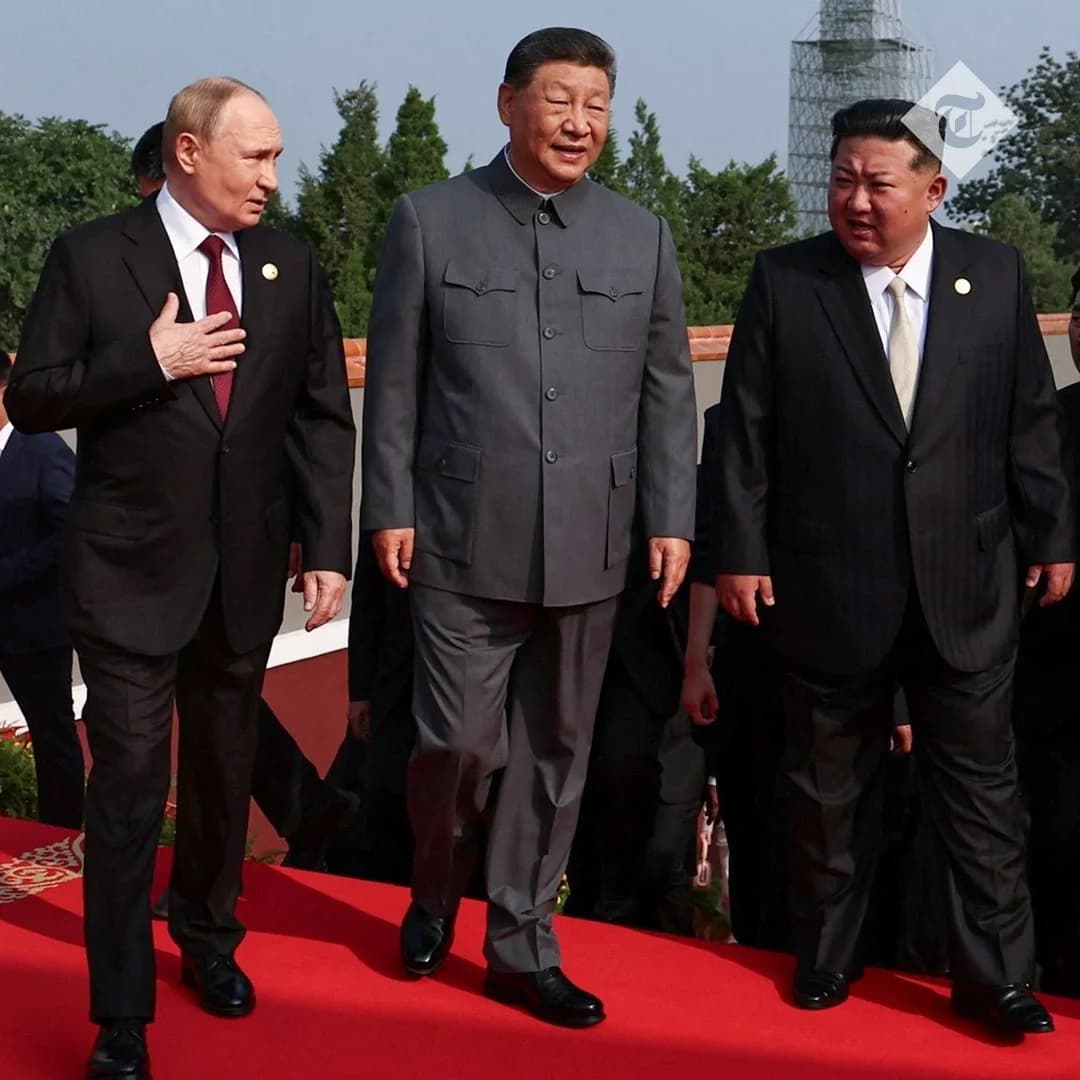
President Xi Jinping, wearing a Mao-style suit, welcomed Russian President Vladimir Putin and North Korean leader Kim Jong Un as guests of honour
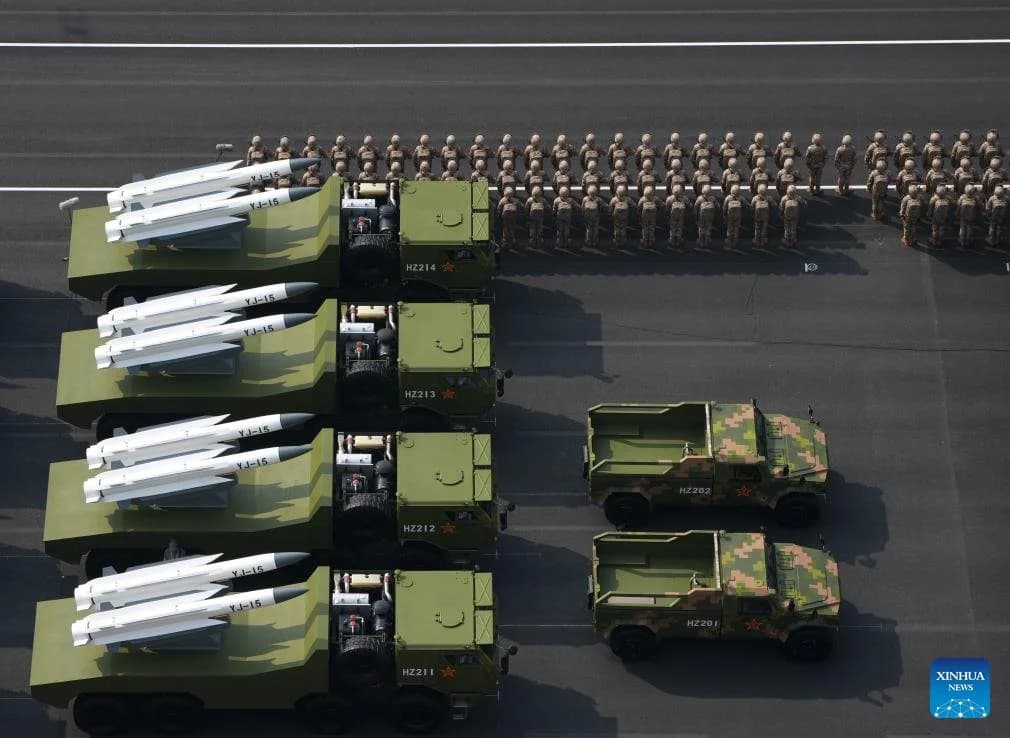
The parade featured an array of China’s most advanced weapons, including a complete display of its nuclear triad—land-, sea-, and air-launched missiles—unveiled for the first time. These included the Jinglei-1 long-range air-based missile, Julang-3 submarine-launched missile, and the Dongfeng-31 and Dongfeng-61 intercontinental ballistic missiles. China also demonstrated its hypersonic antiship weapons, such as the Yingji-17, Yingji-19, and Yingji-20, reportedly tested against mock U.S. aircraft carriers. Additional displays featured underwater-capable drones, unmanned helicopters designed for ship launches, cruise missiles including the Changjian-20A and Changjian-1000, and hypersonic systems like the Yingji-21, Dongfeng-17, and Dongfeng-26D.
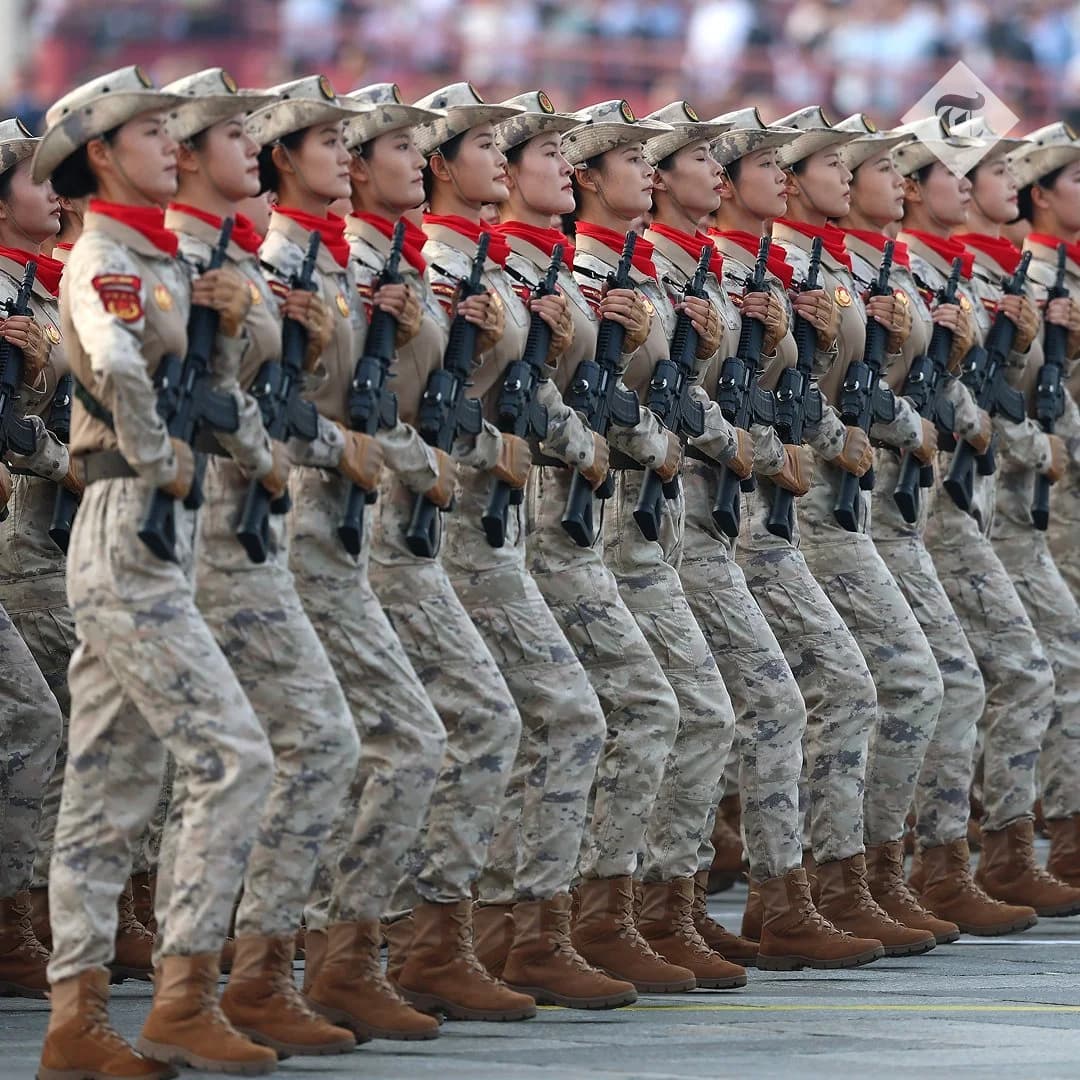
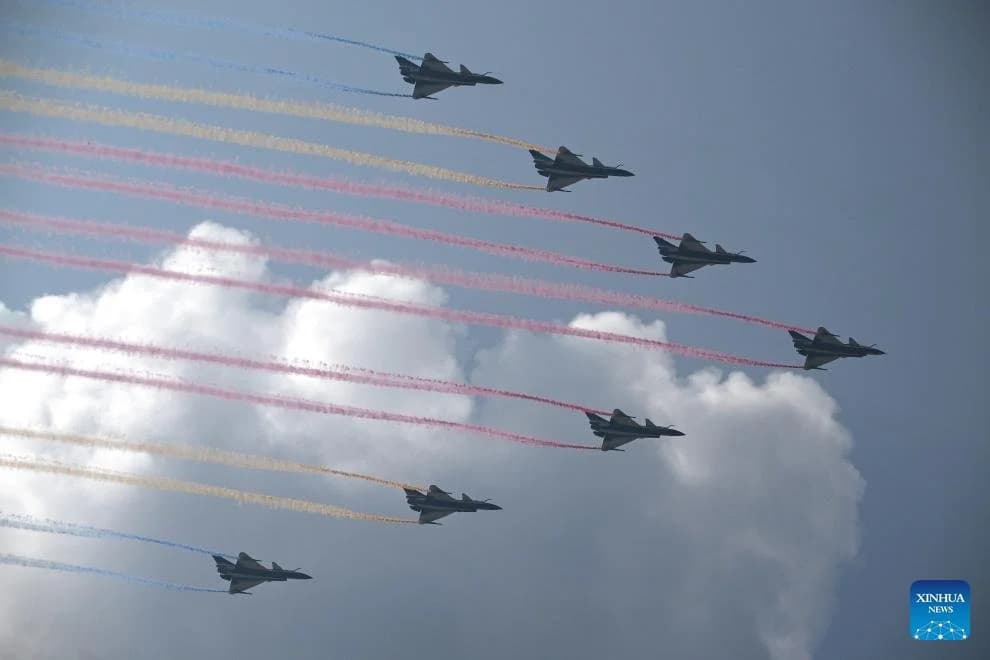
Military bands and a 1,000-member choir performed patriotic pieces, while 80 buglers honoured the 80th anniversary of Japan’s defeat in 1945. More than 50,000 spectators filled Tiananmen Square, seated on chairs coloured green, red, and gold—symbols of land, sacrifice, and peace. In his address, Xi declared that humanity faces “the choice of peace or war, dialogue or confrontation, win-win or zero-sum,” stressing that China “firmly stands on the right side of history.” Security across Beijing had been heightened since August as rehearsals for the parade began. The last such Victory Day parade was held in 2015. Wednesday’s event underscored Beijing’s determination to present itself not only as a central player in World War II’s legacy but also as a modern military power on the global stage.
Comments
No comments yet. Be the first to share a thought.