
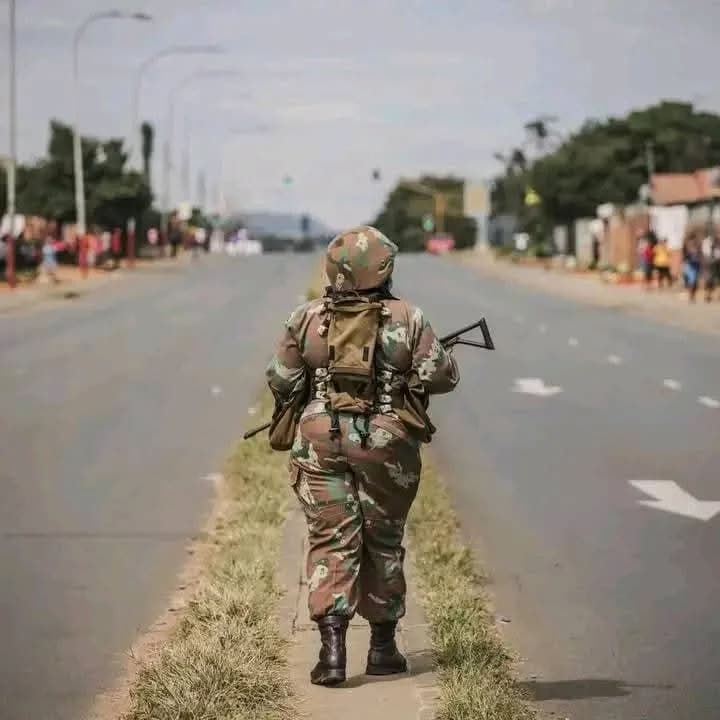
When South African troops stormed into the Democratic Republic of Congo (DRC) in December 2023, they carried themselves with an air of invincibility. They were sent under the pretext of restoring stability and eliminating the M23 rebel group. However, what was meant to be a triumphant mission quickly turned into a crushing defeat. On Monday, February 24, 2025, these same soldiers crossed into Rwanda through Rubavu, not as liberators, but as prisoners of war—humiliated, broken, and defeated. From Military Might to Embarrassing Surrender When South African troops first arrived in the DRC, thei
When South African troops stormed into the Democratic Republic of Congo (DRC) in December 2023, they carried themselves with an air of invincibility. They were sent under the pretext of restoring stability and eliminating the M23 rebel group. However, what was meant to be a triumphant mission quickly turned into a crushing defeat. On Monday, February 24, 2025, these same soldiers crossed into Rwanda through Rubavu, not as liberators, but as prisoners of war—humiliated, broken, and defeated. From Military Might to Embarrassing Surrender When South African troops first arrived in the DRC, their commander made a bold declaration: "We are here to teach M23 a lesson in warfare. Once we have eliminated them, we will deal with their backers fueling the chaos." This statement was a direct accusation against Rwanda, feeding into the long-running false narrative that the country was behind M23. However, a little over a year later, these same troops found themselves in enemy hands—stripped of their bravado and bargaining for their freedom. A total of 194 South African soldiers, including two pregnant women, were released after spending a month as prisoners of war in Goma. Their conditions raise serious questions about what truly transpired during their 13-month deployment in the Congo. Rwanda Opens a Path to Redemption Despite being demonized by South African officials, Rwanda allowed these defeated troops safe passage. They were transported through Rubavu to Kigali, where they were scheduled to board flights back home. This marks the second instance in which South African military personnel had to be escorted out of the Congo through Rwanda. Earlier, South African soldiers who had been killed in combat were repatriated via Rwanda before their remains were discreetly rerouted through Uganda—an attempt by South African authorities to avoid acknowledging their crushing defeat. The Fear of Public Shame: A Desperate Attempt to Save Face The South African government had pleaded for their captured troops to be extracted through Goma’s airport, rather than passing through Rwanda—a country they had repeatedly attacked with baseless accusations. However, M23 firmly denied the request. Additionally, they attempted to negotiate the return of their military equipment, which had been left behind during their hasty retreat. M23 refused. Desperate to conceal their embarrassment, South Africa also requested that their troops be allowed to return in civilian clothing—a feeble attempt to mask the military defeat. This, too, was rejected. As a result, when journalists captured images of the soldiers, they were still dressed in full military uniform—a visible testament to their failure. A Lingering Crisis: More Than 1,000 Troops Still in M23’s Grip> While these 194 soldiers have returned home, the nightmare is far from over. Reports indicate that nearly 1,000 troops—comprising soldiers from South Africa, Tanzania, and Malawi—are still trapped. They are being held in military encampments near Goma and Mubambiro, awaiting an uncertain fate. Ironically, these detained soldiers are now living atop the very mineral resources they looted from the Congo. Their predicament is not just captivity but also the looming question of how to abandon the riches they stole, as smuggling them back home is no longer an option. Was This Really a SADC Mission or a Political Gamble? There is increasing debate over whether this military disaster was a genuine SADC (Southern African Development Community) peacekeeping mission, or if it was a self-serving political move by a few regional leaders. Of the 16 countries that form SADC, only three—South Africa, Tanzania, and Malawi—sent troops to fight in Congo. Analysts argue that this was not an official regional peacekeeping mission, but rather a private military deal between these leaders and President Félix Tshisekedi of the DRC. If true, this situation would mirror the actions of Burundian President Évariste Ndayishimiye, who also deployed his country’s troops to the Congo for his own political and financial gain. Outrage Erupts in South Africa, Silence in Tanzania and Malawi Back home, South African citizens are furious. The government’s failed mission has turned into a national embarrassment, and people are demanding an immediate withdrawal of all troops from the DRC. Their anger is fueled by the revelation that President Cyril Ramaphosa misled the nation, claiming that the mission was a peacekeeping operation, when in reality, it was a reckless military intervention that ended in disaster. Meanwhile, Tanzanian and Malawian governments have remained silent, unwilling to explain to their citizens why their young men were sent to die in a foreign war that brought no benefit to their nations. A Defeat That Will Haunt South Africa for Years This is not just a military loss—it is a diplomatic and political catastrophe. South Africa willingly entered a war it did not understand, underestimated its enemy, and suffered a humiliating defeat. The consequences of this disaster will ripple through its military and political leadership for years to come. As the saying goes, "Shame does not kill, but it destroys dignity." For these soldiers and their government, this shame is one they will carry for a long time. References & Further Reading: SABC News: SANDF releases names of 14 soldiers killed in the DRC Read More Reuters: South Africa deploys more troops to embattled Congo mission Read More National Security News: SA Soldiers in DRC Practically POWs, Claims Leading Analyst Read More



Comments
No comments yet. Be the first to share a thought.