
The Government of the Democratic Republic of the Congo (DRC) and the armed rebel group AFC/M23 have signed a Prisoner Exchange Mechanism, in what has been described as a major step toward easing tensions and restoring peace in eastern Congo. Masad Boulos, senior advisor to U.S. President Donald Trump, announced the deal on Friday, September 12, calling it a “pivotal step” in confidence-building efforts. “We commend the signing of the Prisoner Exchange Mechanism by the Government of the Democratic Republic of the Congo and the AFC/M23, a pivotal step toward de-escalating hostilities and foste
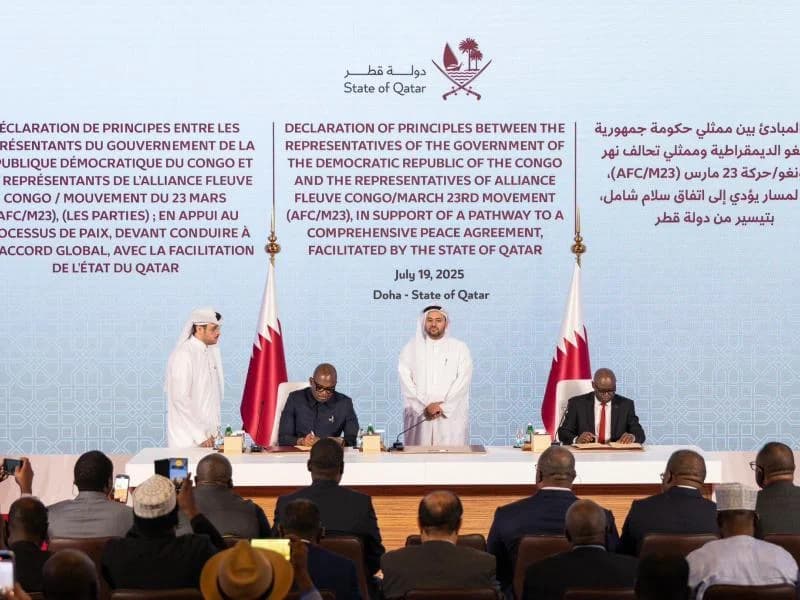
The Government of the Democratic Republic of the Congo (DRC) and the armed rebel group AFC/M23 have signed a Prisoner Exchange Mechanism, in what has been described as a major step toward easing tensions and restoring peace in eastern Congo. Masad Boulos, senior advisor to U.S. President Donald Trump, announced the deal on Friday, September 12, calling it a “pivotal step” in confidence-building efforts. “We commend the signing of the Prisoner Exchange Mechanism by the Government of the Democratic Republic of the Congo and the AFC/M23, a pivotal step toward de-escalating hostilities and fostering peace in eastern DRC,” Boulos wrote on X. He explained that under the new mechanism, the International Committee of the Red Cross (ICRC) will act as a neutral intermediary to identify, verify, and ensure the safe release of detainees held by both sides. “We deeply appreciate Qatar's critical work with the ICRC on this process and encourage parties to use this momentum to make additional progress on reaching a final peace agreement,” Boulos added. The agreement follows months of stalled peace talks. In August, negotiations mediated by Qatar in Doha broke down after the rebels demanded prisoner releases as part of confidence-building measures. The demand was tied to the implementation of the Declaration of Principles signed by The development comes as mistrust between the two sides deepens, with both accusing each other of violating the ceasefire agreed upon in July. Fighting has flared again since early August, as rebels accused the Congolese army and its allies of launching drone strikes, deploying fresh troops, and carrying out targeted attacks on civilians. Despite the July declaration, President Félix Tshisekedi signaled little willingness to engage the rebels. On August 30, he said he would not negotiate with AFC/M23, accusing them of receiving foreign support. Tshisekedi also rejected outside mediation, insisting there would “never be any dialogue outside of our own initiative.” The new mechanism is seen by international actors as a potential breakthrough, though uncertainty remains about whether it will hold amid deep divisions and ongoing violence in eastern DRC.



Comments
No comments yet. Be the first to share a thought.