
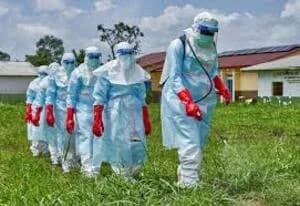
East African Community (EAC) health ministers on Monday opened an extraordinary two-day virtual summit to coordinate a regional response to an Ebola outbreak caused by the rare Bundibugyo virus strain, as confirmed cases rise in the Democratic Republic of Congo (DRC) and Uganda. The meeting, which began on June 1, is expected to produce strategic guidance and strengthen coordination among partner states as health authorities seek to contain the outbreak and prevent further cross-border transmission. Discussions are focused on measures to curb the spread of the Bundibugyo strain of the Ebola
East African Community (EAC) health ministers on Monday opened an extraordinary two-day virtual summit to coordinate a regional response to an Ebola outbreak caused by the rare Bundibugyo virus strain, as confirmed cases rise in the Democratic Republic of Congo (DRC) and Uganda. The meeting, which began on June 1, is expected to produce strategic guidance and strengthen coordination among partner states as health authorities seek to contain the outbreak and prevent further cross-border transmission. Discussions are focused on measures to curb the spread of the Bundibugyo strain of the Ebola virus, for which there is currently no licensed vaccine or specific treatment. According to the latest figures, Uganda has recorded nine confirmed Ebola cases and one death, with health authorities monitoring hundreds of contacts linked to confirmed infections. The situation remains more severe in the DRC, where authorities have reported 125 confirmed cases and 17 deaths, alongside 906 suspected cases and 223 suspected deaths. The outbreak was officially declared on May 15 and is centred in Ituri Province, particularly around Mongbwalu, an area characterised by high population mobility and extensive cross-border movement that health officials say increases the risk of regional transmission. Health authorities on Sunday reported that five patients infected with the Bundibugyo virus had recovered in Bunia, the capital of Ituri Province. Four of the recovered patients, all healthcare workers, were discharged from an Ebola treatment centre after testing negative twice for the virus, while a fifth patient, a laboratory worker, had already returned home. World Health Organization Director-General Tedros Adhanom Ghebreyesus visited Bunia on Sunday as part of the agency’s intensified engagement in the outbreak zone, underscoring growing international concern over the spread of the disease. To strengthen preparedness and surveillance, the EAC Secretariat said it is deploying nine mobile laboratories at strategic cross-border locations across the region, including Kisenyi and Kihundwe health districts in Rwanda and Bwera Hospital in Uganda’s Kasese District. The initiative is funded by KfW Development Bank and supported technically by the Bernhard Nocht Institute for Tropical Medicine. The regional bloc is also supplying personal protective equipment and advancing plans for a framework to accelerate the approval of Ebola vaccines, diagnostics and therapeutics. Member states have been urged to strengthen surveillance systems, public awareness campaigns and emergency preparedness measures. The EAC Secretariat said the ministerial meeting forms part of a broader series of emergency interventions already undertaken, including crisis-response consultations and technical working group discussions on disease control and regulatory harmonisation for potential Ebola countermeasures. EAC Secretary General Stephen Mbundi said the bloc is working closely with national ministries of health, the Africa Centres for Disease Control and Prevention, the World Health Organization and development partners to strengthen surveillance, laboratory diagnosis, infection prevention and control, and rapid response capacity across the region. Health officials have repeatedly warned that the movement of people and goods across East Africa’s porous borders could complicate containment efforts if coordinated action is not maintained. The EAC has therefore called on partner states to remain vigilant and ensure rapid detection, reporting and isolation of suspected cases. The ministerial summit is expected to conclude on Tuesday with recommendations aimed at strengthening regional preparedness and reinforcing cross-border cooperation as authorities work to contain the outbreak.



Comments
No comments yet. Be the first to share a thought.