
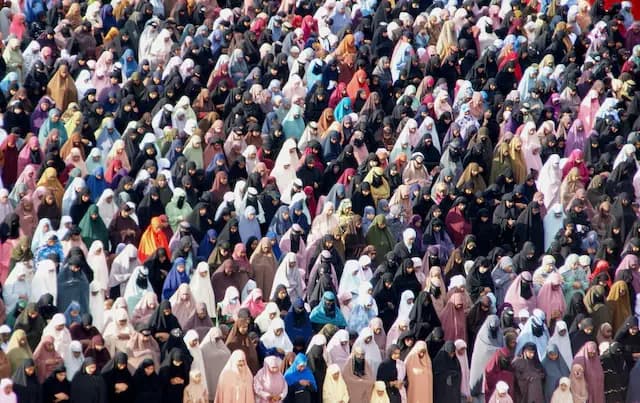
Eid al-Fitr, known as the "Festival of Breaking the Fast," is one of the most significant celebrations in Islam, marking the end of Ramadan, a month dedicated to fasting, prayer, and reflection. In 2025, approximately two billion Muslims around the world observed the occasion on Sunday, March 30. The exact date of Eid varies each year, depending on the lunar calendar and the sighting of the new moon. The celebrations begin with a special congregational prayer, Salat al-Eid, performed in mosques or open spaces. This is followed by festive gatherings where families and friends come together to
Eid al-Fitr, known as the "Festival of Breaking the Fast," is one of the most significant celebrations in Islam, marking the end of Ramadan, a month dedicated to fasting, prayer, and reflection. In 2025, approximately two billion Muslims around the world observed the occasion on Sunday, March 30. The exact date of Eid varies each year, depending on the lunar calendar and the sighting of the new moon. The celebrations begin with a special congregational prayer, Salat al-Eid, performed in mosques or open spaces. This is followed by festive gatherings where families and friends come together to share meals, exchange gifts, and express their best wishes to one another. An important aspect of Eid is the practice of Zakat al-Fitr, a form of charitable giving intended to support those in need, ensuring that all members of the community can take part in the joyous occasion. Muslims across the world observe Eid al-Fitr in ways that reflect their diverse cultural traditions. In Indonesia and Malaysia, many people travel back to their hometowns in a tradition known as "mudik" to celebrate with family. In Egypt, Eid is marked by communal prayers, visits to relatives, and the tradition of giving children cash gifts. In the United States, Muslim communities organize large prayer gatherings and family-friendly festivals, highlighting the multicultural nature of the celebrations. Food plays an essential role in Eid festivities, with each region offering its own unique dishes. In Algeria, couscous, prepared with slow-cooked vegetables and a rich tomato sauce, is a staple. In Palestine, families prepare ma'amoul, traditional semolina cookies filled with dates, walnuts, or pistachios. Lebanon is known for khubz harra, a spicy chili bread often served with grilled meats and vegetables. These culinary traditions enhance the celebratory spirit, bringing families together over special meals. While Eid is a time of joy and togetherness, the manner in which it is celebrated varies across different regions. In Saudi Arabia, homes are decorated, and children receive monetary gifts from their elders as a symbol of generosity. In Somalia, families prepare elaborate banquets featuring traditional sweets like xalwo and buskut. In Nigeria, where the holiday is known as "Small Sallah," celebrations can extend for several days, including communal prayers, feasts, and cultural performances. For many, Eid al-Fitr represents a moment of unity and renewal. However, in conflict-affected regions, celebrations often take on a more subdued tone. In Gaza, for instance, Eid in 2025 was observed under difficult circumstances, with severe food shortages and the aftermath of airstrikes affecting the traditional festivities. Despite such hardships, the holiday remains a symbol of resilience and faith, offering a reminder of the values of gratitude, charity, and the importance of community. Eid al-Fitr continues to be a unifying occasion for Muslims worldwide, transcending geographical and cultural differences. The holiday’s emphasis on generosity, family, and reflection reinforces its deep significance, making it a cherished time for millions across the globe.



Comments
No comments yet. Be the first to share a thought.