
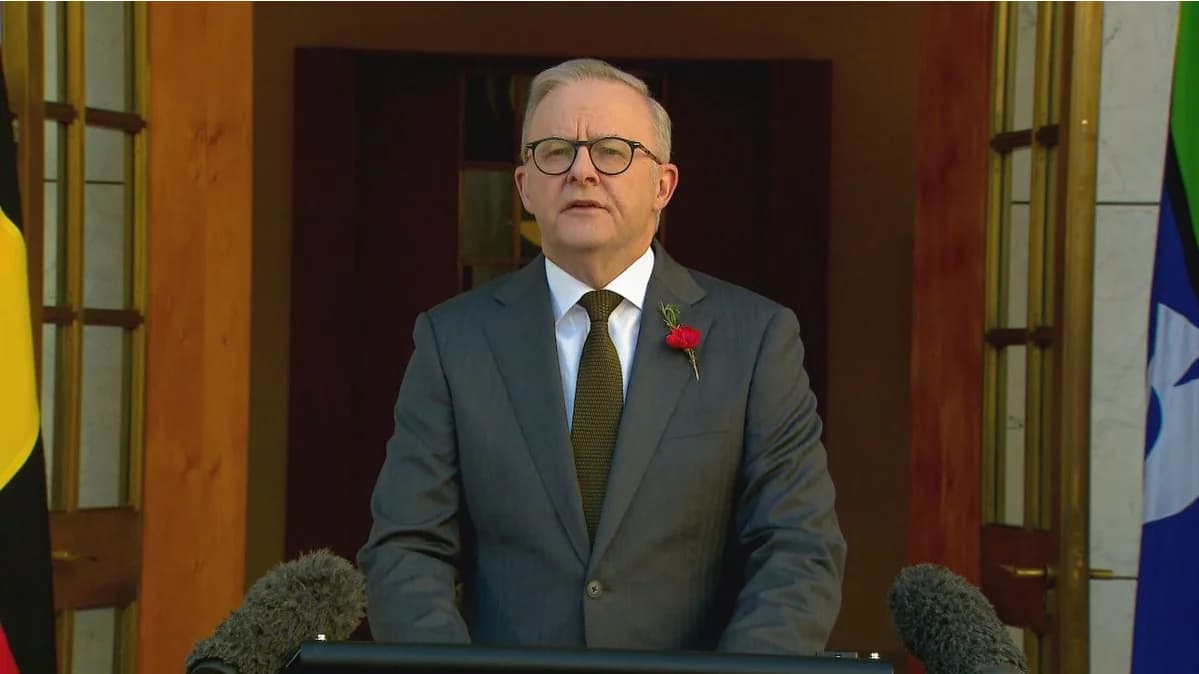
As Australia hurtles toward the 2025 federal election, the battle for leadership between Prime Minister Anthony Albanese and Opposition Leader Peter Dutton has been defined by four fierce debates, each exposing sharp contrasts in policy, character, and vision for the nation's future. With the final debate now concluded and less than a week remaining before polling day, a closer look at the debates’ outcomes — supported by empirical results and public sentiment — offers important clues about the momentum behind each campaign. While the debates alone may not determine the ultimate winner, they p
As Australia hurtles toward the 2025 federal election, the battle for leadership between Prime Minister Anthony Albanese and Opposition Leader Peter Dutton has been defined by four fierce debates, each exposing sharp contrasts in policy, character, and vision for the nation's future. With the final debate now concluded and less than a week remaining before polling day, a closer look at the debates’ outcomes — supported by empirical results and public sentiment — offers important clues about the momentum behind each campaign. While the debates alone may not determine the ultimate winner, they provide a revealing snapshot of how the two leaders have fared under pressure and what may lie ahead for the Australian electorate.
First Debate: A Fiery and Combative Clash Setting the Campaign’s Tone
In the first televised debate of Australia's 2025 election campaign, Prime Minister Anthony Albanese and Opposition Leader Peter Dutton faced off in a heated but structured exchange that centered on key voter concerns: the cost of living crisis, health care and Medicare, immigration, energy policy, and international trade. The event, hosted by Sky News and
The Daily Telegraph
, was judged by an audience of 100 undecided voters from western Sydney — and ended with Albanese winning narrowly, securing 44% of their votes against Dutton’s 35%, while 21% remained undecided. The debate opened with strong thematic contrasts between the two leaders. Albanese declared,
"This is not the time for Australia to go backwards,"
presenting himself as a builder of the nation's future. Meanwhile, Dutton promised to
"get Australia back on track,"
blaming Labor for economic setbacks. On the pressing issue of cost of living, Mr Albanese highlighted his government’s record of budget surpluses and targeted support measures. Mr Dutton, however, accused Labor of presiding over soaring energy and grocery costs, promising Coalition-led relief through measures such as a cut in fuel excise and increased gas supply. Albanese criticized this plan as a mere
"short-term gimmick."
The debate briefly touched on international issues, such as US President Donald Trump's new trade tariffs. Albanese framed the challenge as an opportunity, noting,
"We'll continue to negotiate, of course, with the United States looking for a better deal for Australia."
Dutton, however, took a tougher stance, insisting,
"The prime minister of the day should have the ability and the strength of character to stand up against bullies."
Energy policy became another major flashpoint. Dutton proposed building seven nuclear power plants to secure Australia's energy future, a plan Albanese fiercely opposed, accusing Dutton of
"gaslighting"
Australians with
"costly and unproven"
ideas.
"The only gas policy the Coalition has is the gaslighting of the Australian public,"
Albanese jabbed. Foreign affairs entered the debate with a question about the ongoing war in Gaza. Albanese called for a ceasefire, stating,
"Every human life matters, and we want a ceasefire. We want to see hostages released."
Dutton defended Israel’s right to respond to attacks, emphasizing Australian unity:
"When you come to our country, it's about celebrating being Australian."
Adding to the drama of the evening, the Coalition’s social media wrongly declared Dutton the winner before official results, and Dutton participated despite facing personal strain — his father had suffered a heart attack earlier in the day. Overall, the first debate revealed clear ideological divides: Albanese focusing on continuity and support measures, Dutton emphasizing change and national resilience. While Albanese won the night by a narrow margin, the debate also showed that many voters remained undecided, leaving the race wide open.
Second debate: A Battle of Policy Details and Sharp Personal Exchanges
Prime Minister Anthony Albanese and Opposition Leader Peter Dutton faced off in their second debate of the federal election campaign, held in the Sydney suburb of Parramatta and moderated by ABC's David Speers. Before the debate commenced, pro-Palestinian protesters gathered outside the ABC studios, adding a charged atmosphere to an already tense political event. Over the course of an hour, both leaders exchanged a series of carefully rehearsed lines reflective of their ongoing campaign strategies. Although neither landed a decisive blow, the debate shed light on critical issues and highlighted differences in their leadership styles and visions for Australia's future. One notable moment from the debate was Peter Dutton’s admission that he had made a mistake regarding Indonesia. Initially, Dutton had incorrectly stated that the Indonesian president had made public comments about Russia's intention to base military aircraft in Indonesia. Confronted about this, Dutton admitted, "I made a mistake. I should have referred to the Prabowo government, not President." This admission came after repeated questioning during a previous press conference and showed a rare moment of humility during the otherwise combative evening. Meanwhile, Anthony Albanese was pressed to provide a timeline for when Australians would see reductions in their power bills under Labor’s renewable energy transition plan. Although he avoided giving a specific timeframe, he emphasized, "Renewables are the cheapest form of new energy, and that's why we're investing in batteries, hydro, and gas to ensure security." His refusal to offer a concrete date, however, left room for criticism from Dutton, who accused Labor of failing to deliver meaningful relief for households. The leaders were also asked how they wanted to be remembered. Albanese responded with a focus on social policy, declaring, "I want to be remembered for delivering universally affordable childcare," and he compared access to childcare to access to public education. On the other hand, Dutton centered his legacy on economic and energy reform, stating, "I want to be remembered for getting power prices down, including through the use of zero-emission nuclear technology." Foreign relations emerged as another major theme. When asked about negotiating a "critical minerals deal" with the United States, Albanese said, "You don’t just turn up and do a deal. You build relationships over time." Dutton suggested his connections would make such deals easier but gave few specifics. When it came to trust in world leaders, Albanese carefully remarked, "I have no reason to distrust President Trump or President Xi, based on previous interactions," while Dutton underscored, "Trust is always based on Australia's national interests, not on personalities." A sharp difference emerged on the issue of climate change. Albanese was firm in his recognition of scientific consensus, stating, "The science is clear: climate change is causing more extreme weather events." In contrast, Dutton took a more cautious line: "I'll leave that judgement to the scientists." This equivocation drew strong criticism after the debate, with Treasurer Jim Chalmers accusing Dutton of "slithering and sliding" to avoid acknowledging climate science. Debate over Indigenous affairs also provided critical moments. Albanese admitted, "Both sides of politics have failed" when it comes to closing the gap for First Nations Australians, particularly citing the tragedy of high youth suicide rates. He pointed to Labor’s education initiatives, noting that "over 40,000 Indigenous Australians" had benefited from the government's free TAFE programs. Dutton, while agreeing the statistics were "absolutely heartbreaking," stressed the importance of getting "program delivery right" in remote and Indigenous communities. On the contentious issue of negative gearing, Albanese was unequivocal: "We have not requested advice from Treasury about changes to negative gearing." However, opposition finance spokesperson James Paterson later accused Albanese of a "bold-faced lie," referencing prior Treasury modelling from earlier discussions, even if not directly commissioned by the current government. When discussing offshore renewable energy projects, Albanese defended government initiatives against criticism from local communities. "We take community concerns seriously," he said, but he dismissed claims that "whales will somehow not be able to navigate around offshore wind turbines" as unfounded. Finally, Dutton highlighted his energy policy vision, emphasizing the role of nuclear power in Australia's future. "Every G7 country except Australia includes nuclear as part of their mix," he stated, arguing that embracing nuclear technology alongside gas reserves was essential to securing Australia’s energy future and meeting emissions reduction targets. In conclusion, while neither leader delivered a knockout performance, the debate provided valuable insight into their policy priorities, character, and campaign strategies. The contrasting visions—Labor’s progressive reforms in social and environmental policy versus the Coalition’s focus on conservative economic management and energy solutions—have set the stage for a closely contested election. As Albanese summed up, "This election is about a better future," while Dutton countered, "This election is about making sure Australians can afford to live today."
Third Debate: Intensifying Attacks and a Clearer Divide on Vision
The death of Pope Francis earlier in the day cast a somber mood over the Australian federal election campaign, with Anthony Albanese and Peter Dutton pausing their campaigns in a mark of respect. However, by Tuesday night, the two leaders returned to the political fray, meeting inside Sydney’s Channel Nine studios for their third debate as early voting continued ahead of the May 3 election. With time running short to persuade undecided voters, the debate offered critical insights into each leader’s strategies and challenges.
Dutton Blames Labor for Coalition's Poll Slump
Peter Dutton’s campaign has been marked by several missteps and policy inconsistencies, contributing to a dramatic fall in the Coalition’s poll numbers. When asked to assess his own campaign, Dutton offered only a muted acknowledgment of the decline, refusing to take personal responsibility. Instead, he pointed the finger squarely at Labor’s tactics: "The Labor Party has spent $20 million throwing mud and negative ads, and that has an impact – and I get that." His comments revealed a defensive posture, framing the Coalition’s struggles as the result of external attacks rather than internal failures.
Heated Exchange Over the ‘Biggest Lies’
The most animated moment of the debate came when the leaders were invited to rebuff the "biggest lie" their opponent had told during the campaign. Dutton attacked Labor’s "$600 billion" cost estimate for the Coalition's nuclear plan and their claim he would gut Medicare, labeling them as fear tactics. Albanese, meanwhile, accused the Coalition of hiding where budget cuts would come from to fund nuclear projects, warning voters with a reference to Tony Abbott’s 2014 budget: "Remember the $80 billion ripped out of health and education." Tensions escalated when Dutton insulted Albanese, saying he "couldn’t lie straight in bed," to which Albanese responded coolly: "You can go to abuse – that’s just a sign of desperation." Notably, Albanese refrained from repeating the controversial $600 billion figure during the debate, suggesting a strategic softening of his line of attack.
Albanese Warns Against Risking Dutton in Uncertain Times
On the topic of global instability, Albanese framed the election as a choice between stability and risk. When asked about Australia’s biggest threat, he warned, "Complacency and the uncertain world that we inherit," arguing that now was the worst time to risk leadership under Dutton. He sharpened the attack by referencing Dutton’s 2015 joke about Pacific Island nations suffering from climate change: "It’s not a joke, climate change. It’s something that is the entry fee to credibility in our region." When Dutton was given an opportunity to walk back his earlier boasts about being able to secure exemptions from Trump’s trade tariffs, he dodged the issue, instead highlighting his "personal dealings with past US administrations," including Trump’s first presidency. This move left Albanese’s criticism largely unanswered.
Who Won the Debate?
The three journalists moderating the debate: Deb Knight, Charles Croucher, and Phil Coorey — scored the contest narrowly in favor of Peter Dutton, giving him a 2-1 victory. Charles Croucher explained the decision: "(The debate) was very close, but I think it was by far Peter Dutton’s best debate. And because it’s a cost-of-living election, it was, in my eyes, he won by a nose." This verdict means that after three debates, each leader had claimed one clear victory: Albanese was judged the winner of the earlier News Corp-hosted forum, while Dutton edged out the win in this Channel Nine debate. The ABC-hosted second debate did not declare a winner.
Final Debate: Albanese Seizes Momentum Ahead of Election Day
In the fourth and final leaders’ debate before Australia’s 3 May election, Anthony Albanese secured a convincing victory over Peter Dutton, as judged by a panel of undecided voters on Channel Seven. With less than a week to polling day, the stakes were high—and it was Albanese who emerged more composed and in tune with voters’ concerns. Moderated by political editor Mark Riley, the debate’s outcome was determined by a panel of 60 uncommitted voters. The results were emphatic: 50% backed Albanese, while only 25% supported Dutton; the remaining 25% remained undecided. Cost of living dominated the evening, and on this front, Albanese performed strongly, with 65% of respondents saying he offered the better answers compared to Dutton’s 15%.
Culture Wars and ‘Respect’
One of the sharper contrasts came when Dutton leaned into cultural grievances, suggesting that Indigenous Welcome to Country ceremonies had become “overdone” and should be reserved for “important occasions.” Albanese took a more inclusive tone, defending the practice as a symbol of respect: "We have a great privilege, from my perspective, of sharing this continent with the oldest continuous culture on earth," Albanese said, adding that when he welcomes international visitors, they are often eager to witness Indigenous traditions. Dutton’s remarks risked appearing dismissive at a time when national debates about identity and reconciliation are politically sensitive. The Trump Question and the Mobile Phone Stumble Albanese faced an awkward moment when asked whether he had texted Donald Trump. He answered: "I’m not sure he has a mobile phone, the US president... it is not the way it works, with any global leader." The comment, seized upon by Dutton, led to minor ridicule, with Dutton pressing: "I think the answer there was no." While Albanese likely meant that diplomacy isn’t conducted via personal texting, the clumsy phrasing offered ammunition to critics questioning his international standing.
Economic Management Front and Centre
Albanese used the debate to paint Dutton as a “risk” to Australia’s economic stability. In his strongest moment of the night, he declared: "Peter can attack me. I tell you what I won’t let him do. I won’t let him attack the wages of working people... I won’t let him abandon free Tafe so that people can get an opportunity in life." He reminded voters of Labor’s record: "We inherited a deficit of $78bn. We turned that into a $22bn surplus. We delivered another surplus, and we halved the deficit this year. Inflation is now 2.4%, in the bottom half of the Reserve Bank band." The prime minister’s message was clear: after years of economic turbulence, Australia needed stability, not a return to austerity and division.
Dutton’s Counterattack: Painting Albanese as Untrustworthy
Dutton stuck to familiar attack lines, labelling Albanese a liar and questioning Labor’s credibility on promises ranging from migration to power prices. He charged: "Honestly, this whole campaign, it’s hard to believe anything you say." Highlighting Labor’s broken 2022 pledge to reduce power bills by $275, Dutton accused the government of economic mismanagement: "You have created an economic mess in our country... our job as a Liberal government, as was the case for John Howard, is to clean up the Labor mess." Despite Dutton’s attempts to draw blood, voters appeared more swayed by Albanese’s defense of Labor’s achievements. When questioned about his nuclear energy policy, Dutton admitted he had not visited any of the proposed reactor sites during the campaign and could not guarantee he would do so before election day. Pressed repeatedly, he remained evasive, prompting moderator Riley to quip: "So that’s a no." The exchange reinforced perceptions of Dutton’s nuclear policy as underdeveloped and politically risky.
Eggs, Elon Musk, and Relatability
In a lighter segment designed to test relatability, Dutton stumbled when asked the cost of a carton of eggs, guessing $4.20—well short of the true price above $8. Albanese was closer, guessing $7, reinforcing his awareness of everyday cost pressures. When shown a photo of Elon Musk, Albanese quickly said "Tesla," while Dutton dubbed Musk an "evil genius"—a moment of unintended humour that did little to shift the night’s momentum. The final debate capped a campaign in which both leaders worked to define themselves—and each other—for an electorate squeezed by economic pressures and social tensions. Albanese’s steadier, more optimistic pitch appeared to land better with voters, leaving Dutton with little momentum heading into the final stretch. As election day looms, the question is no longer who won the debates, it is whether the debates will shift enough votes to change the likely outcome. Across all four debates, Anthony Albanese consistently outperformed Peter Dutton in the eyes of uncommitted voters and broader public sentiment. He maintained a message focused on stability, economic recovery, and social inclusivity, while Dutton leaned heavily on culture war issues and attacks on Albanese’s credibility — with limited success. The final debate sealed a clear trend: Albanese not only won more debate audiences but also presented himself as a safer, more familiar choice for an electorate emerging from a period of economic and social challenge. While elections are never decided by debates alone, debate polls, audience reactions, and key messaging control — suggest that Anthony Albanese is the frontrunner heading into the 3 May election. Barring a dramatic late shift in voter sentiment, the debates have reinforced the likelihood of a Labor government winning a second term.



Comments
No comments yet. Be the first to share a thought.