
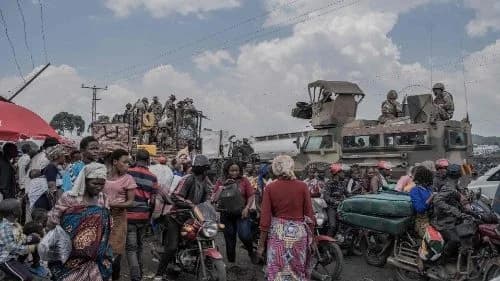
The conflict in the Democratic Republic of Congo (DRC) is rapidly intensifying, particularly in North Kivu province, where the M23 rebel group is clashing with government forces (FARDC). The situation has reached a critical juncture, with Goma, the provincial capital, increasingly at risk of falling under rebel control. Reports from the region highlight the significant advancements made by the M23 rebels, who are now positioned dangerously close to Goma. This has triggered widespread panic among local residents, with thousands fleeing the area in anticipation of an impending assault. The viol
The conflict in the Democratic Republic of Congo (DRC) is rapidly intensifying, particularly in North Kivu province, where the M23 rebel group is clashing with government forces (FARDC). The situation has reached a critical juncture, with Goma, the provincial capital, increasingly at risk of falling under rebel control. Reports from the region highlight the significant advancements made by the M23 rebels, who are now positioned dangerously close to Goma. This has triggered widespread panic among local residents, with thousands fleeing the area in anticipation of an impending assault. The violence is threatening essential public infrastructure, including schools, hospitals, and homes, further exacerbating the humanitarian crisis. The international community has expressed grave concern over the escalating humanitarian crisis. The United Nations has reported that the conflict has displaced hundreds of thousands of civilians, with many forced to seek refuge in neighboring areas. The ongoing violence threatens not only the stability of the DRC but also poses risks of regional instability, potentially spilling over into surrounding countries. There are also growing reports suggesting that the M23 rebels are receiving foreign support, which has strained relations between the DRC and some of its neighboring states. This external involvement has complicated efforts to find a peaceful resolution and stabilize the region. Experts argue that a sustainable peace in North Kivu can only be achieved through inclusive negotiations that involve all parties to the conflict. Strengthening judicial measures to hold perpetrators accountable, alongside addressing the root causes of the conflict, is essential. Furthermore, prioritizing the protection and welfare of civilians should be at the forefront of any peace initiative. As the situation in North Kivu continues to deteriorate, it is clear that both regional and international cooperation is urgently needed to halt the fighting and lay the foundation for a peaceful, prosperous future in the region. Without concerted action, the conflict risks deepening and becoming a prolonged crisis with far-reaching consequences for the DRC and its neighbors.
Comments
No comments yet. Be the first to share a thought.