
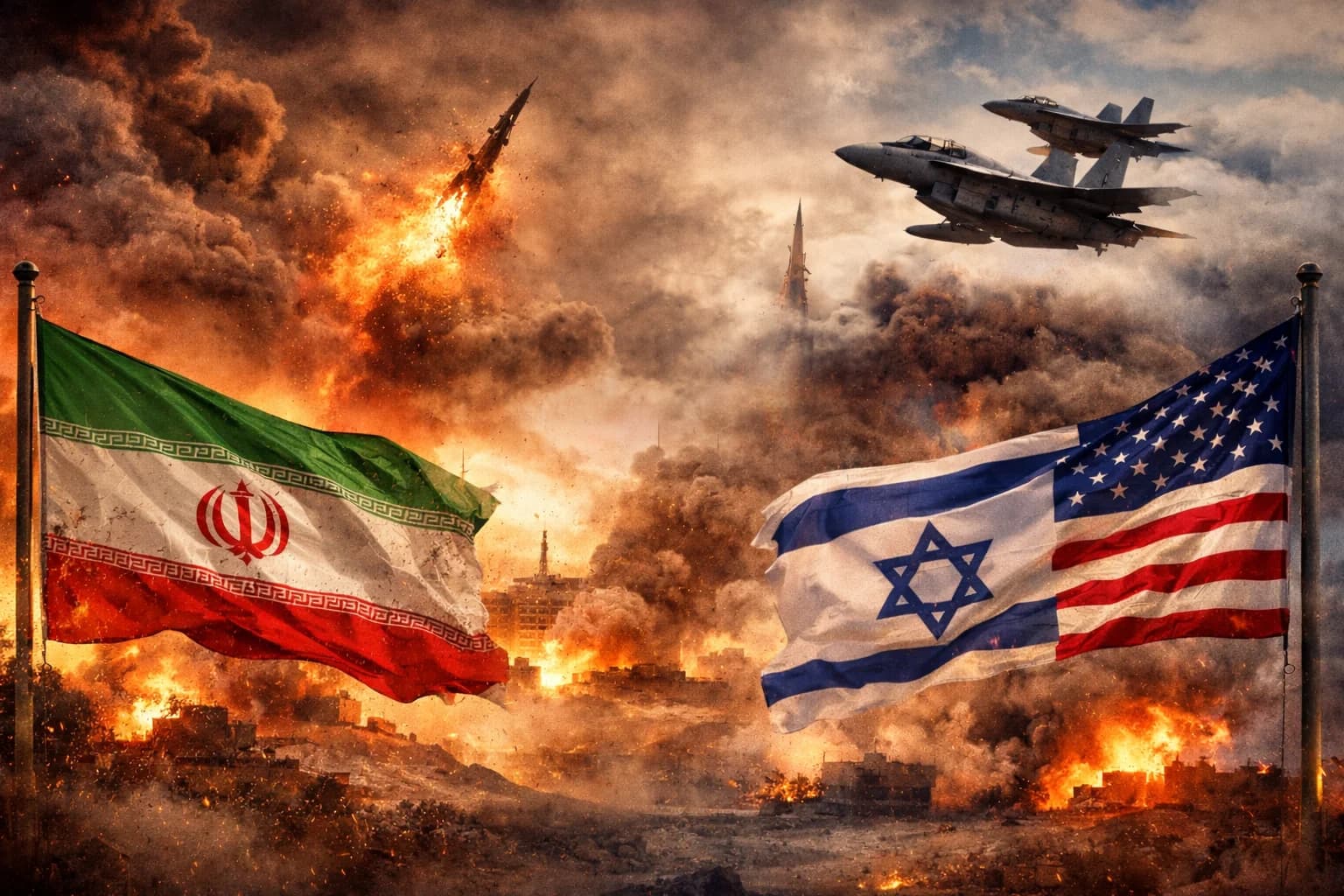
In late February 2026, a coordinated series of airstrikes by the United States and Israel against Iranian military and nuclear-linked sites sent shockwaves through the Middle East and the wider international community. The attacks, described by officials as preemptive and necessary to counter regional threats, mark a dramatic escalation in decades-long tensions between Tehran, Jerusalem, and Washington. Historical Context The roots of the conflict trace back to the Islamic Revolution of 1979 in Iran, which transformed the country from a U.S.-aligned monarchy into an Islamic Republic with sta
In late February 2026, a coordinated series of airstrikes by the United States and Israel against Iranian military and nuclear-linked sites sent shockwaves through the Middle East and the wider international community. The attacks, described by officials as preemptive and necessary to counter regional threats, mark a dramatic escalation in decades-long tensions between Tehran, Jerusalem, and Washington. Historical Context The roots of the conflict trace back to the Islamic Revolution of 1979 in Iran, which transformed the country from a U.S.-aligned monarchy into an Islamic Republic with staunch opposition to Israel. Since then, Iran has provided support to proxy groups such as Hezbollah in Lebanon and Hamas in Gaza, further straining relations with Israel. Concerns over Iran’s nuclear program have consistently heightened regional instability. While Tehran maintains its nuclear initiatives are for peaceful energy and research purposes, both Israel and the U.S. view the program as a potential pathway to nuclear weapons, presenting a direct threat to national and regional security. The Path to Open Conflict Tensions have escalated over the years through a combination of proxy wars, covert operations, and economic sanctions. Israel has repeatedly targeted Iranian nuclear scientists and facilities, while the U.S. has alternated between diplomatic engagement and sanctions to curb Iran’s nuclear ambitions. The recent strikes in February 2026 are seen as a continuation of these strategic measures, but on a larger and more direct scale. Iran responded with missile and drone attacks targeting Israeli cities and U.S. positions in the region, raising fears of a wider confrontation. Global Reactions The attacks have drawn widespread international concern. The United Nations and global powers have called for immediate restraint, warning that further escalation could destabilize the entire Middle East. Analysts note that the conflict reflects a dangerous pattern in which preemptive strikes and retaliatory measures amplify tensions rather than resolve underlying disputes. While the region braces for potential further escalation, the historical backdrop underscores that the current crisis is not sudden. Decades of mistrust, strategic rivalry, and contested nuclear ambitions have set the stage for the 2026 confrontation. Experts suggest that only sustained diplomatic engagement, alongside robust regional security agreements, could prevent the situation from spiraling into a broader conflict.



Comments
No comments yet. Be the first to share a thought.