
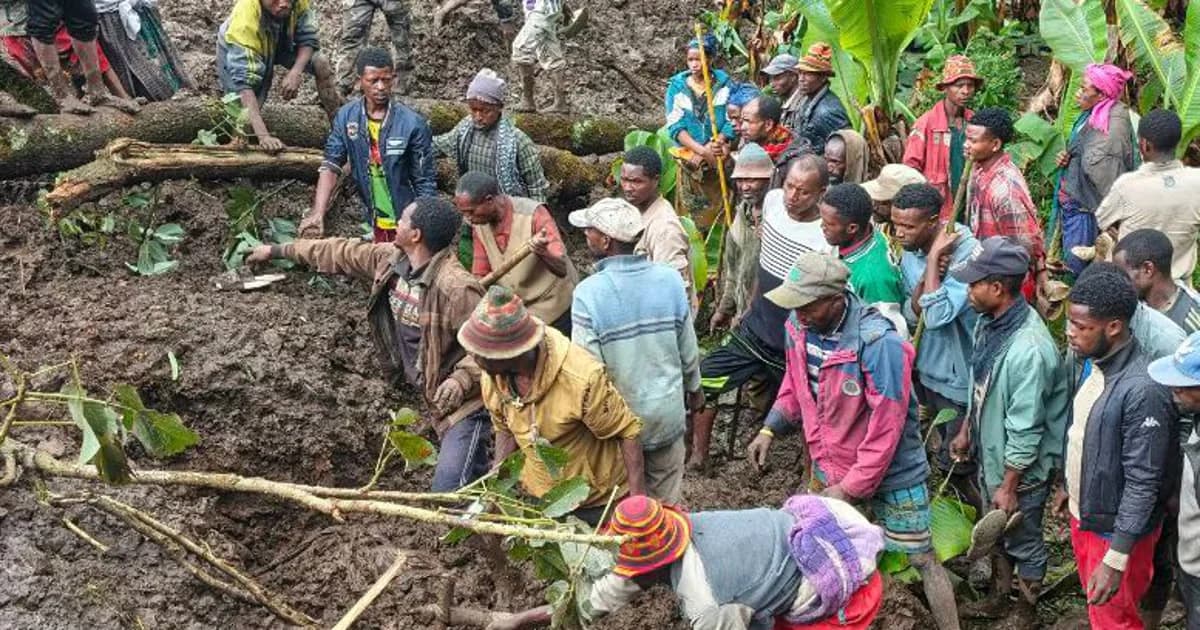
Heavy rains in southern Ethiopia have triggered landslides and flash floods that have killed at least 107 people, left around 125 missing, and displaced more than 3,400 residents, authorities confirmed Saturday 14 March, 206. The disaster struck several kebeles across Gacho Baba, Bonke, Kamba Zuria, and West Abaya woredas in Gamo Zone on Tuesday night, as torrential rains triggered massive soil shifts. Most victims were found buried under mud, according to Abebe Agena, the Gacho Baba District communication chief. Mesfin Manuqa, Gamo Zone Director of Disaster Response, said 107 bodies had been
Heavy rains in southern Ethiopia have triggered landslides and flash floods that have killed at least 107 people, left around 125 missing, and displaced more than 3,400 residents, authorities confirmed Saturday 14 March, 206.
The disaster struck several kebeles across Gacho Baba, Bonke, Kamba Zuria, and West Abaya woredas in Gamo Zone on Tuesday night, as torrential rains triggered massive soil shifts. Most victims were found buried under mud, according to Abebe Agena, the Gacho Baba District communication chief.
Mesfin Manuqa, Gamo Zone Director of Disaster Response, said 107 bodies had been recovered so far, and that one person was pulled out of the mud alive during rescue operations after being buried for three days.
Ethiopian Prime Minister Abiy Ahmed visited the affected areas on Saturday, pledging government support for those impacted. “Appropriate studies and work must be carried out to resolve the problem in a sustainable manner. Preventive measures are also necessary,” Abiy said in a social media post.
Tilahun Kebede, President of the South Ethiopia Regional State, expressed deep condolences. “May God put the souls of those who died in the accident,” he said — using the local term “accident” to describe the natural disaster — “I sincerely wish that God gives comfort to all their families and friends.” He urged residents in flood-prone areas to move to higher ground, adding: “Since it is the rainy season and accidents like this can happen again, communities living in Degama and Nada should take necessary precautions.”
Birhanu Adelo, Chief Commissioner of the Ethiopian Human Rights Commission (EHRC), said the institution will intensify monitoring and coordinate relief efforts to ensure affected residents receive essential supplies. The Commission described the situation as severe, confirming widespread loss of life, physical injuries, and property damage across affected communities.
The Ethiopian parliament declared a three-day national mourning period beginning Saturday, March 14, 2026. During the mourning period, national flags will fly at half-mast across government institutions, diplomatic missions, and consular offices abroad.
In an international response, WHO Director-General Tedros Adhanom Ghebreyesus expressed condolences on Friday, March 13, saying the organization stands ready to support the Ethiopian government in providing emergency health services to survivors.



Comments
No comments yet. Be the first to share a thought.