
The European Union has warned it will impose nearly €100 billion (£87bn) worth of tariffs on a wide range of American imports [from bourbon whiskey to Boeing aircraft] if former U.S. President Donald Trump does not finalize a trade deal by the end of next week. In a statement on Wednesday, the European Commission said it plans to consolidate two previously prepared lists of U.S. goods for potential retaliatory tariffs, according to The Guardian . The first list, valued at €21 billion, includes items such as poultry and alcohol. The second, worth €72 billion, targets vehicles and aircraft. Com
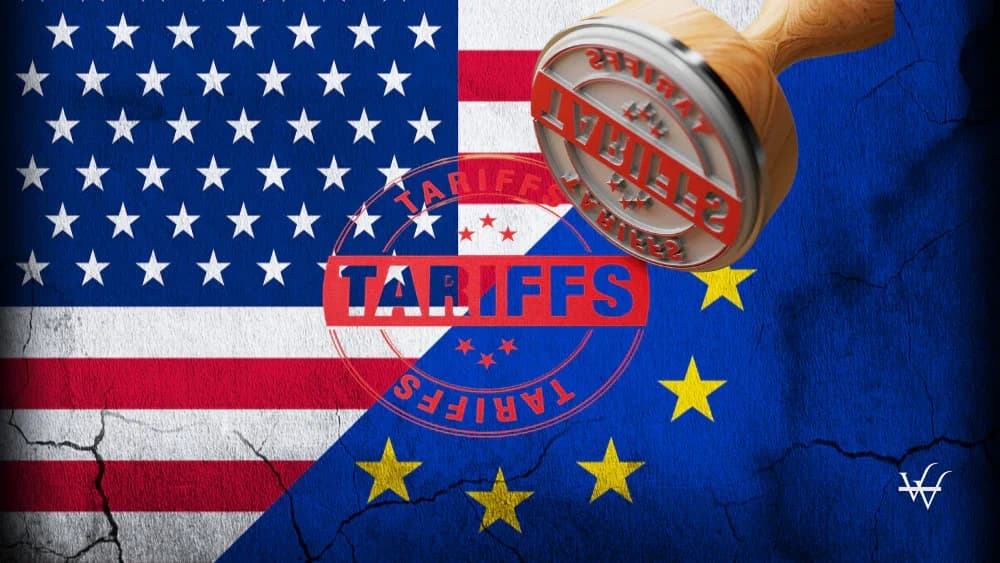
The European Union has warned it will impose nearly €100 billion (£87bn) worth of tariffs on a wide range of American imports [from bourbon whiskey to Boeing aircraft] if former U.S. President Donald Trump does not finalize a trade deal by the end of next week. In a statement on Wednesday, the European Commission said it plans to consolidate two previously prepared lists of U.S. goods for potential retaliatory tariffs, according to The Guardian. The first list, valued at €21 billion, includes items such as poultry and alcohol. The second, worth €72 billion, targets vehicles and aircraft. Combined, they would form a single €93 billion countermeasure package that could take effect as early as August 7, pending approval from EU member states. Olof Gill, a spokesperson for the European Commission on trade, said that “the EU’s primary focus is on achieving a negotiated outcome with the US.” He added that merging the two lists would make the EU’s countermeasures “clearer, simpler and stronger,” while preparations for all possible outcomes would continue in parallel. EU trade commissioner Maroš Šefčovič was expected to speak with U.S. Commerce Secretary Howard Lutnick before briefing EU ambassadors later on Wednesday. The tone in Brussels has reportedly grown more confrontational following Trump’s rejection of a draft agreement 10 days ago, coupled with his threat to impose blanket 30% tariffs on EU goods starting August 1 if a deal is not reached. The European car sector has borne the brunt of Trump’s tariff strategy. Stellantis, parent company of Jeep and Vauxhall, reported this week that the tariffs have cost it €300 million. Volvo, likewise, cited a significant decline in second-quarter earnings linked to the trade tensions. French President Emmanuel Macron has consistently advocated for a tougher EU response. Both France and Germany raised the ACI option during a meeting of EU ambassadors last Friday. ACI refers to Anti-Coercion Instrument (ACI); an EU regulation often described as its “nuclear deterrent” against economic threats. The ACI would allow the EU to respond with a broad arsenal of measures, including tariffs and bans on certain U.S. services, a move that would particularly impact the tech industry. “It was certainly a shift in rhetoric, but it is not clear whether they would be advocating pressing the actual button,” said one diplomat familiar with the discussions. Tobias Gehrke, a senior policy fellow at the European Council on Foreign Relations, criticized the EU for what he described as a missed opportunity. He argued the bloc should have invoked the ACI immediately after Trump’s tariff threats were issued. “There is a sense that the bloc has fumbled its hand, despite holding decent cards,” Gehrke said. “The EU should have immediately retaliated against US tariffs. While the mantra ‘negotiate from a position of strength’ was oft-repeated in speeches, any associated actions never materialised.” He suggested that only a high-level meeting involving Trump —currently in Scotland — and EU leaders such as Macron, German Chancellor Friedrich Merz, and Italian Prime Minister Giorgia Meloni could break the deadlock. The EU’s latest escalation also comes just ahead of a major summit with China on Thursday, where European Commission President Ursula von der Leyen, European Council President Antonio Costa, and Chinese President Xi Jinping are expected to meet.



Comments
No comments yet. Be the first to share a thought.