
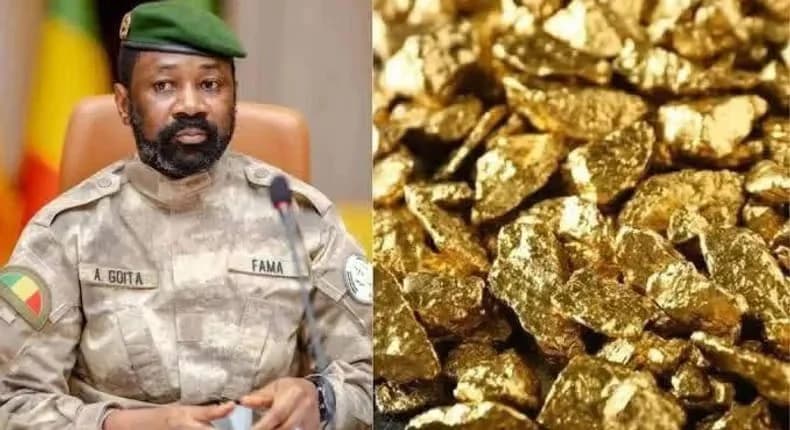
Foreign mining companies are maintaining a strong foothold in Mali, even as escalating violence and political uncertainty reshape the risk landscape. Instead of retreating, several firms are increasing investment in private security measures to safeguard operations, underscoring the strategic importance of the country’s vast mineral wealth. Mali remains one of Africa’s leading gold producers, and with global prices hovering near record highs, the incentive to stay outweighs the risks for many operators. Major players such as Barrick Gold, Toubani Resources, and Eagle Eye Asset Holdings contin
Foreign mining companies are maintaining a strong foothold in Mali, even as escalating violence and political uncertainty reshape the risk landscape. Instead of retreating, several firms are increasing investment in private security measures to safeguard operations, underscoring the strategic importance of the country’s vast mineral wealth. Mali remains one of Africa’s leading gold producers, and with global prices hovering near record highs, the incentive to stay outweighs the risks for many operators. Major players such as Barrick Gold, Toubani Resources, and Eagle Eye Asset Holdings continue to expand or sustain their projects across the country. Security Risks Drive Self-Funded Protection The deteriorating security situation has forced mining companies to take matters into their own hands. Armed groups, including jihadist factions and Tuareg separatists, have intensified attacks in recent months, targeting both military and civilian infrastructure. The killing of Defence Minister Sadio Camara in a car bomb attack near the capital Bamako marked a turning point, heightening fears among investors and prompting firms to reassess safety strategies. In response, some companies have deployed professional armed security teams, while others emphasize that their operations remain geographically distant from high-risk zones. For example, key projects such as lithium developments and major gold mines continue to operate with minimal disruption, according to industry sources. Investment Holds Steady Amid Instability Despite the unrest, production has largely continued uninterrupted. Companies argue that Mali’s long-standing mining infrastructure and resource potential provide a strong foundation for continued operations. New investments are also moving forward. Eagle Eye Asset Holdings recently backed the Sanankoro gold project with a $120 million agreement, while Toubani Resources has launched construction on its Kobada mine. Meanwhile, Barrick Gold expects significant output from its Loulo-Gounkoto complex in 2026, reinforcing confidence in the sector. Government Reforms Add Complexity Beyond security challenges, investors are also navigating a shifting regulatory environment. Mali’s military-led government introduced a new mining code in 2023 aimed at increasing state and local participation in extractive industries. The reforms raise government ownership stakes to as much as 35%, up from around 20%, and eliminate certain tax incentives previously enjoyed by foreign investors. They also prioritize local content and grant authorities greater control over mining permits, particularly for strategic minerals like lithium and uranium. While the government says these measures are designed to maximize national benefit and combat illegal mining, they have added pressure on companies already grappling with security risks. Output Declines, But Confidence Persists The combined impact of regulatory changes and instability has begun to show in production figures. Mali recorded a significant drop in industrial gold output in 2025, with declines both year-on-year and against government projections. Still, most operators appear committed to staying the course. Analysts note that Mali’s rich deposits, coupled with strong global demand for gold and critical minerals, continue to outweigh the challenges. Strategic Stakes Remain High As global competition for natural resources intensifies, Mali’s position as a key supplier of gold—and a potential hub for lithium and uranium—keeps it firmly on the radar of international investors. For now, the message from foreign miners is clear: despite rising risks, Mali remains open for business.



Comments
No comments yet. Be the first to share a thought.