
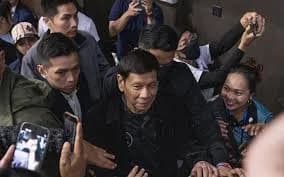
Former Philippine President Rodrigo Duterte was arrested at Manila's Ninoy Aquino International Airport upon his return from Hong Kong, Philippine police confirmed on March 11, 2025. The arrest was based on a warrant issued by the International Criminal Court (ICC), charging Duterte with crimes against humanity related to his controversial anti-drug campaign, the "war on drugs." Humanitarian organizations have accused Duterte of overseeing a relentless and highly controversial drug war during his presidency from 2016 to 2022. Official records indicate that over 6,000 individuals were killed
Former Philippine President Rodrigo Duterte was arrested at Manila's Ninoy Aquino International Airport upon his return from Hong Kong, Philippine police confirmed on March 11, 2025. The arrest was based on a warrant issued by the International Criminal Court (ICC), charging Duterte with crimes against humanity related to his controversial anti-drug campaign, the "war on drugs." Humanitarian organizations have accused Duterte of overseeing a relentless and highly controversial drug war during his presidency from 2016 to 2022. Official records indicate that over 6,000 individuals were killed in police operations, while human rights groups estimate the death toll to be between 12,000 and 30,000, primarily affecting impoverished urban communities. The ICC launched a preliminary examination into alleged extrajudicial killings in 2018. In response, Duterte withdrew the Philippines from the ICC’s Rome Statute in 2019, aiming to evade the court’s jurisdiction. However, the ICC proceeded with its investigation, asserting authority over crimes committed while the Philippines was still a member. Upon his arrest, Duterte was escorted by authorities and is currently held at a secure facility in Manila. Questioning the basis of the warrant, he asked, "What crime have I committed?" Duterte’s former presidential spokesperson, Salvador Panelo, condemned the arrest as "unlawful," arguing that the Philippines had withdrawn from the ICC in 2019. The international community is now closely watching how the Philippine government will handle this unprecedented situation, balancing domestic legal arguments against international legal obligations.



Comments
No comments yet. Be the first to share a thought.