
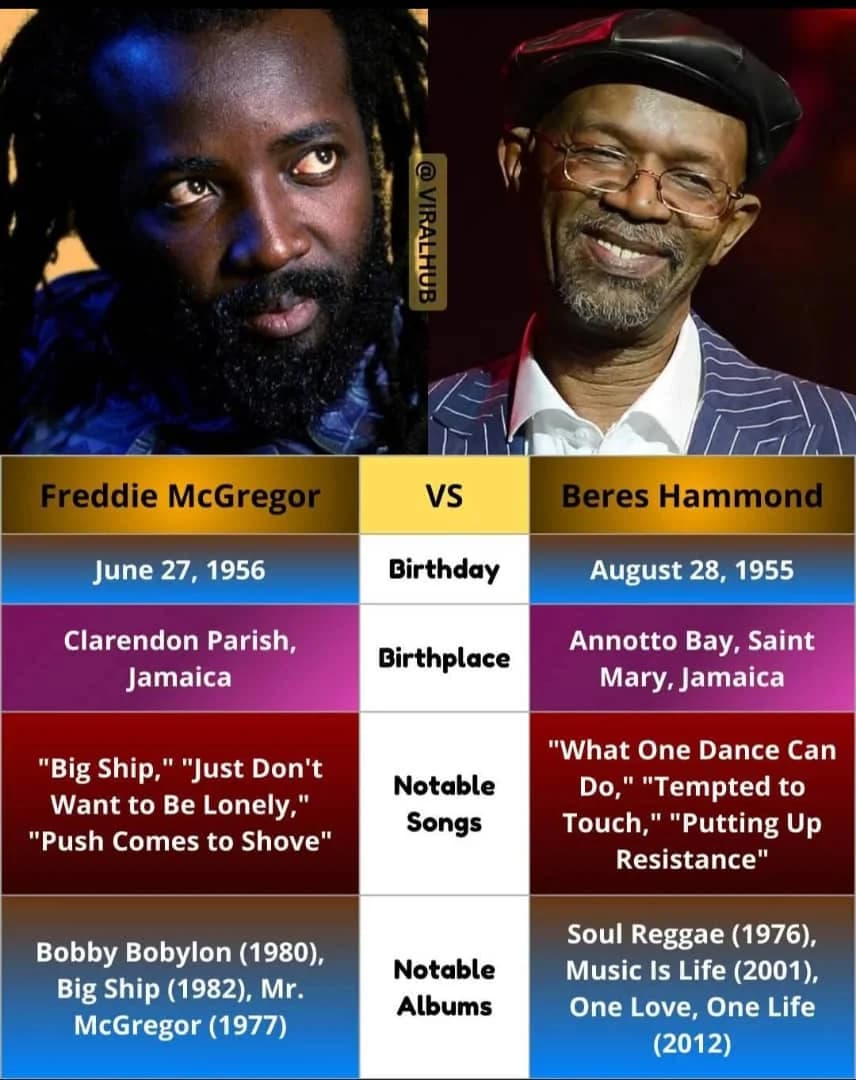
In the world of reggae music, two voices stand as monumental figures—Freddie McGregor and Beres Hammond. These icons have not only defined the genre but also left an indelible mark on music itself. Their contributions to reggae transcend time and geography, blending deep-rooted cultural authenticity with universal appeal. With distinct musical styles, both have shaped the soundscape of reggae, yet the question remains: who truly reigns supreme? This article takes a closer look at these two legends and their lasting impact on the reggae genre. Freddie McGregor, born on June 27, 1956, in Claren
In the world of reggae music, two voices stand as monumental figures—Freddie McGregor and Beres Hammond. These icons have not only defined the genre but also left an indelible mark on music itself. Their contributions to reggae transcend time and geography, blending deep-rooted cultural authenticity with universal appeal. With distinct musical styles, both have shaped the soundscape of reggae, yet the question remains: who truly reigns supreme? This article takes a closer look at these two legends and their lasting impact on the reggae genre. Freddie McGregor, born on June 27, 1956, in Clarendon Parish, Jamaica, grew up steeped in reggae culture. A child prodigy, he joined The Clarendonians at an early age, honing his vocal prowess before launching a career that would span decades. By the 70s and 80s, McGregor had solidified himself as a household name in reggae, with anthems that resonated deeply with the struggles and triumphs of everyday life. His powerful voice, rooted in the deep rhythms of roots reggae, brought a level of consciousness and strength to the genre. Beres Hammond, born a year earlier on August 28, 1955, in Annotto Bay, Jamaica, initially dabbled in soul and R&B before being fully embraced by reggae. This fusion of genres allowed Hammond to create a distinctive sound that would redefine lovers' rock, a subgenre known for its sensual and romantic undertones. His smooth, emotive voice has captivated audiences around the world, making him a beloved figure in reggae and beyond. No reggae artist can be measured solely by their vocal ability; their impact is truly felt through their music. Both McGregor and Hammond have released songs that have stood the test of time, shaping the reggae genre in their own right. Freddie McGregor’s key songs include “Big Ship,” an anthem of perseverance, this track encapsulates McGregor’s spirit of resilience; “Just Don’t Want to Be Lonely,” a heartfelt reggae ballad that speaks to the emotional struggles of loneliness; and “Push Comes to Shove,” a profound reflection on life's challenges. McGregor’s music is rooted in wisdom, often touching on social and personal struggles with a sense of strength. Beres Hammond, on the other hand, brought smooth, romantic energy to the reggae scene with tracks like “What One Dance Can Do,” a lovers' rock classic, this track showcases Hammond’s storytelling ability and vocal finesse; “Tempted to Touch,” one of his most popular songs, it brought a seductive, infectious rhythm to dancefloors worldwide; and “Putting Up Resistance,” an anthem of strength, this song is a testament to Hammond’s ability to blend resilience with soul. Hammond’s sound, smooth and sultry, draws listeners into a romantic world of emotional depth and passion. Both McGregor and Hammond have released albums that not only marked their artistic development but also charted the evolution of reggae itself. Freddie McGregor’s standout albums include “Bobby Bobylon” (1980), a defining album that cemented his reputation as a roots reggae artist; “Big Ship” (1982), which marked McGregor’s formal arrival as a reggae heavyweight, offering powerful, socially conscious tracks; and “Mr. McGregor” (1977), the foundation of McGregor’s legendary status, featuring timeless tracks that continue to influence reggae artists today. Beres Hammond’s body of work includes “Soul Reggae” (1976), a groundbreaking fusion of soul and reggae, this album laid the groundwork for Hammond’s future success; “Music Is Life” (2001), which showcases Hammond’s ever-growing talent, blending traditional reggae with modern sensibilities; and “One Love, One Life” (2012), a modern classic that seamlessly blends roots reggae with the romantic themes of lovers’ rock. Hammond’s albums are deeply rooted in emotional expression, capturing the highs and lows of love, while McGregor’s work often revolves around social consciousness, addressing personal and societal struggles with depth. The reggae landscape is vast and diverse, but Freddie McGregor and Beres Hammond stand as titans within the genre. McGregor, with his roots-based reggae and profound lyrics, has become a beacon of conscious music. Meanwhile, Hammond’s smooth, sensual sound has brought the world of lovers’ rock to life, making him a king in his own right. Ultimately, the reggae genre needs both Freddie McGregor and Beres Hammond. While McGregor offers the fire of revolution and resistance, Hammond provides the warmth of love and passion. Together, they represent the full spectrum of reggae—its struggles, joys, and timeless relevance. In the great kingdom of reggae, it’s not about who takes the crown—it’s about honoring the different voices that shape its rich, enduring legacy. McGregor and Hammond’s music will continue to inspire and connect audiences, proving that in the world of reggae, there is room for many kings.
Comments
No comments yet. Be the first to share a thought.