
Once upon a time, John Hicks, a British economist who made significant contributions to the study of money, value, and general equilibrium theory, said, “Money is not what it is but what it does.” This idea reflects the functional view of money in economics, emphasizing its roles as a medium of exchange, a store of value, and a unit of account, rather than its physical form or intrinsic value. Long ago, the world had no credit cards or any form of money resembling what we use today. People lived in small communities and exchanged goods they had for those they needed. This system was called b
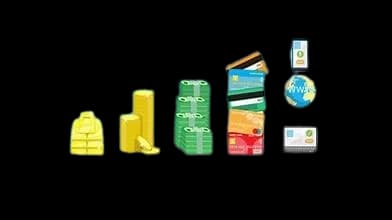
Once upon a time, John Hicks, a British economist who made significant contributions to the study of money, value, and general equilibrium theory, said, “Money is not what it is but what it does.” This idea reflects the functional view of money in economics, emphasizing its roles as a medium of exchange, a store of value, and a unit of account, rather than its physical form or intrinsic value. Long ago, the world had no credit cards or any form of money resembling what we use today. People lived in small communities and exchanged goods they had for those they needed. This system was called bartering. For example, a farmer would trade vegetables with a fisherman to get fish. This marks the first stage in the evolution of money. However, bartering had its challenges. What if the fisherman didn’t want vegetables? Or what if the farmer needed salt instead of fish? People needed a more reliable way to trade. Eventually, communities began using items that everyone agreed had value, such as seashells, beads, salt, tobacco, and even large stones. These were known as commodity money. But carrying heavy stones or collecting rare shells was inconvenient. As time passed, people started using metal coins made of gold, silver, and copper. These coins were small, durable, and easy to transport. Kings and rulers stamped their faces or symbols on coins to guarantee authenticity. Coins made trading faster and simpler, but carrying large quantities could still be cumbersome and risky. Then came an innovation that changed everything—paper money. Instead of carrying coins, people began using lightweight pieces of paper to represent value. These notes were trusted because they were issued by governments or banks. With paper money, trade expanded even further. As societies became more connected, carrying large amounts of cash was no longer practical or safe. This led to the invention of banks and checks. People could deposit their money in a bank and use checks to make payments. The bank would handle the transfer of funds, streamlining transactions. In the 20th century, technology introduced a significant advancement—credit and debit cards. Instead of using cash or checks, people could swipe a card to make purchases. These cards were linked to bank accounts, making payments quick and convenient. Today, money is becoming increasingly digital. People use online banking, mobile payment apps, and even cryptocurrencies like Bitcoin. With just a phone or computer, they can send money anywhere in the world within seconds. From bartering to coins, from paper money to digital payments, money has continuously evolved to make life easier and trade faster. Yet one thing remains unchanged: money is simply a tool that helps people acquire what they need and share what they have.



Comments
No comments yet. Be the first to share a thought.