
The fall of Bashar al-Assad’s regime marks a profound shift in Syria’s political landscape. The once grand presidential palace in Damascus, with its lavish furnishings and opulent architecture, now stands under the control of the armed rebels who stormed the capital after the president’s flight. The rebels, led by figures like Abu Oweis, a young man who had fought since the early days of the uprising, now occupy the palace, contrasting sharply with the regime that once ruled with brutality and excess. Inside the palace, remnants of a bygone era remain—gifts from world leaders, framed photos,
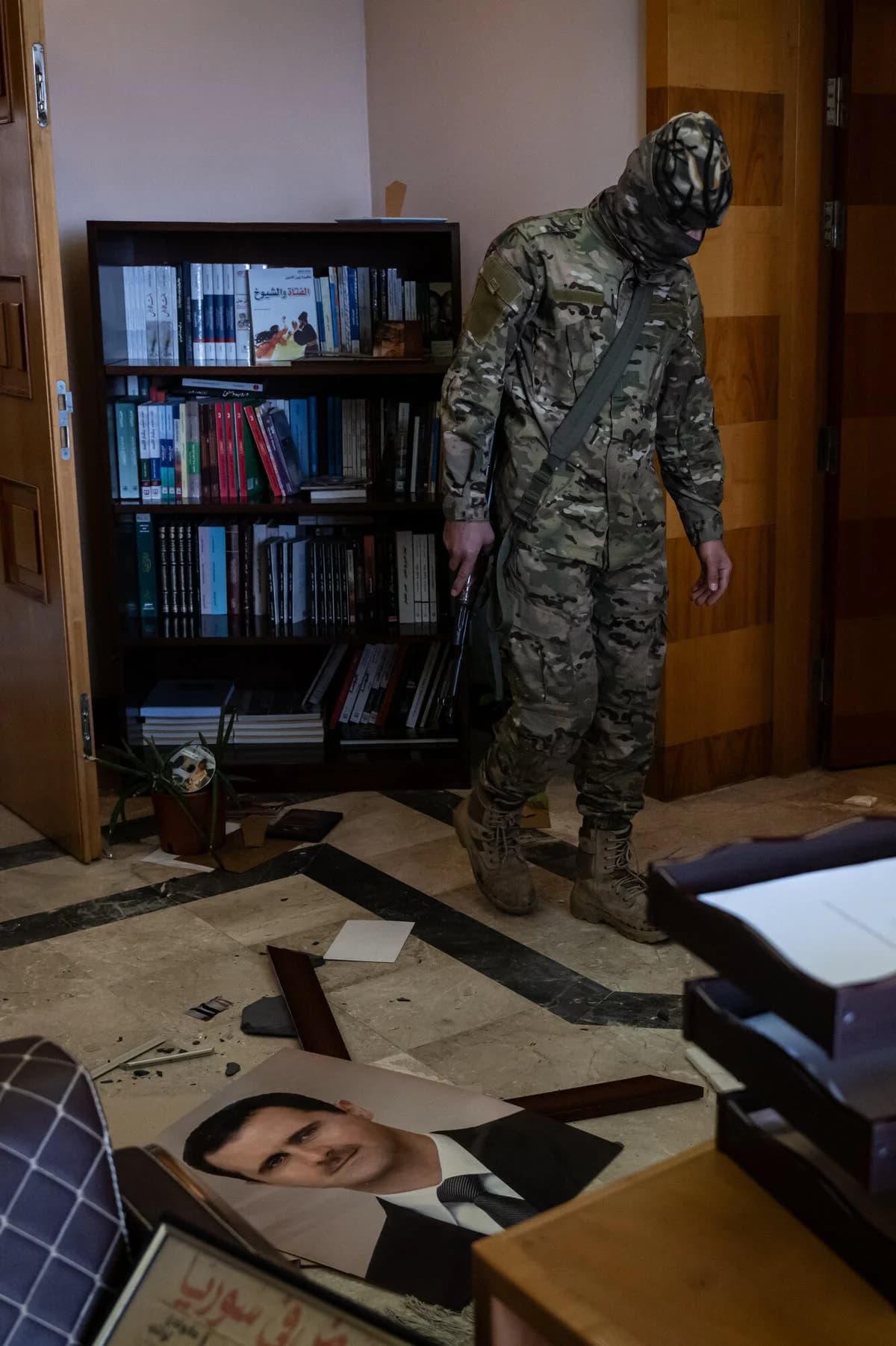
The fall of Bashar al-Assad’s regime marks a profound shift in Syria’s political landscape. The once grand presidential palace in Damascus, with its lavish furnishings and opulent architecture, now stands under the control of the armed rebels who stormed the capital after the president’s flight. The rebels, led by figures like Abu Oweis, a young man who had fought since the early days of the uprising, now occupy the palace, contrasting sharply with the regime that once ruled with brutality and excess. Inside the palace, remnants of a bygone era remain—gifts from world leaders, framed photos, and elaborate furniture—but the mood has turned bitter. The lavish building, once a symbol of authoritarian power, now serves as a stark reminder of the injustices suffered by ordinary Syrians. As the country looks to the future, hope and uncertainty coexist, with many hopeful that life will improve after the fall of the regime.



Comments
No comments yet. Be the first to share a thought.