
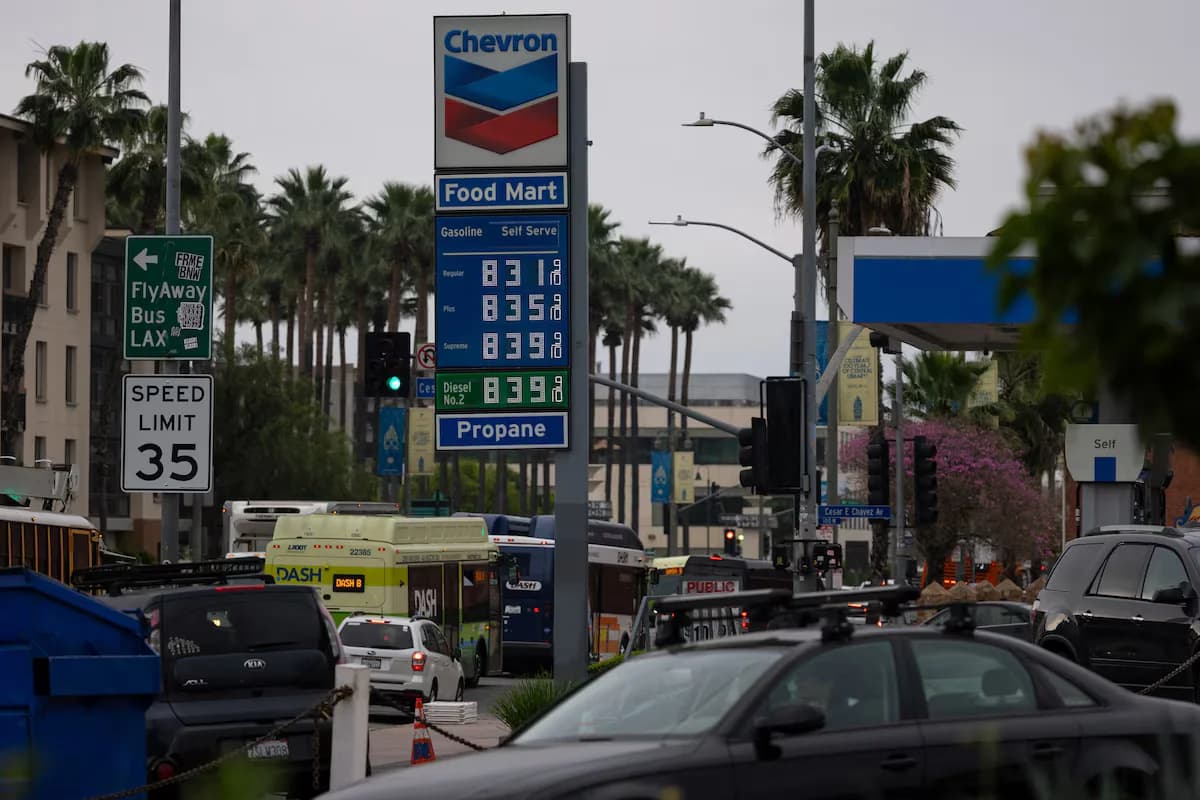
What began as a distant conflict in the Middle East is now showing up in one of the most ordinary places in America: the gas pump. As tensions involving Iran disrupt global oil markets, rising gasoline prices are creating an unusual political twist one that could threaten the congressional majority of the Republican Party led by President Donald Trump. In a strange chain reaction linking war to daily life, instability in the oil-rich region has pushed global crude prices upward. The effects are being felt thousands of kilometers away in the United States, where drivers are paying more to fill
What began as a distant conflict in the Middle East is now showing up in one of the most ordinary places in America: the gas pump. As tensions involving Iran disrupt global oil markets, rising gasoline prices are creating an unusual political twist one that could threaten the congressional majority of the Republican Party led by President Donald Trump. In a strange chain reaction linking war to daily life, instability in the oil-rich region has pushed global crude prices upward. The effects are being felt thousands of kilometers away in the United States, where drivers are paying more to fill their tanks. What might normally be seen as a foreign policy issue is rapidly turning into a domestic political headache. Energy analysts say disruptions around key shipping routes such as the Strait of Hormuz, a narrow waterway through which a large portion of the world’s oil travels, have rattled markets. Even small threats to this route can send global oil prices surging almost overnight. For American commuters, truck drivers and small businesses, the consequences are immediate. Higher fuel costs increase transportation expenses and push up the prices of everyday goods. As frustration grows among voters, political observers warn that the economic pressure could influence how Americans vote in upcoming congressional elections. The situation presents an odd political paradox: a war unfolding thousands of kilometers away could determine the fate of lawmakers in Washington. With Republicans holding only a narrow majority in Congress, a spike in gas prices something as routine as a weekly fill up may end up playing a surprising role in deciding which party holds power. In today’s interconnected economy, the journey from battlefield to ballot box can be shorter and stranger than anyone expects.



Comments
No comments yet. Be the first to share a thought.