
Financial markets surged March 23, 2026 after U.S. President Donald Trump announced a five-day postponement of planned strikes on Iranian power plants, citing what he described as “productive conversations” with Tehran aimed at reducing tensions. The announcement came just hours before a 48-hour ultimatum for Iran to reopen the Strait of Hormuz was set to expire Monday evening in Washington. Markets React to Iran Strike Postponement Brent crude initially fell as much as 14% to $96 per barrel before paring losses to hover near $101, as investors priced in a reduced risk of immediate conflict di
Financial markets surged March 23, 2026 after U.S. President Donald Trump announced a five-day postponement of planned strikes on Iranian power plants, citing what he described as “productive conversations” with Tehran aimed at reducing tensions. The announcement came just hours before a 48-hour ultimatum for Iran to reopen the Strait of Hormuz was set to expire Monday evening in Washington.
Markets React to Iran Strike Postponement
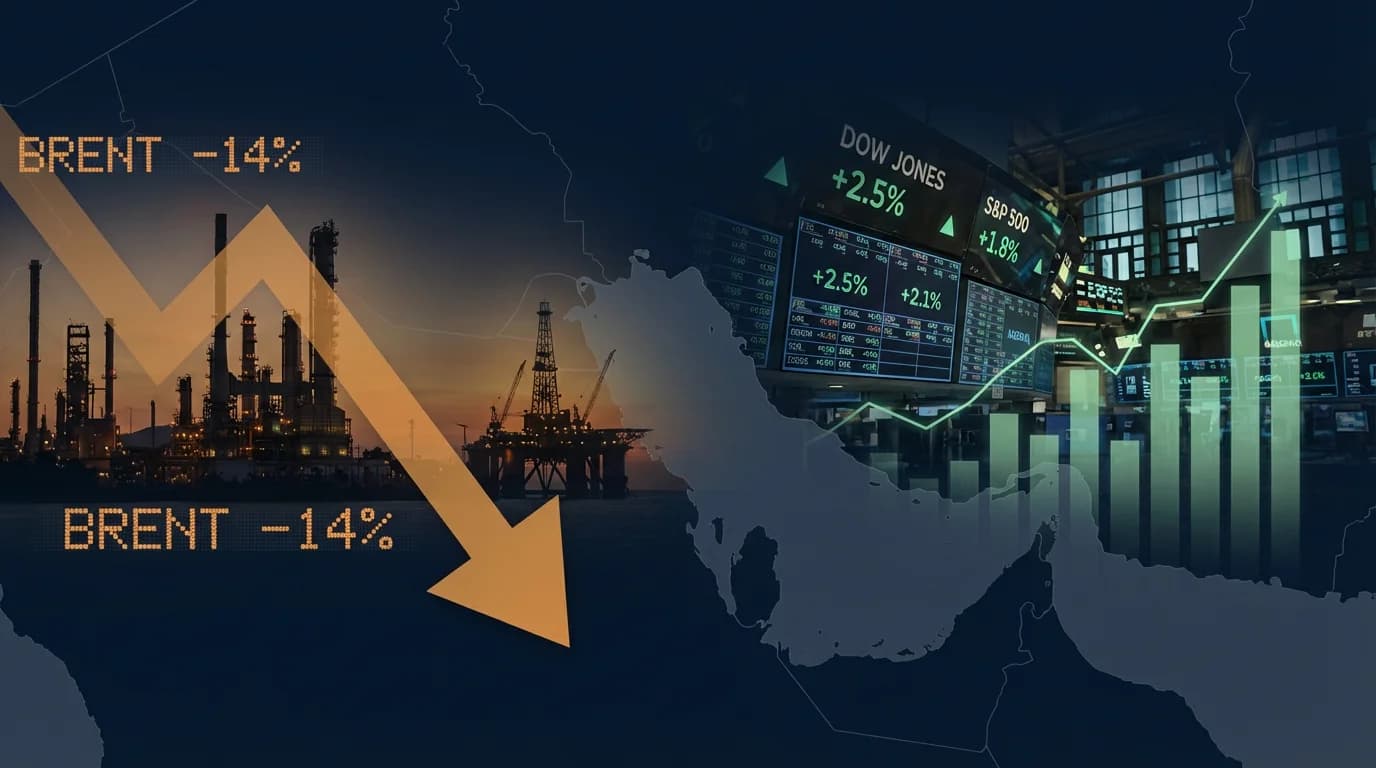
Brent crude initially fell as much as 14% to $96 per barrel before paring losses to hover near $101, as investors priced in a reduced risk of immediate conflict disrupting Middle East oil shipments.
Equity markets rallied in response. In Europe, the STOXX 600 index rose nearly 1%, while in the U.S., the Dow Jones Industrial Average climbed 975 points (2.1%), the S&P 500 gained 2%, and the Nasdaq increased 2.3%. Two-year U.S. Treasury yields dropped 21 basis points from Monday’s peak above 4%, the highest since June, as investors sought safety amid lower perceived geopolitical risk. The U.S. dollar weakened against major currencies, with the euro rising to $1.158.
Markets partially retraced gains later as Reuters reported that the Israel Defense Forces continued strikes on Tehran. Iranian officials denied that any negotiations had taken place, highlighting uncertainty over de-escalation claims. Analysts noted that the initial surge reflected investors pricing in a lower probability of immediate escalation, before the conflicting reports tempered enthusiasm.
The CBOE Volatility Index (VIX), which measures market fear and uncertainty, fell sharply after the announcement, reflecting the temporary easing of risk in equity markets.
Attention now turns to whether the five-day window yields tangible diplomatic progress, or merely delays a confrontation that markets remain highly sensitive to.
While the postponement eased immediate fears, the episode underscores how quickly oil, equities, and bond markets can swing on geopolitical headlines, demonstrating the persistent vulnerability of global financial markets to Middle East tensions.



Comments
No comments yet. Be the first to share a thought.