
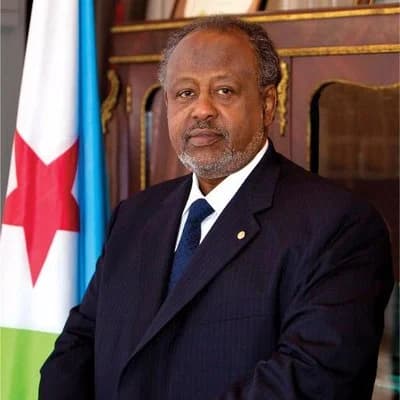
The President of Djibouti , Ismail Omar Guelleh , has been re-elected for a sixth term after securing an overwhelming 97.81% of the vote in the country’s latest presidential election. According to official results, Guelleh decisively defeated his main challenger, Mohamed Farah Samatar , who garnered just 2.19% of the total votes cast. The outcome further cements Guelleh’s long-standing grip on power in the Horn of Africa nation. At 78 years old, Guelleh remains one of Africa’s longest-serving leaders. He first assumed office in 1999, succeeding his uncle, Hassan Gouled Aptidon, the country’s f
The President of Djibouti, Ismail Omar Guelleh, has been re-elected for a sixth term after securing an overwhelming 97.81% of the vote in the country’s latest presidential election. According to official results, Guelleh decisively defeated his main challenger, Mohamed Farah Samatar, who garnered just 2.19% of the total votes cast. The outcome further cements Guelleh’s long-standing grip on power in the Horn of Africa nation. At 78 years old, Guelleh remains one of Africa’s longest-serving leaders. He first assumed office in 1999, succeeding his uncle, Hassan Gouled Aptidon, the country’s first president. Since then, he has maintained political dominance through successive elections. His latest victory comes after significant constitutional changes. In 2025, Djibouti’s political leadership removed the upper age limit for presidential candidates, a move widely seen as paving the way for Guelleh to contest again. This reform effectively eliminated one of the last barriers that could have prevented his continued rule. Throughout his tenure, Guelleh has been credited with maintaining relative stability in Djibouti, a strategically important nation located near key global shipping routes. The country hosts several foreign military bases, including those of the United States, France, and China, making it a critical geopolitical hub. However, his leadership has also faced criticism from opposition groups and international observers, who have often raised concerns about the lack of political competition, restrictions on freedom of expression, and the credibility of electoral processes in Djibouti. Despite these criticisms, Guelleh’s decisive victory signals continued political continuity in the country, as he embarks on another term expected to extend his leadership well beyond a quarter-century in power. As Djibouti moves forward, attention will likely focus on governance reforms, economic development, and whether space for political pluralism will expand under his extended rule.



Comments
No comments yet. Be the first to share a thought.