
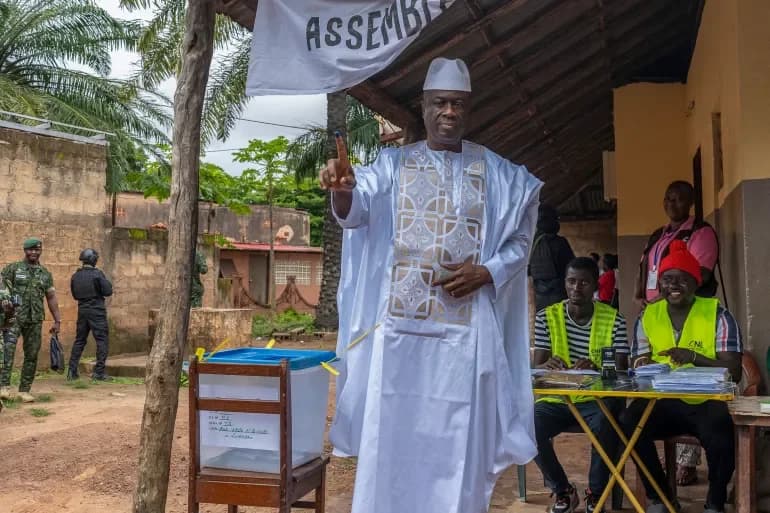
Vote counting is under way in Guinea-Bissau after voters took part in a constitutional referendum that could significantly increase the powers of the country’s presidency. The referendum was held on Sunday, less than 10 months after the military seized power in a coup. The transitional government says the proposed constitutional reforms are intended to strengthen political institutions and prevent future instability before civilian rule is restored. The new constitution would transform Guinea-Bissau from a parliamentary system into a presidential one. Under the proposed system, the president
Vote counting is under way in Guinea-Bissau after voters took part in a constitutional referendum that could significantly increase the powers of the country’s presidency. The referendum was held on Sunday, less than 10 months after the military seized power in a coup. The transitional government says the proposed constitutional reforms are intended to strengthen political institutions and prevent future instability before civilian rule is restored. The new constitution would transform Guinea-Bissau from a parliamentary system into a presidential one. Under the proposed system, the president would have the authority to appoint and dismiss the prime minister and members of government, as well as dissolve parliament. The current system requires the prime minister to come from the parliamentary majority, a structure that has contributed to repeated tensions and difficult power-sharing arrangements. Voters were asked to respond “yes” or “no” to whether they agreed with the implementation of the new constitution approved by the National Transitional Council. Idrissa Djalo, executive secretary of the National Electoral Commission, said turnout had exceeded 55 percent and that voting took place without incidents that would undermine the credibility of the process. Final results are expected on Tuesday. The referendum comes as Guinea-Bissau prepares for presidential and parliamentary elections scheduled for December 6. The military government says the elections are intended to return the country to civilian rule after a period of political uncertainty. Transitional President General Horta Inta-A Na Man said the objective of the reforms was to ensure that whoever wins the upcoming elections can complete their mandate without political obstruction. However, under the transitional charter, Inta-A Na Man is barred from standing in the elections. The referendum follows years of political instability. After the November 2025 presidential election, rival candidates both claimed victory and accused each other of electoral interference. The military takeover followed one day later, further deepening the country’s political crisis. The outcome of the referendum could therefore shape Guinea-Bissau’s political system and determine how power is exercised under the civilian government expected to take office after the December elections.



Comments (2)
Great piece, the background section really helped.
Interesting angle. Any data on how this compares to last year?