
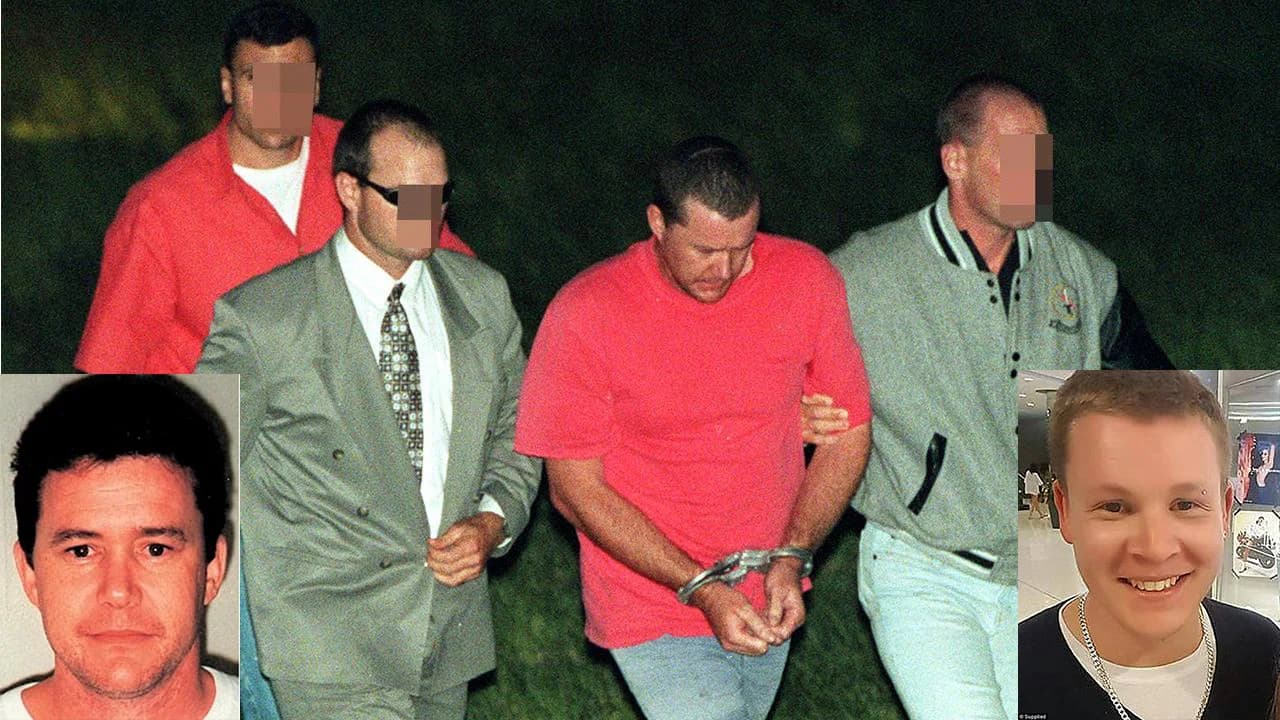
Brenden James Abbott, often dubbed “The Postcard Bandit,” is a famous figure in Australian criminal history. Known for his mysterious bank heists, prison escapes, and months of evasion from law enforcement, Abbott became a legend, one that captured the public’s imagination through his resourcefulness and cunning. From humble beginnings to becoming Australia’s most infamous bank robber, Abbott’s criminal career continues to inspire documentaries, films, and books, cementing his place in the annals of criminal history. How did it begin? Brenden Abbott was born on May 8, 1962, in Footscray, Mel
Brenden James Abbott, often dubbed “The Postcard Bandit,” is a famous figure in Australian criminal history. Known for his mysterious bank heists, prison escapes, and months of evasion from law enforcement, Abbott became a legend, one that captured the public’s imagination through his resourcefulness and cunning. From humble beginnings to becoming Australia’s most infamous bank robber, Abbott’s criminal career continues to inspire documentaries, films, and books, cementing his place in the annals of criminal history.
How did it begin?
Brenden Abbott was born on May 8, 1962, in Footscray, Melbourne, into a family marked by dysfunction and instability. Raised as a ward of the state in Western Australia, Abbott’s childhood was one of hardship, deprivation, and emotional neglect. Like many in similar circumstances, Abbott’s early years were punctuated by confrontations with the law. Abbott attended Eastern Hills High School in Mount Helena, a suburb of Perth. His academic performance was average, but his intelligence and resourcefulness were apparent. It wasn’t long before Abbott’s confrontations with the law escalated from minor infractions to serious offenses. After serving time for burglary, Abbott’s transformation from a petty criminal to a notorious bank robber began in earnest.
What was Brenden’s first robbery?
In 1986, Abbott’s criminal trajectory took a more deliberate turn. In a daring robbery in Perth, he and a group of accomplices managed to steal $112,000 from the Commonwealth Bank. This heist marked Abbott’s first significant criminal act, but it was the beginning. His involvement in the robbery led to his arrest and conviction, sentencing him to Fremantle Prison. Fremantle Prison, known for housing some of the most dangerous criminals in Australia, would serve as both a training ground and a crucible for Abbott’s most audacious plans. While many people thought that it was time for Brenden to bring positive changes, this robber showed the contrast. While behind bars, instead of learning from the harsh life conditions in the prison, Abbott began developing his escape plan, demonstrating an early aptitude for manipulation, strategy, and timing.
Fremantle Prison break: the revelation of what planned behind bars.
On November 24, 1989, Abbott and fellow inmate Aaron Reynolds pulled off one of Australia’s most remarkable jailbreaks. The two men fashioned prison guard uniforms using materials found within the prison, including fabric from the prison’s tailor workshop. The robbers hid in the guise of guards, they managed to scale the high limestone walls of Fremantle Prison, evading detection despite the strict security measures in place. This daring escape sent shockwaves through the prison system, casting doubt on the effectiveness of its security measures. The public was captivated by the audacity and meticulous planning that had gone into the breakout, solidifying Abbott’s reputation as a criminal mastermind.
The National Crime Outbreak
After his escape, Abbott went underground, using a variety of aliases and disguises to evade capture. Over the next few years, he embarked on a national crime series that spanned multiple states, from Western Australia to Queensland. Abbott committed an estimated 40 to 50 bank robberies, systematically targeting banks in major cities, including Perth, Adelaide, and the Gold Coast. Abbott’s bank robberies were characterized by precision and meticulous planning. He would study bank layouts, observe the behavior of bank employees, and plan his heists with military precision. He often prepared elaborate disguises, using wigs and makeup to alter his appearance, making it difficult for the authorities to track him. His heists were typically low-key affairs; robberies that were executed swiftly and without unnecessary violence. Though Abbott was rarely caught in the act, his crimes became increasingly audacious. While on the run, he allegedly sent postcards to the media, taunting police and further embedding himself in the public’s imagination as an elusive and almost mythical figure. However, it was later revealed that the postcards were not written by Abbott but rather by someone else, fueling the myth surrounding his criminal career.
Second Capture and Jailbreak
In 1995, Abbott's crime series ended with his capture in Queensland after an intense manhunt. However, his time in prison became the stage for another daring escape. In November 1997, Abbott, along with four accomplices, managed to break out of Sir David Longland Prison. Using diamond-encrusted wire, they sawed through their cell bars and navigated the perimeter fences, engaging in a shootout with guards during their escape. Abbott's ingenuity and resourcefulness once again astonished the public, cementing his legendary status. Authorities were left scrambling to recapture him, but for a time, Abbott was once again a fugitive, living under false identities.
Final capture and Imprisonment
Abbott’s time as a fugitive came to an end in May 1998 when he was captured in Darwin after six months on the run. His recapture marked the conclusion of one of Australia's most thrilling criminal sagas. Abbott was then transferred to the high-security Woodford Correctional Centre in Queensland, where he spent several years in solitary confinement due to the danger he posed. Despite not committing any major crimes during his imprisonment, his notoriety only grew. Known for his intelligence, charm, and remarkable escape abilities, Abbott's legacy continued to capture the public's imagination.
“The Postcard Bandit”—an Inspiration from Brenden’s legacy
Abbott’s story remains a fascinating tale of crime, escape, and audacity. His ability to evade capture, outwit authorities, and carry out meticulously planned heists earned him a place in Australian criminal folklore. Abbott’s criminal career has inspired numerous books, documentaries, and even a television movie,
The Postcard Bandit (2003),
which dramatized his life on the run. Though Abbott has been incarcerated for much of the past two decades, his criminal legacy endures. His cleverness and cunning continue to captivate audiences, making him a figure of intrigue and myth. Abbott Brenden is still recognized as one of Australia’s most notorious criminals. As of now, Abbott is eligible for parole, raising the question of what the future holds for the man who was once the most wanted fugitive in the country. Can you guess what the mystery is? This legend of bank heists and jailbreaks is still alive. He is now 62 years old, and he has a family. Will he inherit his robbery skills to someone, or will he commit another robbery as it’s what he can do best? This keeps wandering in most people’s minds.
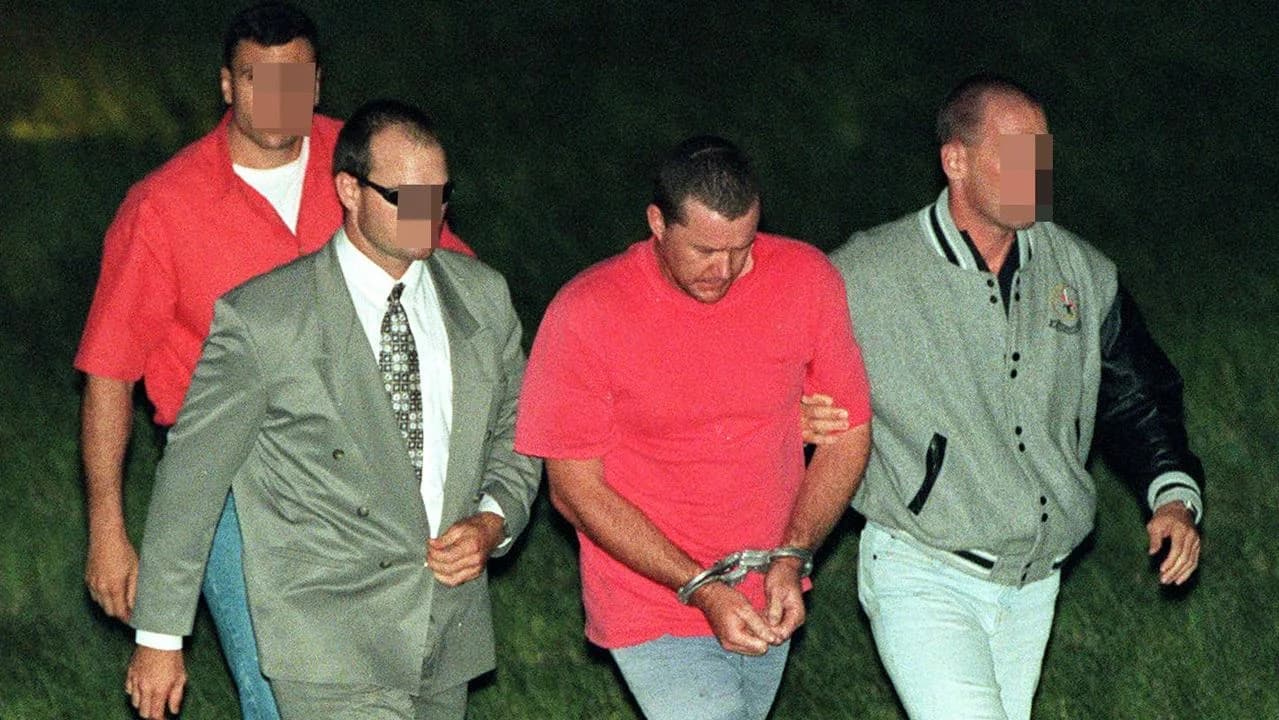
On May 6, 1998, Brenden Abbott being taken to Woodford Correctional Centre in Brisbane after an arrest.



Comments
No comments yet. Be the first to share a thought.