
The term “Highway of Death” is being used by journalists to describe a dangerous supply route in the Russia–Ukraine war where Ukrainian drone attacks are heavily targeting Russian logistics convoys. These highways, especially in occupied southern Ukraine and routes leading toward Crimea, are vital for transporting fuel, ammunition, food, and military equipment to Russian frontline forces. Because of repeated drone strikes, these routes have become extremely risky. Ukraine’s military has increasingly relied on drones to monitor and attack moving Russian convoys. These drones are used to ident
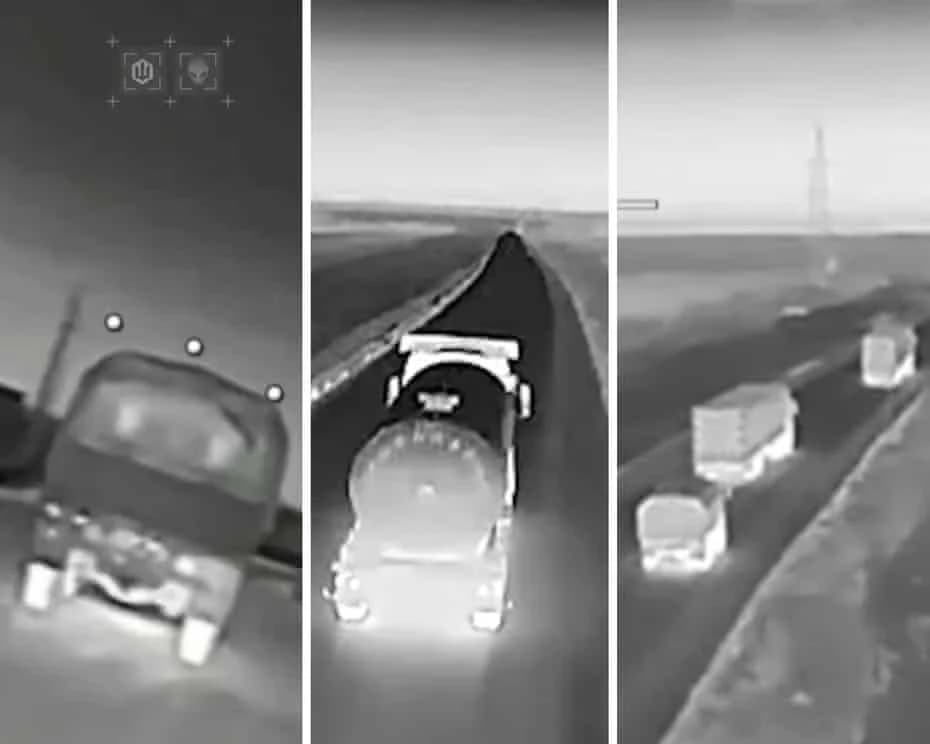
The term “Highway of Death” is being used by journalists to describe a dangerous supply route in the Russia–Ukraine war where Ukrainian drone attacks are heavily targeting Russian logistics convoys. These highways, especially in occupied southern Ukraine and routes leading toward Crimea, are vital for transporting fuel, ammunition, food, and military equipment to Russian frontline forces. Because of repeated drone strikes, these routes have become extremely risky. Ukraine’s military has increasingly relied on drones to monitor and attack moving Russian convoys. These drones are used to identify targets, follow vehicles in real time, and carry out precise strikes aimed at disrupting supply chains. As a result, many transport vehicles have been destroyed or forced to move cautiously, slowing down Russia’s ability to resupply its troops. This has turned key highways into contested and highly dangerous zones rather than safe logistics corridors. Military analysts say this strategy focuses not only on battlefield confrontation but also on weakening the enemy through logistics disruption. By cutting supply lines, Ukraine aims to reduce Russia’s operational effectiveness on the front lines.
The situation highlights how modern warfare increasingly depends on drones and technology, where control of supply routes can be as important as control of territory.



Comments
No comments yet. Be the first to share a thought.