
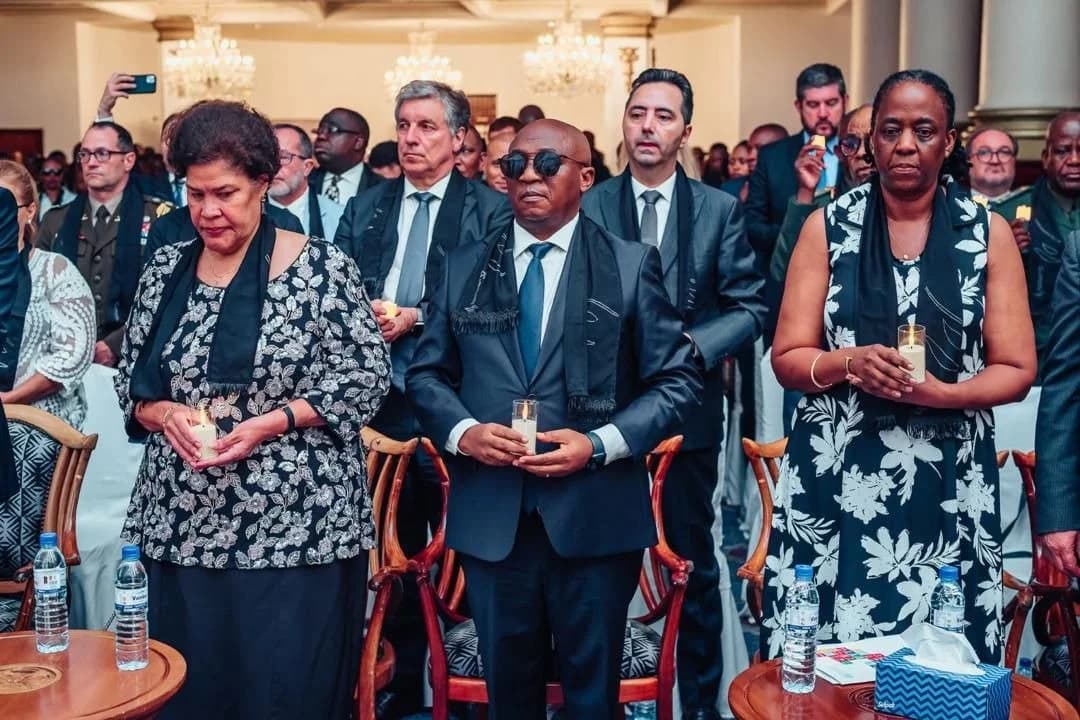
MPIGI, Uganda — Diplomats and representatives from several countries and international organizations joined Rwandans in Uganda on April 10 to pay tribute to victims of the 1994 Genocide against the Tutsi during a commemoration held at the Ggolo Memorial Site . The event formed part of Kwibuka 32 , the annual remembrance that began on April 7 under the theme “Remember, Unite, Renew,” marking 32 years since the genocide in which more than one million people were killed, according to official Rwandan sources. According to the Rwanda High Commission in Uganda, delegations at the ceremony included
MPIGI, Uganda — Diplomats and representatives from several countries and international organizations joined Rwandans in Uganda on April 10 to pay tribute to victims of the 1994 Genocide against the Tutsi during a commemoration held at the Ggolo Memorial Site.
The event formed part of Kwibuka 32, the annual remembrance that began on April 7 under the theme “Remember, Unite, Renew,” marking 32 years since the genocide in which more than one million people were killed, according to official Rwandan sources.
According to the Rwanda High Commission in Uganda, delegations at the ceremony included representatives from the Sahrawi Arab Democratic Republic, South Africa, South Sudan, Sudan, Tanzania, the United Kingdom and Venezuela, alongside officials from the United Nations and the European Union.
Uganda’s government was represented by Alice Kaboyo, Minister of State in the Office of the Prime Minister for Luweero Triangle and Rwenzori Region, who attended as chief guest.
“It is not only about Rwanda, but about all nations and people. It calls upon us as Africans and members of the global community to reaffirm our commitment to the prevention of genocide and mass atrocities. The lessons of 1994 remain deeply relevant across the world,” said Kaboyo.
The Ggolo Memorial Site is one of the most significant genocide remembrance sites outside Rwanda. It is the final resting place of 4,771 victims whose bodies were recovered from Lake Victoria after being dumped into rivers such as Nyabarongo and Akagera during the genocide and later carried across borders into Uganda.
Uganda hosts two other recognized genocide memorial sites: Lambu Memorial Site in Masaka District and Kasensero Landing Site in Rakai District, where additional remains were recovered and buried.
Commemoration activities are held annually at these sites during the Kwibuka period, bringing together survivors, members of the Rwandan diaspora, Ugandan officials and international representatives. The events typically include wreath-laying, prayers, testimonies and moments of silence in remembrance of the victims.
Officials at the ceremony emphasized the importance of preserving the historical record and addressing genocide denial as part of ongoing remembrance efforts.



Comments
No comments yet. Be the first to share a thought.