
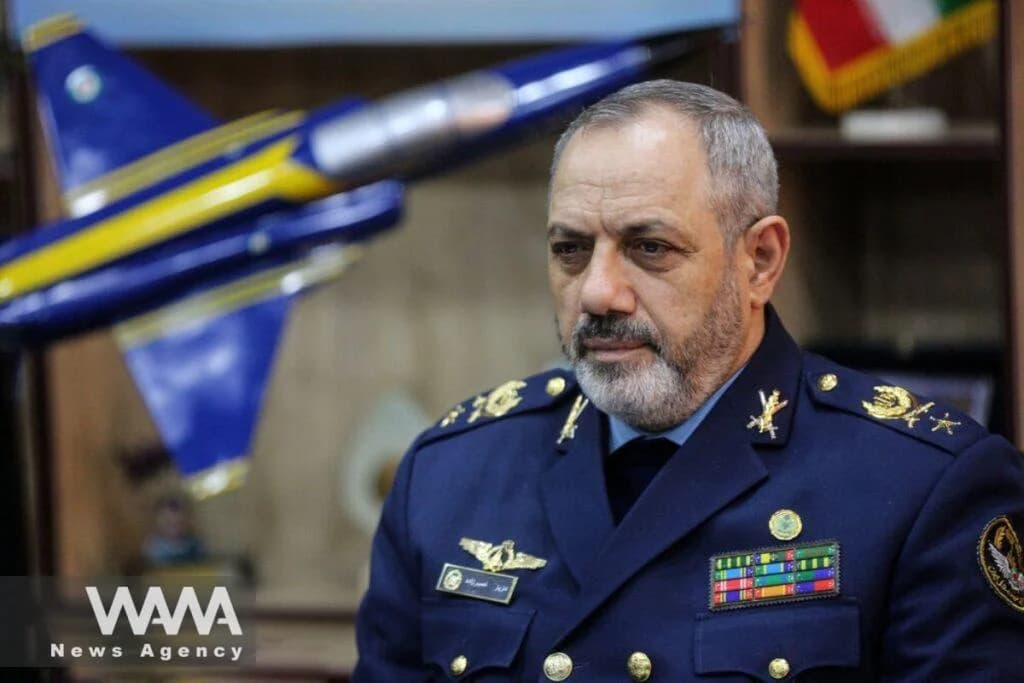
Iran’s Defense Minister Aziz Nasirzadeh has claimed that the Islamic Republic has established weapons manufacturing facilities in “several countries,” though he did not disclose which ones. Speaking in an interview with the Iranian news agency Young Journalists Club , Nasirzadeh said missile development has been a top priority for Tehran but suggested that “after the war with Israel, priorities may change.” He added that the overseas factories are expected to be “officially opened and announced in the near future.” The remarks come as Iran also works to avoid new international sanctions ove
Iran’s Defense Minister Aziz Nasirzadeh has claimed that the Islamic Republic has established weapons manufacturing facilities in “several countries,” though he did not disclose which ones. Speaking in an interview with the Iranian news agency
Young Journalists Club
, Nasirzadeh said missile development has been a top priority for Tehran but suggested that “after the war with Israel, priorities may change.” He added that the overseas factories are expected to be “officially opened and announced in the near future.” The remarks come as Iran also works to avoid new international sanctions over its nuclear programme. Iran’s foreign minister, Abbas Araghchi, said he held a phone call with his French, German, and British counterparts in a bid to prevent a UN Security Council vote on sanctions just days before a European deadline, reports
The Guardian.
The three European powers [part of the 2015 Iran nuclear deal] have threatened to trigger the “snapback” provision that allows for the reimposition of sanctions if they believe Iran is breaching its commitments, including cooperation with international nuclear monitors. Last month, Iran’s parliament voted to suspend all cooperation with the International Atomic Energy Agency (IAEA) after Israeli and US airstrikes on Iranian nuclear facilities in June, even as talks continued over the programme. Following the call, Araghchi issued a statement via Telegram accusing France, Germany, and the UK of lacking “legal and moral qualifications” to impose sanctions. Still, he stressed that Iran remained open to negotiations: “The Islamic Republic of Iran, just as it acts authoritatively in self-defence, has never abandoned the path of diplomacy and is ready for any diplomatic solution that guarantees the rights and interests of the Iranian people"
Iran’s foreign minister, Abbas Araghchi (File: IranWire)
French Foreign Minister Jean-Noël Barrot confirmed the discussions in a post on X, saying another round of talks is scheduled for next week: “We have just made an important call to our Iranian counterpart regarding the nuclear programme and the sanctions against Iran that we are preparing to reapply… time is running out.” UK Foreign Secretary David Lammy and the EU’s top diplomat Kaja Kallas echoed that warning. Germany’s Foreign Minister Johann Wadephul added: “Iran needs to engage substantively in order to avoid the activation of snapback. We have been clear that we will not let the snapback of sanctions expire unless there is a verifiable and durable deal.” Any move to reinstate sanctions could face opposition at the UN Security Council, where China and Russia; both permanent members with veto power, are likely to resist Western efforts.



Comments
No comments yet. Be the first to share a thought.