
Australian residents with family in Iran are living in a state of constant worry, amid fears for their loved ones’ safety despite a fragile ceasefire between Iran and Israel. Though a temporary halt in hostilities has been agreed upon, the precarious nature of the situation continues to leave many in the Iranian diaspora deeply concerned, with growing calls for the Australian government to help evacuate family members from the conflict zone. In an interview with ABC News, Bahar Chaichi, an Iranian-born engineer who moved to Australia 13 years ago, described the emotional toll of watching the
Australian residents with family in Iran are living in a state of constant worry, amid fears for their loved ones’ safety despite a fragile ceasefire between Iran and Israel. Though a temporary halt in hostilities has been agreed upon, the precarious nature of the situation continues to leave many in the Iranian diaspora deeply concerned, with growing calls for the Australian government to help evacuate family members from the conflict zone. In an interview with ABC News, Bahar Chaichi, an Iranian-born engineer who moved to Australia 13 years ago, described the emotional toll of watching the crisis unfold from a distance. “Most of the time we feel guilty that we are sitting here in Australia, in such a safe, lovely, beautiful place,” she said. “That feeling of powerlessness is the most challenging thing that we are dealing with.” Ms Chaichi, who serves as the president of the Australian Iranian Community in Newcastle, is among more than 85,000 Iranians currently living in Australia.
A Mother's Plea for Her Daughter’s Family
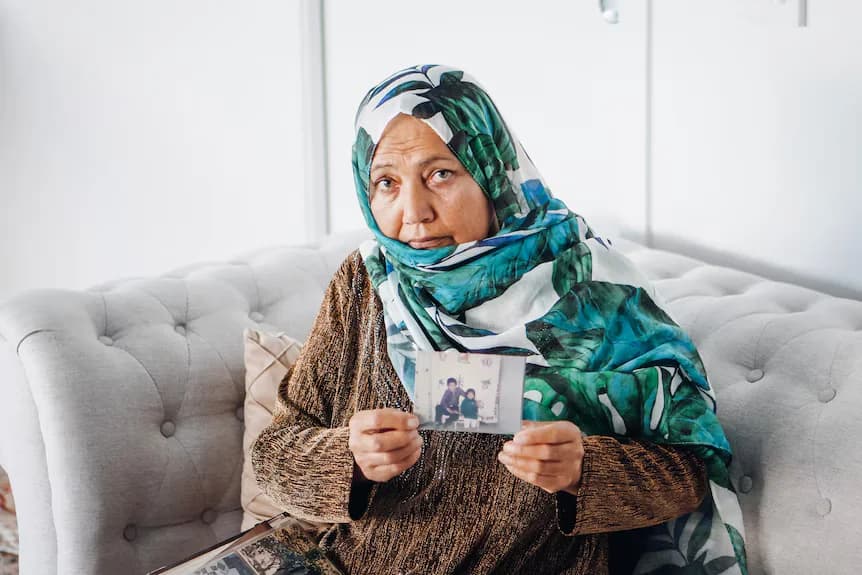
Among those most affected is Amineh Pirouzi, a naturalised Australian citizen originally from Afghanistan, who now resides on the NSW Mid North Coast. Her daughter Mahdiah, along with her husband and three children, remains in Tehran. “I fear that my daughter will die of stress and fear,” Ms Pirouzi said. “No one understands my pain and suffering.” Struggling with sleeplessness and absenteeism from work, Ms Pirouzi said she lives in a state of constant worry. Last year, her daughter applied to migrate to Australia under the Community Support Program, but the application remains pending. “I plead with the Australian government to help my daughter flee as soon as possible,” she said. “I fear that despite all my screaming and begging, no one will listen to me.”
Desire for Regime Change
Some Iranian-Australians view the current crisis as a possible turning point in their homeland’s history. Azin Naghibi and Hesan Orouji, both Iranian refugees who arrived in Australia in 2013, say they were previously targeted by Iran’s Islamic Revolutionary Guard Corps (IRGC). Mr Orouji is a member of the Iran Novin Party, which advocates for the restoration of a monarchy under Reza Pahlavi, the son of the late Shah of Iran. “This is the only historic chance we have to not be killed by the Islamic regime again and again,” Mr Orouji said. “It’s a paradox to see your home getting bombed, but I say, ‘If that’s the cost I have to pay, then I’ll pay it.’” The couple, whose family remains in Tehran, said their relatives had opted not to evacuate despite warnings from both the U.S. and Israel. According to Ms Naghibi, many Iranians remain in place in the hope of witnessing regime change. “They tell us, ‘I want to watch it. I want to be there when it happens,’” she said. “The people of Iran don’t deserve this, but the hope is greater than all of that.”
Civilians Suffering for What The Didn’t Initiate
Ms Chaichi stressed that, as in all wars, it is civilians who ultimately bear the brunt of the conflict. “Like any other wars, obviously, normal people were not part of the decision-making process to initiate it,” she said. She also noted the resilience of the Iranian people, who have endured decades of internal and external conflict.
“We’ve been attacked so many times, for so many reasons, by so many names, by so many nations, But we practise our resilience, and I think this is another time for us to stick together, keep our faith, and hold on to hope.”



Comments
No comments yet. Be the first to share a thought.