
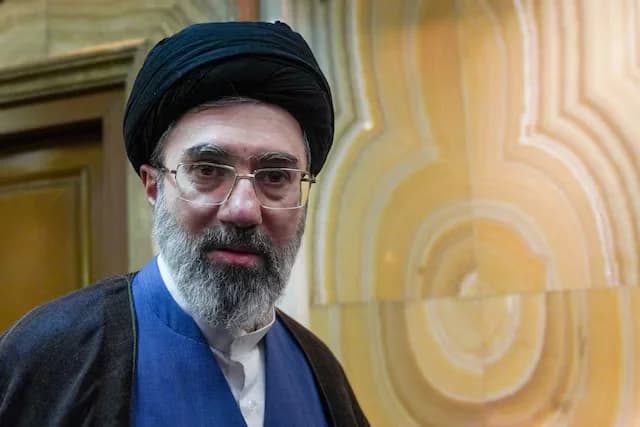
Iran’s newly appointed Supreme Leader, Mojtaba Khamenei , is reportedly recovering from serious and disfiguring injuries sustained during an airstrike that killed his father, Ali Khamenei , according to sources cited by Reuters. The 56-year-old leader is said to have suffered significant facial injuries and damage to one or both legs following the strike on the supreme leader’s compound in Tehran at the onset of the ongoing war. Some reports suggest he may have lost a leg, though these claims have not been independently verified. Despite his condition, sources close to his inner circle indicat
Iran’s newly appointed Supreme Leader, Mojtaba Khamenei, is reportedly recovering from serious and disfiguring injuries sustained during an airstrike that killed his father, Ali Khamenei, according to sources cited by Reuters.
The 56-year-old leader is said to have suffered significant facial injuries and damage to one or both legs following the strike on the supreme leader’s compound in Tehran at the onset of the ongoing war. Some reports suggest he may have lost a leg, though these claims have not been independently verified.
Despite his condition, sources close to his inner circle indicate that Khamenei remains mentally sharp and actively involved in state affairs. He is reportedly participating in high-level meetings via audio conferencing and contributing to key decisions, including ongoing war strategies and sensitive negotiations with the United States.
His health has become a focal point at a critical time for Iran, as the nation navigates one of its most dangerous periods in decades. High-stakes diplomatic efforts, including indirect peace talks with Washington taking place in Islamabad, add further pressure on the country’s leadership.
Since his appointment on March 8, Khamenei has not appeared publicly, and no images or video recordings have been released. Iranian authorities have also remained silent on the extent of his injuries, fueling speculation both domestically and internationally.
Analysts suggest that even beyond his physical condition, Khamenei faces a major challenge in consolidating power. Unlike his father, who ruled for over three decades, Mojtaba Khamenei is considered politically less established. Experts believe it may take years for him to command similar authority within Iran’s complex political and military structure, particularly with the influential Revolutionary Guards playing a dominant role.
Public uncertainty surrounding his condition has sparked widespread discussion on social media in Iran, with some questioning his ability to govern effectively. However, supporters argue that maintaining a low profile is necessary given ongoing security threats, including continued airstrikes targeting key figures.
While sources indicate that images or a possible public appearance could emerge in the coming months, Khamenei’s recovery and visibility will likely remain closely tied to both his health and the evolving security situation.
As Iran continues to face internal and external pressures, the stability of its leadership under Mojtaba Khamenei will remain a key factor shaping the country’s political and strategic direction.
Comments
No comments yet. Be the first to share a thought.