
The East African gospel industry is entering a new era, and at the center of this transformation is Kiswahili. What was once seen as a stylistic preference has quickly evolved into a business strategy, with gospel artists in Rwanda, Uganda, Burundi, and even parts of the DRC deliberately adopting Kiswahili to reach a wider and more profitable audience. Behind the praise lyrics and worship melodies lies a powerful economic truth: Kiswahili is becoming the new currency of gospel music. For any artist looking to expand beyond their home market, language is everything. Kiswahili provides insta
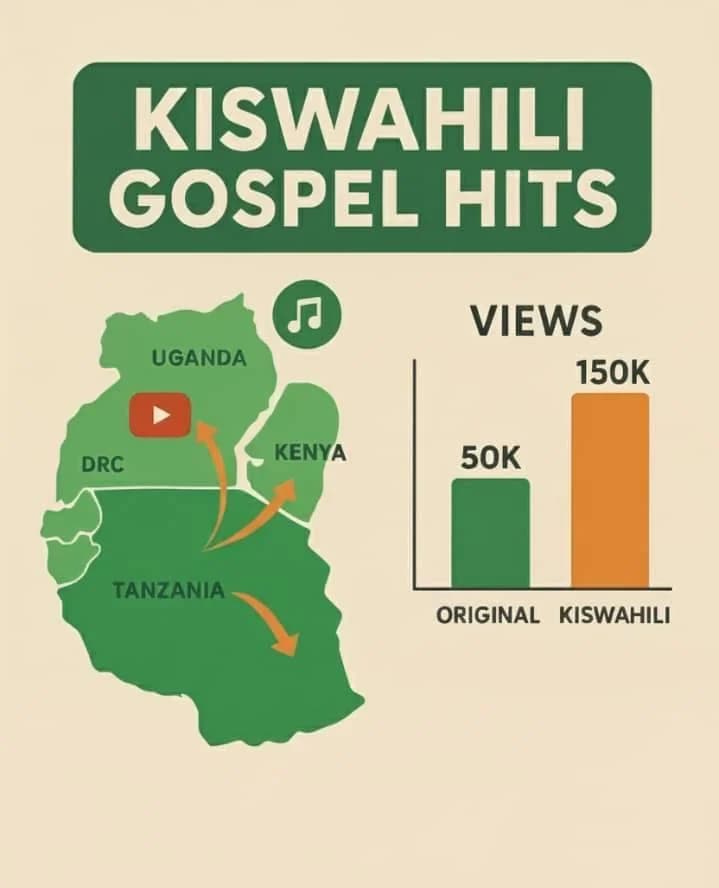
The East African gospel industry is entering a new era, and at the center of this transformation is Kiswahili. What was once seen as a stylistic preference has quickly evolved into a business strategy, with gospel artists in Rwanda, Uganda, Burundi, and even parts of the DRC deliberately adopting Kiswahili to reach a wider and more profitable audience. Behind the praise lyrics and worship melodies lies a powerful economic truth: Kiswahili is becoming the new currency of gospel music. For any artist looking to expand beyond their home market, language is everything. Kiswahili provides instant access to over 200 million speakers across East Africa. In an industry where streaming numbers, cross-border airplay, and performance bookings determine an artist’s success, this wide reach makes Kiswahili extremely valuable. A single worship song can organically travel from Nairobi to Kigali, Kampala, and Dar es Salaam without translation. The trend is already visible in the success of several gospel songs that crossed borders after being performed in Kiswahili. Tracks like *“Nipe Nguvu” by Israel Mbonyi, “Nitaamini” by James & Daniella, “Mungu Ni Pendo” by Aline Gahongayire, “Nashimwe” (Kiswahili Version) by Gaby Kamanzi, “Umenifanya Huru” by Alarm Ministries, “Ni Yesu” by Gentil Bigizi, “Nashukuru” by Prosper Nkomezi, and “Uwe Nami” by Bosco Nshuti* have proven that Kiswahili can instantly transform an artist’s regional presence. These songs did not just gain listeners, they opened markets. The influence of Tanzania and Kenya remains a dominant factor. These two countries lead East Africa in gospel music consumption on YouTube, Boomplay, and Spotify. Tanzanian stars such as Paul Clement and Goodluck Gozbert constantly pull millions of views, shaping a musical style that artists from neighboring countries are eager to tap into. Releasing songs in Kiswahili increases visibility in these two powerhouse markets, where gospel music is deeply integrated into daily culture. Beyond streaming, event organizers and church conferences now prefer artists who can perform in Kiswahili. It makes programming easier and attracts multicultural congregations. For musicians, this means more invitations, bigger crowds, and better pay. Managers and producers also see Kiswahili as a brand-strengthening tool. The language is easier to market, remix, and circulate on regional Christian radio. As financial opportunities in the gospel world continue evolving, one thing is clear: Kiswahili is no longer just a worship language, it is a strategic business investment. And for many gospel artists, embracing it is not just wise, but essential for survival in a fast-changing industry.



Comments
No comments yet. Be the first to share a thought.