
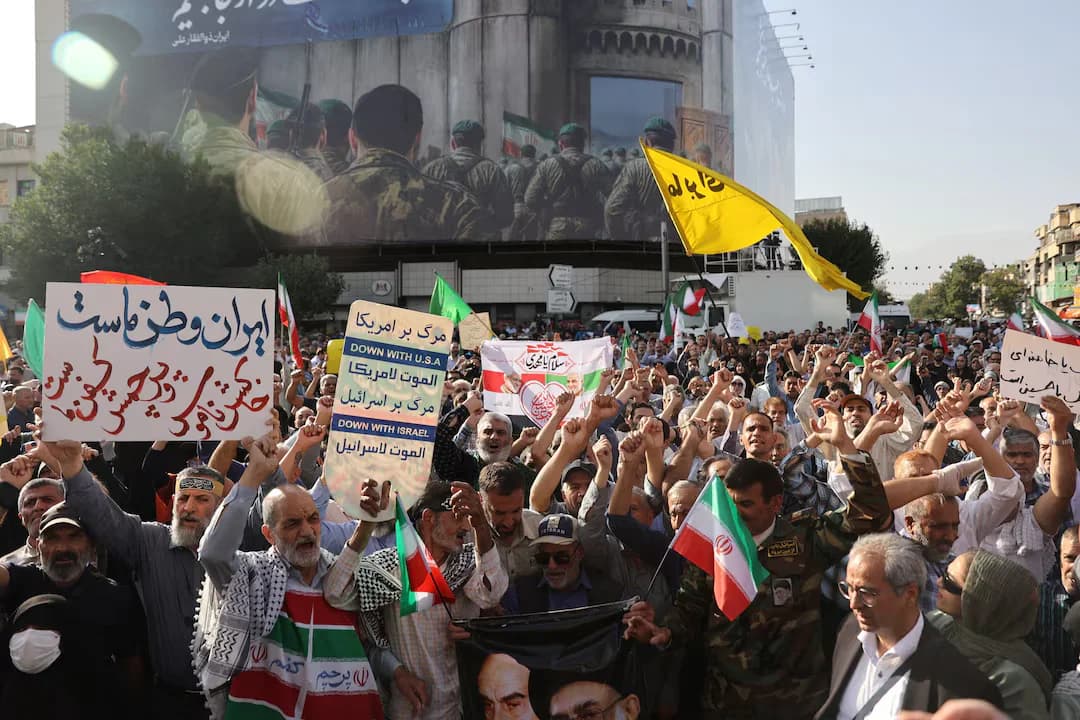
Israel launched a high-impact strike on Tehran’s most infamous political prison, Evin, on Monday, signaling a major shift in its campaign by expanding military targets to include the ideological and repressive pillars of Iran’s ruling regime. According to Reuters, Israel made clear that Monday’s airstrike on Evin Prison and other targets in Tehran was not just a military maneuver but a symbolic blow to the very structure of Iran’s governance. The prison, long a symbol of political repression and a detention site for both domestic dissidents and foreign detainees, became a focal point of Israe
Israel launched a high-impact strike on Tehran’s most infamous political prison, Evin, on Monday, signaling a major shift in its campaign by expanding military targets to include the ideological and repressive pillars of Iran’s ruling regime. According to Reuters, Israel made clear that Monday’s airstrike on Evin Prison and other targets in Tehran was not just a military maneuver but a symbolic blow to the very structure of Iran’s governance. The prison, long a symbol of political repression and a detention site for both domestic dissidents and foreign detainees, became a focal point of Israel’s expanded campaign. “Viva la libertad!” tweeted Israeli Foreign Minister Gideon Saar, alongside a video showing an explosion at what appeared to be the Evin Prison entrance. While Reuters could not verify the specific clip shared by Saar, other authenticated footage confirmed a significant strike on the site. Iran’s state broadcaster, IRIB, aired footage of emergency responders pulling survivors from the rubble, including a wounded man on a stretcher. Mizan, the judiciary’s news agency, reported urgent measures were being taken to protect the safety and health of the prisoners. In addition to Evin, Israel’s military claimed to have targeted several Revolutionary Guard command centers involved in domestic security operations in the Tehran area. “The military is currently striking, with unprecedented force, regime targets and governmental repression bodies in the heart of Tehran,” said Israeli Defence Minister Israel Katz. Reports indicated that much of Tehran’s 10-million-strong population has fled amid 10 consecutive days of bombing. The semi-official Tasnim news agency reported that strikes had also hit a power substation in Evin. State utility company Tavanir confirmed that parts of the capital were experiencing blackouts. This comes amid escalating tensions following the United States’ decision to join Israel’s military operations. Just over 24 hours earlier, U.S. B-2 bombers had dropped 30,000-pound bunker-busting bombs on Iran’s underground nuclear sites. As the situation develops, U.S. President Donald Trump has hinted at intentions beyond military dismantlement, entertaining the idea of regime change in Tehran. While Iran has reiterated threats to retaliate, it has yet to deliver a substantial response. According to two U.S. officials, Washington anticipates potential Iranian attacks on American forces stationed in the Middle East, although diplomatic channels remain open in pursuit of a resolution that might prevent further Iranian reprisals. As tensions mount, Iranian Foreign Minister Abbas Araqchi met with Russian President Vladimir Putin in Moscow, seeking diplomatic support from one of Tehran’s few remaining powerful allies.



Comments
No comments yet. Be the first to share a thought.