
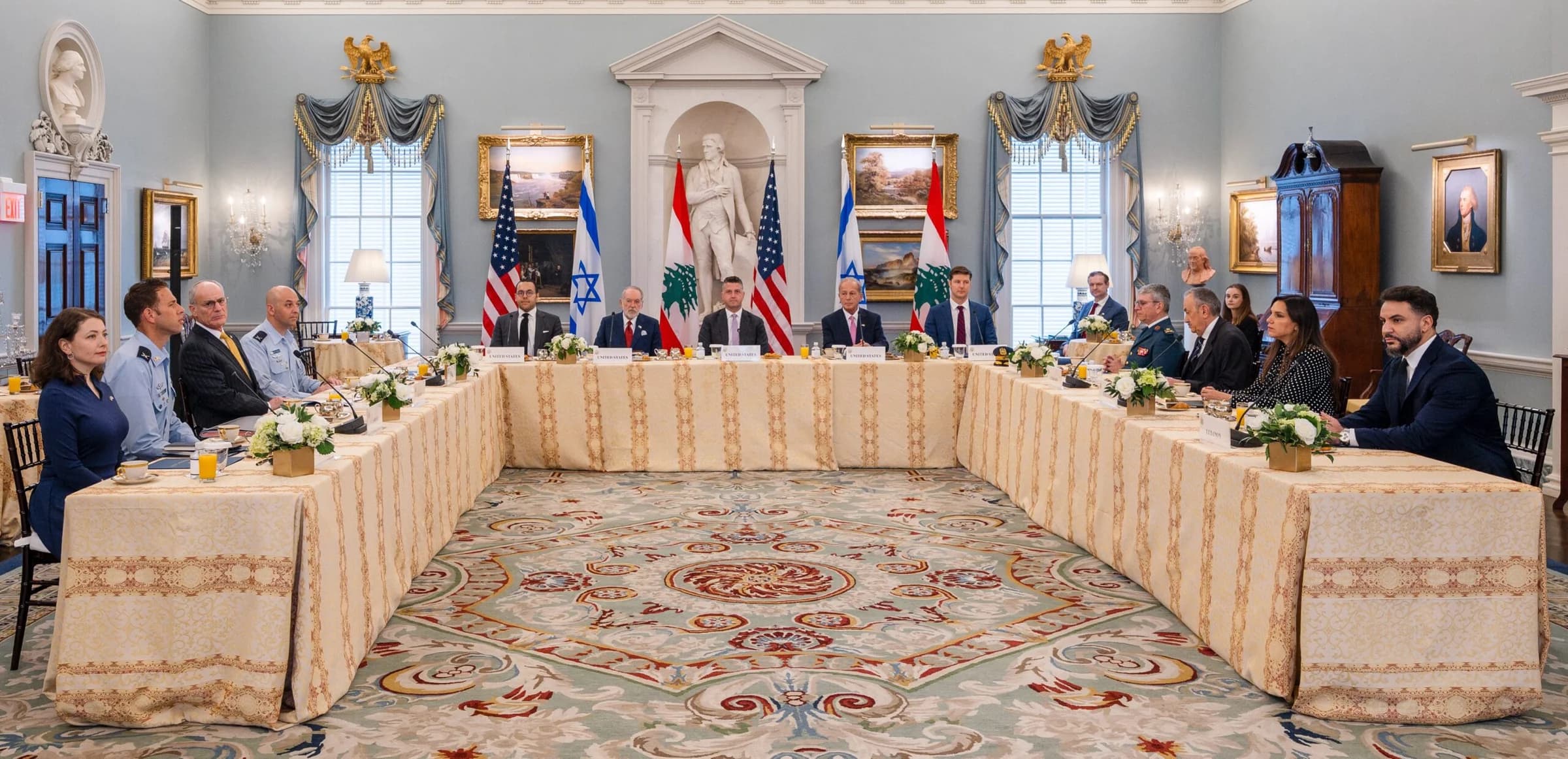
Israel and Lebanon have agreed to extend a U.S.-brokered ceasefire by 45 days following talks in Washington aimed at strengthening the truce along their shared border. The extension prolongs a cessation of fighting announced on 16 April by U.S. President Donald Trump, which had been due to expire on Sunday. U.S. State Department spokesperson Tommy Pigott confirmed the agreement on Thursday, describing the latest discussions as "highly productive." "The April 16 cessation of hostilities will be extended by 45 days to enable further progress," Pigott said. The talks marked the third round of neg
Israel and Lebanon have agreed to extend a U.S.-brokered ceasefire by 45 days following talks in Washington aimed at strengthening the truce along their shared border.
The extension prolongs a cessation of fighting announced on 16 April by U.S. President Donald Trump, which had been due to expire on Sunday. U.S. State Department spokesperson Tommy Pigott confirmed the agreement on Thursday, describing the latest discussions as "highly productive."
"The April 16 cessation of hostilities will be extended by 45 days to enable further progress," Pigott said.
The talks marked the third round of negotiations between Israeli and Lebanese officials since Israel intensified air strikes on Lebanon following a Hezbollah missile barrage into Israeli territory on 2 March, three days after the outbreak of the U.S.-Israeli conflict with Iran.
Israel's subsequent ground operations in southern Lebanon displaced approximately 1.2 million people before the initial ceasefire was announced last month.
Despite the truce, exchanges of fire between Israeli forces and Hezbollah have continued, largely in southern Lebanon, where Israel maintains a self-declared security zone.
Lebanon's delegation attended the Washington talks despite objections from Hezbollah, and said its primary demand remained a full cessation of hostilities.
Israel has insisted that Hezbollah's disarmament must form part of any broader peace arrangement. Iran, which backs Hezbollah, has said ending Israel's military campaign in Lebanon is among its conditions for a broader regional agreement.
Israeli Ambassador to the United States Yechiel Leiter described the discussions as "frank and constructive," adding: "There will be ups and downs, but the potential for success is great. What will be paramount throughout negotiations is the security of our citizens and our soldiers."
Lebanon's delegation said it sought to convert the ceasefire's momentum into a lasting peace agreement. "The extension of the ceasefire and the establishment of a U.S.-facilitated security track provide critical breathing space for our citizens, reinforce state institutions, and advance a political pathway toward lasting stability," the delegation said.
Pigott said a new security track of negotiations would open at the Pentagon on 29 May, with further political discussions scheduled at the State Department on 2 and 3 June.
"We hope these discussions will advance lasting peace between the two countries, full recognition of each other's sovereignty and territorial integrity, and establish genuine security along their shared border," he said.
Comments
No comments yet. Be the first to share a thought.