
US Vice-President JD Vance has stated that the United States will not intervene militarily in the escalating conflict between India and Pakistan, describing the ongoing hostilities between the two nuclear-armed nations as “fundamentally none of our business.” His comments came during an interview with Fox News, where he emphasized the limits of American influence in resolving such a conflict and reiterated that the US role would be confined to diplomatic engagement. Vance explained that while the US would encourage both India and Pakistan to pursue de-escalation, it was neither feasible nor a
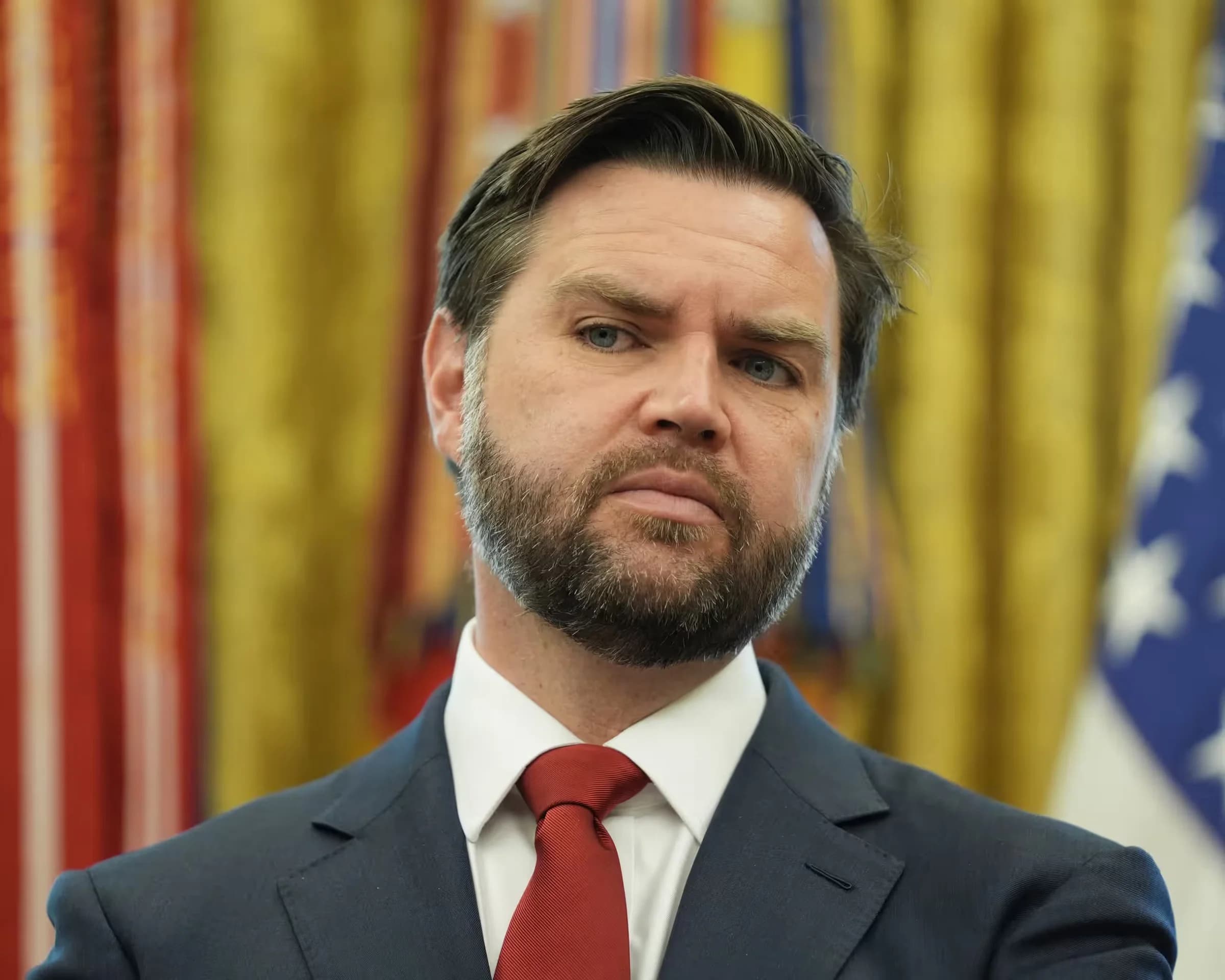
US Vice-President JD Vance has stated that the United States will not intervene militarily in the escalating conflict between India and Pakistan, describing the ongoing hostilities between the two nuclear-armed nations as “fundamentally none of our business.” His comments came during an interview with Fox News, where he emphasized the limits of American influence in resolving such a conflict and reiterated that the US role would be confined to diplomatic engagement. Vance explained that while the US would encourage both India and Pakistan to pursue de-escalation, it was neither feasible nor appropriate for the United States to intervene directly. “What we can do is try to encourage these folks to de-escalate a little bit, but we’re not going to get involved in the middle of a war that’s fundamentally none of our business and has nothing to do with America’s ability to control it,” he said. Stressing that the US could not force either side to cease hostilities, Vance added, “We’ll continue to pursue this through diplomatic channels.” Expressing concern over the possible consequences of continued hostilities, Vance said, “Our hope and our expectation is that this is not going to spiral into a broader regional war or, God forbid, a nuclear conflict. Right now, we don’t think that’s going to happen.” Vance’s remarks align with former President Donald Trump’s “America First” doctrine, signaling a broader shift away from US involvement in foreign conflicts. Both Trump and Vance have previously emphasized that the US would not continue mediating international disputes unless direct talks between conflicting parties were possible—such as in the ongoing Russia-Ukraine war. The India-Pakistan conflict escalated further on Thursday, when India claimed to have intercepted missile and drone strikes launched by Pakistan, following its own airstrikes early Wednesday that reportedly killed 31 people in Pakistan. India stated that its strikes were aimed at "terrorist infrastructure," a claim strongly denied by Pakistan, which insisted that civilians had been targeted and no terrorist groups were present in the affected areas. As Vance signaled a reduced US role in mediating such global crises, Secretary of State Marco Rubio took a more traditional diplomatic approach. He engaged in conversations with leaders from both India and Pakistan, urging “immediate de-escalation” in the region. In addition, foreign ministers from Iran and Saudi Arabia arrived in Delhi on Thursday to contribute to peace efforts and reduce tensions. Vance, who has taken an increasingly prominent role in foreign policy under the new Trump administration, had recently traveled to India. During that visit, he acknowledged India’s right to retaliate against terrorist threats but warned against letting such action spiral into a larger regional conflict. Referring to a recent Islamist militant attack in Kashmir, he said, “Our hope here is that India responds to this terrorist attack in a way that doesn’t lead to a broader regional conflict. And we hope, frankly, that Pakistan, to the extent that they’re responsible, cooperates with India to make sure that the terrorists sometimes operating in their territory are hunted down and dealt with.”



Comments
No comments yet. Be the first to share a thought.