
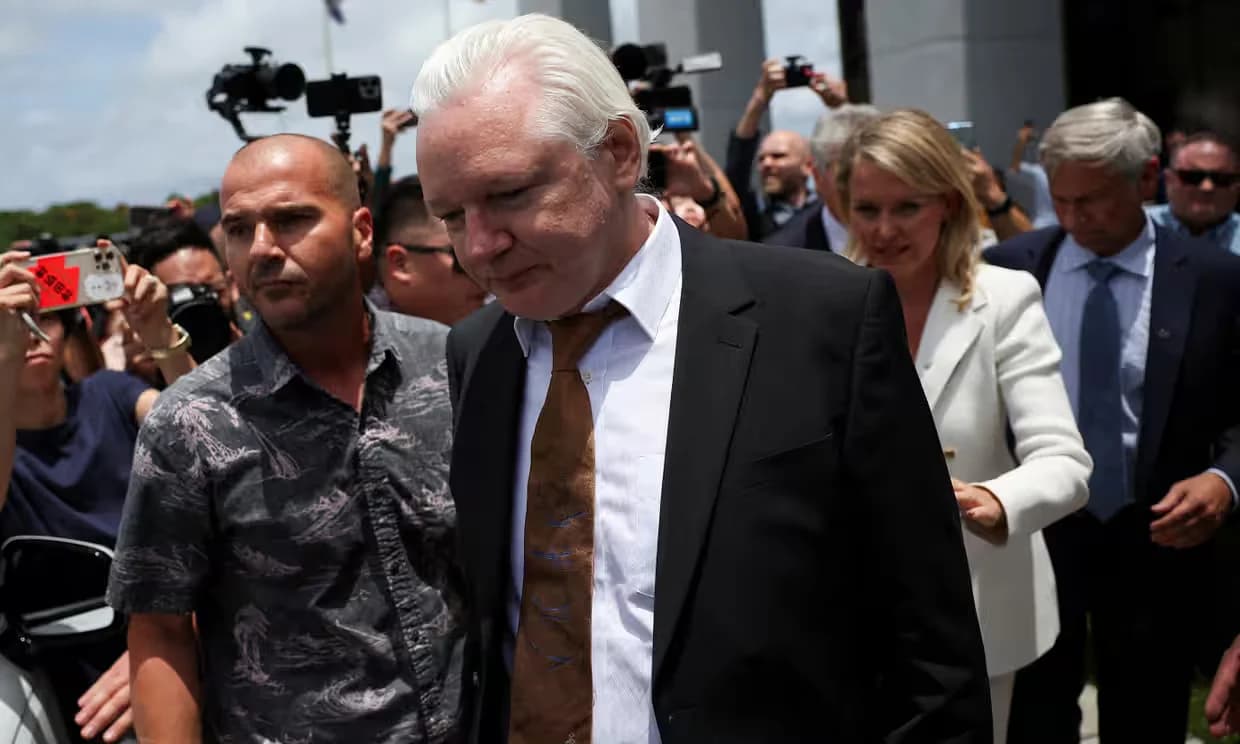
Julian Assange, the founder of WikiLeaks, has returned to Australia after a prolonged legal battle spanning over a decade. His return marks the conclusion of a complex saga involving international diplomacy, legal proceedings, and debates over press freedom. In June 2024, Assange agreed to a plea deal with the U.S. government, pleading guilty to a charge under the Espionage Act of 1917 for conspiracy to obtain and disclose national defense information. This agreement acknowledged the time he had already served in British detention, leading to his immediate release. Following his release, As
Julian Assange, the founder of WikiLeaks, has returned to Australia after a prolonged legal battle spanning over a decade. His return marks the conclusion of a complex saga involving international diplomacy, legal proceedings, and debates over press freedom. In June 2024, Assange agreed to a plea deal with the U.S. government, pleading guilty to a charge under the Espionage Act of 1917 for conspiracy to obtain and disclose national defense information. This agreement acknowledged the time he had already served in British detention, leading to his immediate release. Following his release, Assange traveled to Australia, arriving in Canberra in late June 2024. His return was met with a mixture of support and criticism, reflecting the divided public opinion on his actions and their implications for press freedom. Assange's return has reignited discussions on the balance between national security and press freedom. Supporters view him as a champion of transparency, while critics argue that his actions endangered lives and national security. The Australian government's role in facilitating his return has also been scrutinized, highlighting the complexities of international legal agreements and the protection of citizens abroad. As Assange settles back into Australian society, the global community continues to debate the ramifications of his actions and the broader implications for journalism and government transparency. His case remains a pivotal example of the challenges in balancing the public's right to know with the need to protect sensitive information.



Comments
No comments yet. Be the first to share a thought.