
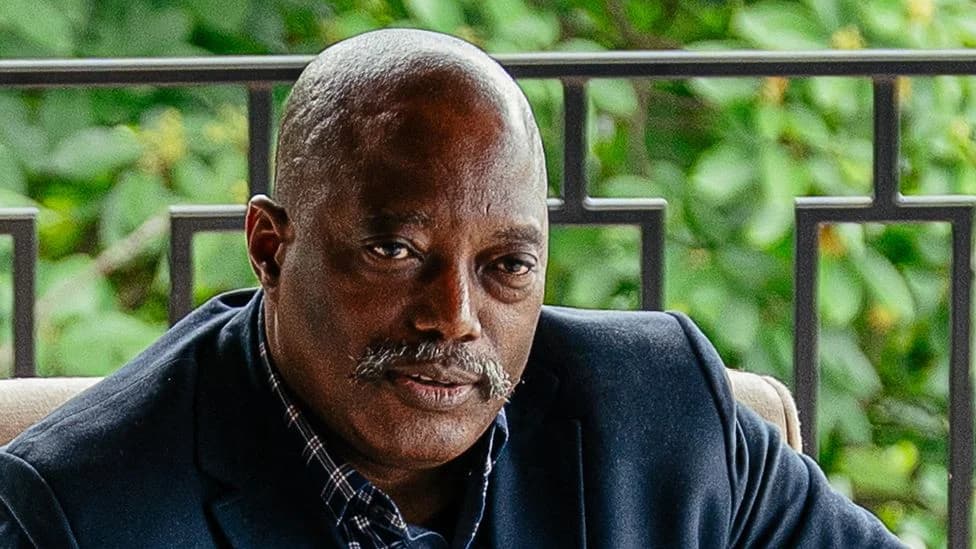
Former DRC President Joseph Kabila has strongly rejected sanctions imposed by the United States Treasury, calling the move “politically motivated” and based on unproven allegations. The sanctions, announced on April 30 by the Treasury’s Office of Foreign Assets Control (OFAC), place Kabila on the Specially Designated Nationals (SDN) list under the Democratic Republic of Congo sanctions program. The designation freezes any assets under U.S. jurisdiction and bars American individuals and companies from conducting business with him. Washington justified the move by citing alleged links between
Former DRC President Joseph Kabila has strongly rejected sanctions imposed by the United States Treasury, calling the move “politically motivated” and based on unproven allegations. The sanctions, announced on April 30 by the Treasury’s Office of Foreign Assets Control (OFAC), place Kabila on the Specially Designated Nationals (SDN) list under the Democratic Republic of Congo sanctions program. The designation freezes any assets under U.S. jurisdiction and bars American individuals and companies from conducting business with him. Washington justified the move by citing alleged links between Kabila and the AFC/M23 rebel movement, which controls parts of eastern Democratic Republic of the Congo. The group has been at the center of ongoing insecurity in the region, particularly in North and South Kivu. In response, Kabila’s office said he learned of the decision “with astonishment,” rejecting the accusations as unsubstantiated and politically driven. The statement argued that the allegations originate from authorities in Kinshasa and have not been backed by credible evidence in court. “The American decision is all the more surprising as it is based on the narrative of the Kinshasa authorities,” the statement read, criticizing what it described as a lack of proof and questioning the independence of the Congolese judicial system. Kabila, who led the country from 2001 to 2019 before handing over power to Félix Tshisekedi, announced plans to challenge the sanctions through legal channels. He said his legal team would seek access to the evidence behind the designation and defend his record. The sanctions come amid mounting pressure on the former president within the DRC. Authorities have suspended his political party, seized assets, and a military court previously sentenced him to death in absentia on charges including treason, war crimes, conspiracy, and organizing an insurrection in collaboration with M23. Kabila warned that the U.S. action could be interpreted as support for repression by the current administration, arguing that it risks legitimizing what he described as authoritarian governance. He added that targeting political actors would not resolve the country’s deeper challenges. Despite the escalating tensions, Kabila maintained that he remains committed to peace, national reconciliation, and democratic governance. He said peace would not be achieved by criminalizing those who call for reform, accountability, and reconciliation, reaffirming his intention to remain engaged in the country’s political future.



Comments
No comments yet. Be the first to share a thought.