
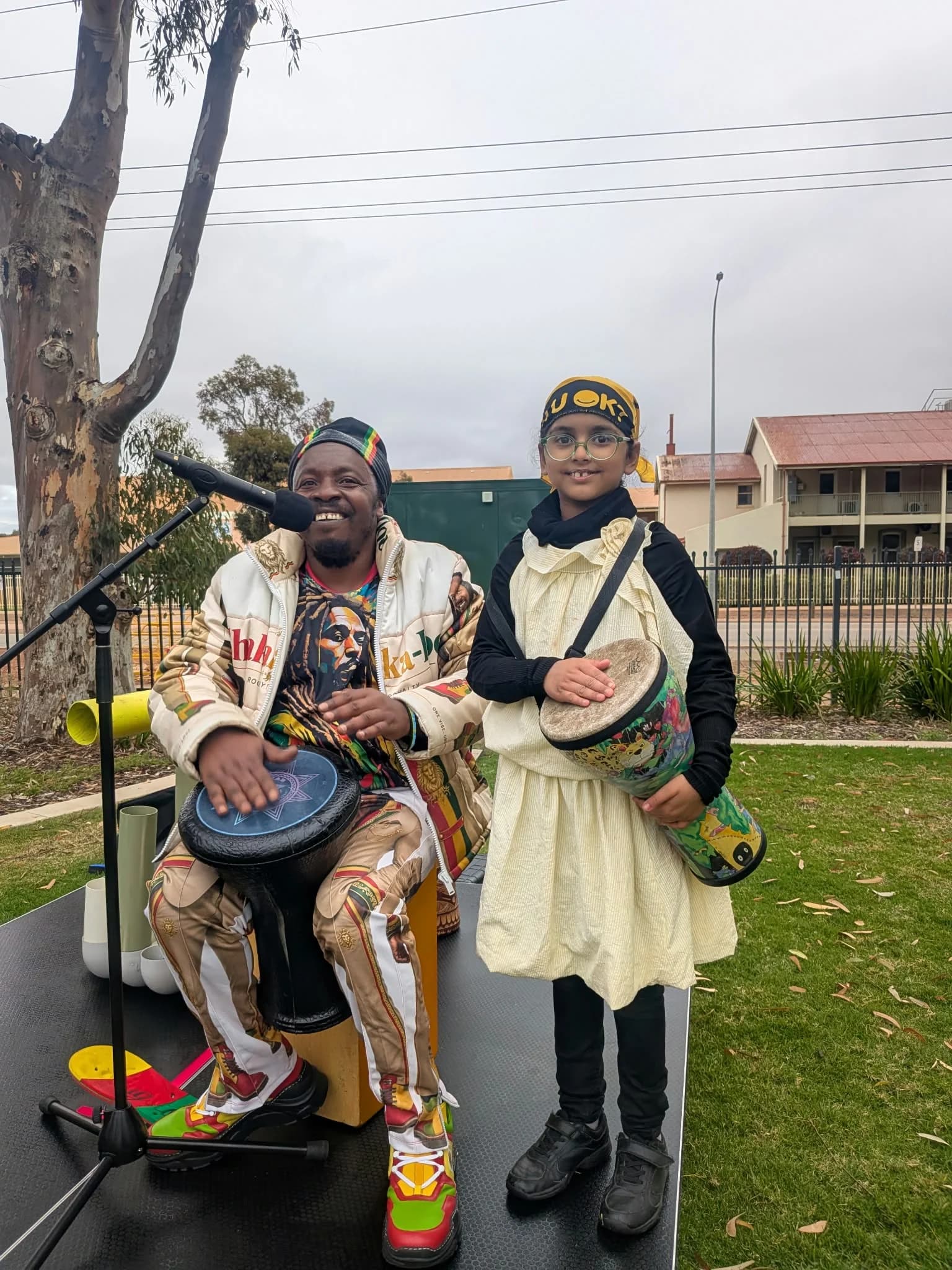
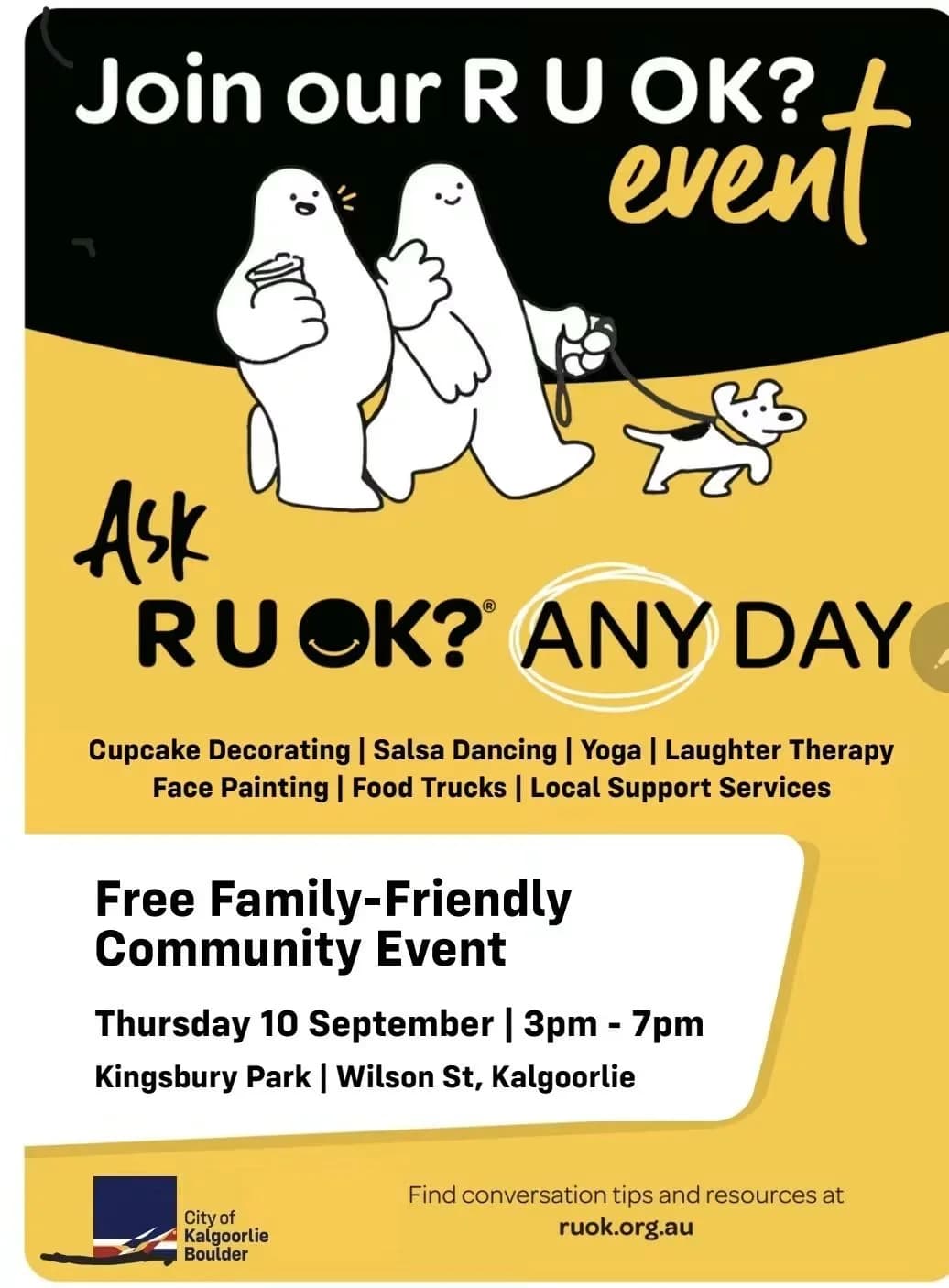
Laughter, percussion, movement and community activities turned a mental health awareness event into an afternoon centred on connection, participation and belonging. Kalgoorlie-Boulder was filled with rhythm, laughter and community spirit on Thursday as residents gathered for the 2026 R U OK? Community Event, bringing together mental health awareness, wellbeing activities and meaningful human connection. Hosted by the City of Kalgoorlie-Boulder, the free event ran from 3:00 pm to 7:00 pm, attracting families, community organisations, local performers, wellbeing advocates and residents of diff
Laughter, percussion, movement and community activities turned a mental health awareness event into an afternoon centred on connection, participation and belonging. Kalgoorlie-Boulder was filled with rhythm, laughter and community spirit on Thursday as residents gathered for the 2026 R U OK? Community Event, bringing together mental health awareness, wellbeing activities and meaningful human connection. Hosted by the City of Kalgoorlie-Boulder, the free event ran from 3:00 pm to 7:00 pm, attracting families, community organisations, local performers, wellbeing advocates and residents of different ages and backgrounds. Rather than focusing solely on formal discussions about mental health, the event created an open and welcoming environment where people could connect through conversation, music, movement, food, entertainment and shared activities. Among those contributing to the atmosphere was Professor Ras Banamungu, founder of Laughter Percussion Academy and developer of Laughter Percussion, whose approach uses rhythm, laughter, movement and collective participation to bring people together. Turning a Simple Question Into a Community Conversation At the centre of R U OK? Day is a simple question: “R U OK?” But behind those three words is a broader call to notice the people around us, ask how they are doing, listen without judgement and remain connected beyond the first conversation. In Kalgoorlie-Boulder, that message was expressed through community participation. Residents moved between wellbeing activities, information stands, entertainment and creative experiences, creating opportunities for people to interact while learning more about mental health and available support. The approach demonstrated that conversations around wellbeing do not always have to take place in formal or clinical environments. They can also begin in community spaces where people feel comfortable, included and willing to engage. Laughter Percussion Turns Spectators Into Participants For Professor Banamungu, the event was about more than entertainment. “Participating with the community through Laughter Percussion is more than an activity for me,” he said. “It is a spiritual calling, a purpose and a way of bringing people together through rhythm, laughter, movement and human connection.” Laughter Percussion combines rhythmic participation, percussion, movement, laughter, call-and-response and shared creative expression. Its emphasis is not on watching a performance from the sidelines, but on encouraging people to participate. A clap can become communication. A rhythm can become connection. Movement can become participation. And laughter can become a shared language. Within the context of R U OK? Day, those elements provided another way for people to interact and break down barriers. Sometimes an important conversation begins with words. At other times, connection begins with a smile, a shared rhythm or simply the feeling of being welcomed into a group. “Reconstructing Humanity Beyond Separation” The Kalgoorlie-Boulder gathering also reflected the wider philosophy of Laughter Percussion Academy: “Reconstructing Humanity Beyond Separation.” The philosophy is centred on using participatory arts, rhythm and shared creativity to encourage people to move beyond social, cultural and interpersonal barriers. Professor Banamungu said the event demonstrated the ability of community spaces to bring people together despite differences in age, culture, background and life experience. “It was a real pleasure to share the energy of Laughter Percussion with the community and to be part of such a vibrant celebration,” he said. For participants, the experience was not simply about watching a performance. It was about taking part, meeting others and creating moments of belonging. That distinction matters in conversations about mental wellbeing, where social connection can play an important role in helping people feel less isolated. Wellbeing Beyond the Stage Throughout the afternoon, residents could participate in a range of activities designed to encourage interaction, creativity, movement and relaxation. Families took part in children's activities and enjoyed food, while others engaged with community organisations, support services, dance, laughter and creative activities. Together, the different elements created an environment where mental health awareness became part of ordinary community life rather than a separate conversation. The event offered a reminder that community wellbeing can be strengthened through everyday opportunities to connect. A conversation can happen at a community event. A check-in can happen between colleagues. A meaningful moment can happen between neighbours. And support can begin simply by noticing that someone may not be themselves. City Support Creates Space for Connection Professor Banamungu also acknowledged the role of the City of Kalgoorlie-Boulder in bringing the community together. “A very special thank you to the City of Kalgoorlie-Boulder for organising this wonderful event and creating a space where local talent, creativity, mental health awareness and community spirit could all come together,” he said. The event highlighted the role local government and community organisations can play in creating accessible spaces where residents can participate, learn about support services and build relationships. Strong communities are not created only through infrastructure and public services. They are also strengthened through human relationships and the spaces that allow those relationships to grow. The Power of Checking In Behind the music, laughter and activities was a message that extended beyond the event itself: mental health conversations require continued attention. Checking in with a friend. Calling a family member. Listening to a colleague. Speaking to a neighbour. Noticing when someone seems different. These simple actions can help create a culture in which people feel more comfortable talking about what they are experiencing. Professor Banamungu captured that message during the event. “Sometimes the most powerful thing we can do is check in, listen, connect and remind one another that we are not alone,” he said. It is a message that reflects the broader purpose of R U OK? Day: not simply asking a question, but being prepared to listen and continue the conversation. Keeping the Rhythm Going As the afternoon came to an end, the message of connection remained. Professor Banamungu thanked the participants, performers, volunteers, organisers and supporters who contributed to the celebration before leaving the community with a simple call: “Kalgoorlie-Boulder, keep the rhythm going, keep checking in, keep connecting, and keep celebrating the joy that life brings to us.” The 2026 R U OK? Community Event showed that conversations about mental health can take many forms. They can happen through words, but also through music, movement, laughter, creativity and community. And while R U OK? Day provides a dedicated moment to check in, the real challenge is to carry that spirit into everyday life.



Comments
No comments yet. Be the first to share a thought.