
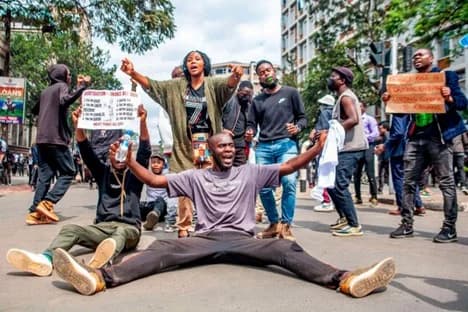
Massive protests have erupted across Kenya in response to proposed tax hikes outlined in the Finance Bill 2024. Demonstrations, marked by significant youth participation and calls for the resignation of President William Ruto, have been met with a heavy police presence, leading to clashes and the use of tear gas and rubber bullets. Prominent figures, including Auma Obama, have been involved in the protests, which have been described as one of the largest in Kenya's history. The Finance Bill 2024, which includes several proposed tax increases, has sparked widespread discontent among Kenyans. T
Massive protests have erupted across Kenya in response to proposed tax hikes outlined in the Finance Bill 2024. Demonstrations, marked by significant youth participation and calls for the resignation of President William Ruto, have been met with a heavy police presence, leading to clashes and the use of tear gas and rubber bullets. Prominent figures, including Auma Obama, have been involved in the protests, which have been described as one of the largest in Kenya's history. The Finance Bill 2024, which includes several proposed tax increases, has sparked widespread discontent among Kenyans. The bill aims to address the country's burgeoning public debt and finance infrastructure projects. However, many Kenyans feel that the tax hikes disproportionately affect the poor and middle class, exacerbating economic hardships in a country already struggling with high unemployment and inflation. The youth have taken a leading role in the protests, voicing their frustration over limited economic opportunities and a lack of government responsiveness to their needs. With unemployment rates among the youth at alarming levels, the proposed tax hikes are seen as a further blow to their financial stability. Social media has played a crucial role in organizing and mobilizing the youth, with hashtags such as RutoMustGo and TaxRevolution trending across various platforms. The Kenyan government has responded to the protests with a heavy police presence. In many cities, including Nairobi and Mombasa, clashes between protesters and police have led to the use of tear gas and rubber bullets. Human rights organizations have condemned the excessive use of force, calling for restraint and dialogue. Auma Obama, a notable figure and activist, has joined the protests, lending her voice to the growing calls for President Ruto's resignation. Her involvement has brought international attention to the situation, highlighting the widespread dissatisfaction with the current administration. Other political figures and civil society leaders have also expressed support for the protesters, urging the government to reconsider the proposed tax hikes. The current wave of protests is being described as one of the largest in Kenya's history. The scale and intensity of the demonstrations reflect a deep-seated frustration with the government and a demand for significant political and economic reforms. The outcome of these protests could have far-reaching implications for Kenya's political landscape and future governance. As the protests continue, there are growing calls for President Ruto to engage in dialogue with the protest leaders and address their concerns. The international community is closely monitoring the situation, with many urging the Kenyan government to find a peaceful resolution. The coming days will be critical in determining the direction of the protests and the government's response.

Comments
No comments yet. Be the first to share a thought.