
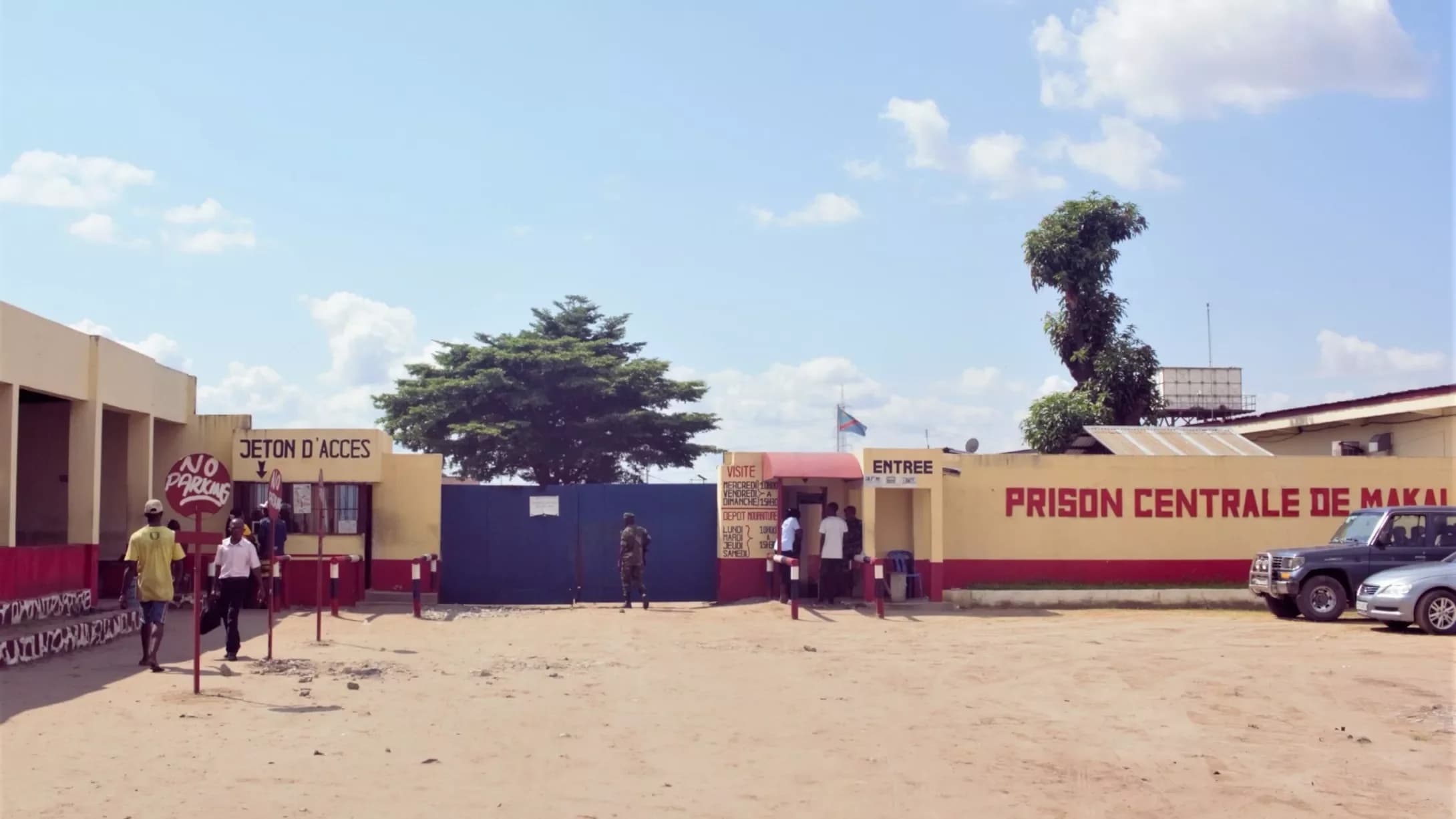
When authorities in the Democratic Republic of the Congo announced that 129 people had died during an attempted escape from Makala Central Prison in September 2024, the figure appeared to close the story as a contained tragedy. But in the case of Makala Central Prison, where independent verification is limited, numbers do not only describe events, they define their political limits. Almost immediately, Human Rights Watch (2024) questioned the official toll, saying the real number of deaths could be higher and that multiple detainees remained unaccounted for. Congolese legal advocates from grou
When authorities in the Democratic Republic of the Congo announced that 129 people had died during an attempted escape from Makala Central Prison in September 2024, the figure appeared to close the story as a contained tragedy.
But in the case of Makala Central Prison, where independent verification is limited, numbers do not only describe events, they define their political limits.
Almost immediately, Human Rights Watch (2024) questioned the official toll, saying the real number of deaths could be higher and that multiple detainees remained unaccounted for. Congolese legal advocates from groups including the Ligue des Électeurs also raised concerns over inconsistencies in official reporting and the absence of transparent prisoner accounting.
The Congolese government has maintained that 129 represents the confirmed death toll, attributing the fatalities to the chaos of the escape attempt, including gunfire, a stampede, and a fire that broke out inside the facility. Independent verification of that account has not been possible.
The dispute is not only about arithmetic. It reflects a deeper mistrust in how deaths inside detention facilities are recorded, reported, and ultimately acknowledged.
A system under strain, not an isolated incident
Human Rights Watch has documented that Makala Central Prison was designed to hold roughly 1,500 inmates, but has at times held more than ten times that capacity, a rate of overcrowding that far exceeds regional and international norms for detention facilities.
In such conditions, overcrowding becomes more than a statistic. It becomes infrastructure failure, where movement itself can turn lethal, and control collapses under basic pressure.
The outbreak of fire during the incident underscores that point. In a facility holding many times its intended population, with minimal ventilation and restricted movement, fire does not behave as it would in a functional detention environment. It becomes a mass casualty event by default.
That structural overcrowding is central to understanding how a single escape attempt escalated into mass fatalities.
The question of who is inside
A further layer of concern lies in the composition of the prison population. According to the United Nations Office for the Coordination of Humanitarian Affairs (UNOCHA), a significant proportion of detainees in Congolese prisons are held in prolonged pre-trial detention, in some cases for years without conviction.
This reality shifts the moral framing of the incident. Many of those affected were not serving sentences handed down by courts, but were instead held in a legal limbo, detained but not judged.
In such a system, the boundary between incarceration and indefinite confinement becomes blurred.
Why the number remains contested
Disputes over the death toll have persisted because the conditions required for independent verification are largely absent. Access to Makala prison is tightly controlled, documentation systems are weak, and external observers often rely on partial accounts from officials or released detainees.
Lawyers who visited the facility in the days following the incident reported difficulty obtaining accurate prisoner counts and described an environment in which family members were still seeking confirmation of whether their relatives were alive or dead.
Human Rights Watch and Congolese legal groups argue that this information gap is structural. Without transparent accounting mechanisms, the state effectively becomes the sole arbiter of casualty figures, a position that inevitably generates skepticism when mass-casualty events occur.
Force, accountability, and institutional collapse
Authorities have acknowledged that guards used live ammunition during the incident, raising questions about proportionality in a setting already defined by extreme overcrowding.
But the immediate use of force is only part of a longer chain of responsibility.
The deeper failure lies in conditions that made such force both possible and predictable: chronic overcrowding, prolonged pre-trial detention, limited oversight, and under-resourced correctional infrastructure.
In that context, violence inside prisons is not an aberration. It is an outcome of institutional design under strain.
The international response
As of publication, neither the African Union nor any major foreign government has formally called for an independent investigation into the Makala deaths. The United Nations has urged transparency in the handling of detention-related fatalities in the DRC, but no mechanism for external oversight of the incident has been established.
That silence is itself significant. In a country navigating a fragile peace process and sustained scrutiny over governance, the absence of international pressure on prison accountability signals how easily detention conditions are deprioritised when broader political negotiations dominate the agenda.
What accountability requires
Meaningful accountability in this case would require more than confirming a death toll. It would require independent access to detention records, transparent publication of prisoner counts, and the involvement of external monitors in investigating fatalities.
Without such mechanisms, disputes over numbers will continue, not because the truth is unknowable, but because it is not independently accessible.
The larger reality
Whether the final number is 129 or significantly higher, the underlying reality remains unchanged: a prison system operating beyond capacity, holding large numbers of untried detainees, and lacking safeguards necessary to prevent mass fatalities during moments of crisis.
In that sense, the debate over figures risks obscuring the more fundamental issue.
The problem is not only how many died.
It is why so many could die at all in a single incident, and why, under the same conditions, it is likely to happen again.



Comments
No comments yet. Be the first to share a thought.